Air fryers have revolutionized home cooking, promising crispy, delicious results with less oil and more convenience. Yet, many users find their results falling short of expectations, often due to a few easily avoidable blunders. If your air-fried meals aren’t consistently golden and crunchy, you might be making one of these common mistakes. This article will unveil the top missteps air fryer owners frequently make and provide practical solutions to transform your cooking experience, helping you unlock the full potential of this versatile kitchen appliance.
Air Fryer Basics: Understanding How It Works
At its core, an air fryer is a compact convection oven. It operates by rapidly circulating hot air around your food, mimicking the effects of deep-frying by creating a crispy exterior. This powerful convection current ensures quick and even cooking, making it an excellent alternative to traditional frying methods or even a conventional oven for many dishes. Its ability to achieve a desirable crunch with significantly less oil makes it a healthier cooking option for everything from fries to roasted vegetables.
The 7 Common Air Fryer Mistakes and How to Fix Them
Even with its straightforward operation, mastering the air fryer involves understanding a few key principles. Avoiding these common pitfalls will elevate your cooking from good to gourmet.
Mistake 1: Overcrowding the Basket
|
Our Picks for the Best Air fryer in 2026
As an Amazon Associate I earn from qualifying purchases.
|
||
| Num | Product | Action |
|---|---|---|
| 1 | Chefman TurboX 4-in-1 Air Fryer, 5-Quart Airfryer for Extra Crispy Chicken, Fries, Wings, and More, Air Fry, Bake, Reheat, and Frozen Functions, Digital Touch Controls, Dishwasher Safe |

|
| 2 | Ninja - XL Single Basket Air Fryer - 5.5 QT Capacity fits 3lbs of Wings - 5-in-1Air Fry, Roast, Bake,Reheat & Dehydrate -Dishwasher Safe Parts & Recipe Guide - Grey -AF150AMZ |
|
| 3 | Ninja Air Fryer, 8 QT DoubleStack 2-Basket, Space Saving Design, Cooks 2lb Chicken Wings, Feeds up to 6 People, 6-in1 Air Fryer, Roast, Bake & More, Easy to Clean, Dishwasher Safe Parts, Black, SL201 |
|
| 4 | Ninja - Air Fryer - 4 QT Capacity - 4-in1 Roast, Crisp, Roast, Reheats, & Dehydrates - Dishwasher Safe Parts - Includes 20 Easy & Healthy Recipes - Compact - Grey - AF101 |
|
| 5 | Cuisinart Air Fryer Toaster Oven, 1800W, 8-in-1 with Air Fry, Convection, Broil & Warm, 0.6 Cubic Feet, 60-Minute Timer, TOA-70NAS, Stainless Steel |
|
| 6 | Chefman Air Fryer – 6 QT Compact Airfryer for Quick & Easy Meals in Minutes, Features Hi-Fry Technology for Extra Crisp, Touchscreen Controls with 4 Presets, Nonstick & Dishwasher Safe Basket - Black |
|
| 7 | Ninja Crispi Pro 6-in-1 Glass Air Fryer - 450°F, Nontoxic, 6qt & 2.5qt Containers & Lids - Microwave, Freezer, Dishwasher Safe - Max Crisp, Air Fry, Bake, Roast, Recrisp, Dehydrate -Cyberspace AS101CY |
|
| 8 | bella 4Qt Slim Air Fryer, Fits-anywhere™ Kitchenware, EverGood™ Ceramic Nonstick Coating, Adjustable Temperature, 6 Preset Cooking Options, 60 Min Auto Shutoff w Audible Tone, 3.3lb Capacity, Oatmilk |
|
| 9 | Ninja - Air Fryer - 4-in-1 Pro Air Fry, Roast, Reheat, Dehydrate - 5QT Capacity fits up to 4lbs of French Fries - 400F Max Temp - Nonstick Basket & Crisper Plate - 120V - Grey - AF141 |
|
| 10 | Cosori 9-in-1 TurboBlaze Air Fryer 6 Qt, Premium Ceramic Coating, 90°–450°F, Precise Heating for Even Results, Air Fry, Roast, Bake, Broil, Dry, Frozen, Proof, Reheat, Keep Warm, 120V, Dark Gray |
|
One of the most frequent errors air fryer users make is cramming too much food into the basket. While it’s tempting to cook a large batch all at once to save time, overcrowding obstructs the crucial hot air circulation that defines air frying. This leads to uneven cooking, with some pieces turning out steamed or soggy instead of crispy, while others might burn.
The Fix: Always arrange food in a single layer, ensuring there’s ample space between each piece for hot air to flow freely. If you’re cooking for a crowd, work in smaller batches. Although this might seem to take more time initially, each batch will cook more efficiently and yield superior, evenly crisped results, ultimately saving you time and frustration.
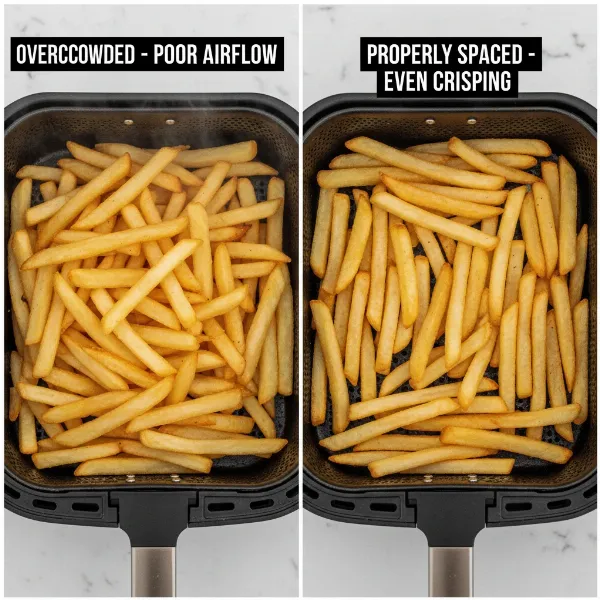 Comparison of overcrowded air fryer basket versus food arranged in a single layer for optimal cooking.
Mistake 2: Skipping Preheat or Preheating Incorrectly
Many assume an air fryer’s rapid heating means preheating isn’t necessary, but this can lead to food sticking and inconsistent cooking. Preheating creates an immediate hot environment, ensuring food starts crisping instantly upon contact with the heat. Without it, your food might dry out before achieving that desired crunch.
The Fix: Just like a conventional oven, preheat your air fryer for about 5-10 minutes before adding food. Refer to your specific air fryer’s manual for precise recommendations, as preheating times can vary between models. This simple step ensures optimal crispiness and prevents food from sticking to the basket. While some experts, like Cathy Yoder of Empowered Cooks, suggest preheating may not always be necessary for longer cooking times, it’s generally recommended for shorter cooks to achieve the best texture.
Mistake 3: Forgetting to Shake or Flip Food
The powerful fan in an air fryer helps with circulation, but it doesn’t always guarantee every surface of every food item will cook perfectly evenly. Neglecting to shake or flip your food can result in one side being perfectly golden while the other remains pale and soft.
The Fix: For smaller items like fries, nuggets, or chopped vegetables, regularly shake the basket every 5-7 minutes during cooking. For larger items such as chicken wings, fish fillets, or thicker cuts of meat, flip them halfway through the cooking process. This ensures all sides are exposed to the direct heat, promoting uniform browning and crispiness.
Mistake 4: Mismanaging Oil – Too Much, Too Little, or the Wrong Kind
The “air” in air fryer doesn’t mean “no oil.” While it uses significantly less oil than deep-frying, completely omitting it or using too much can sabotage your results. Too little oil can lead to dry, unappetizing food, while too much can make your food soggy, greasy, and defeat the purpose of healthier cooking. Additionally, using oils with a low smoke point can result in burnt flavors.
The Fix: For most recipes, a light spritz or tossing with just 1/2 to 1 teaspoon of oil is sufficient to help achieve crispiness and allow seasonings to adhere. Opt for oils with a high smoke point, such as avocado oil, which can withstand the air fryer’s high temperatures without burning. Avoid aerosol cooking sprays, as their propellants can damage the nonstick coating of your air fryer over time. Instead, invest in a reusable spray bottle and fill it with your preferred high smoke point oil.
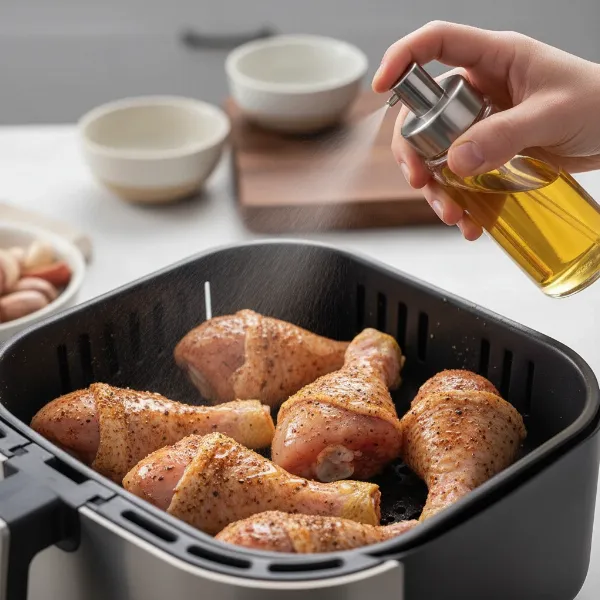 A hand holding a reusable oil spray bottle, lightly misting chicken pieces in an air fryer basket.
Mistake 5: Neglecting Regular Cleaning
It’s easy to overlook cleaning an air fryer beyond a quick rinse of the basket, but food particles, oil residue, and grease can quickly accumulate. This buildup not only causes unpleasant odors and potential smoke but also impairs the air fryer’s performance and can even become a fire hazard.
The Fix: Make it a habit to clean your air fryer after every use. For quick cooks, a simple wipe-down once it cools is often enough. For longer sessions or messier foods, fully wash the basket and drawer with hot, soapy water. Don’t forget to periodically wipe down the interior and the heating element at the top, as splatter can collect there. Regular cleaning ensures hygienic cooking and prolongs the lifespan of your appliance.
Mistake 6: Air Frying Unsuitable Foods (Wet Batters, Leafy Greens)
Not all foods are created equal for the air fryer. Attempting to cook items with loose, wet batters (like traditional tempura or battered fish) will result in a drippy mess, as the batter won’t set quickly enough and will fall through the basket. Similarly, lightweight foods like leafy greens (spinach, kale) or popcorn can get blown around by the powerful fan, potentially hitting the heating element and causing burning or a fire hazard.
The Fix: For battered foods, adapt recipes to use a thicker coating or a classic three-step breading (flour, egg, breadcrumbs) that adheres well. Choose frozen battered items designed for oven or air fryer cooking, which typically have a firmer coating. For leafy greens, steaming or sautéing is often a better choice. Popcorn and very light items are best prepared in a microwave or on the stovetop.
Mistake 7: Improper Placement and Lack of Airflow Around the Unit
An air fryer generates a significant amount of heat and relies on proper airflow for its internal cooling system. Placing it too close to walls, cabinets, or other objects can restrict this airflow, leading to overheating, poor cooking performance, and potentially damaging your kitchen surfaces or the appliance itself.
The Fix: Always position your air fryer on a stable, heat-proof surface with at least five inches of clear space on all sides and above the unit. This allows the hot air to dissipate safely and ensures the appliance operates efficiently. Consider placing it near an extractor fan if you’re sensitive to cooking odors.
Unlock Your Air Fryer’s Full Potential
Avoiding these common air fryer mistakes will significantly improve your cooking results, turning formerly frustrating experiences into culinary successes. By understanding how your air fryer works and adjusting your techniques, you’ll consistently achieve beautifully crispy textures, even cooking, and ultimately, more delicious meals. Don’t be afraid to experiment with new recipes and different foods. Keep an eye on your food as it cooks, as cooking times can vary between models and food types. With these tips, your air fryer will quickly become your favorite kitchen companion, transforming your cooking game one crispy bite at a time.
What culinary creation will you master in your air fryer next?
Frequently Asked Questions
Can I use aluminum foil in an air fryer?
Yes, you can use aluminum foil in an air fryer, but with caution. Avoid covering the entire basket, as this restricts airflow crucial for crisping and can pose a fire hazard if it touches the heating element. Only use it to line the bottom of the basket for easier cleanup with certain foods, ensuring it doesn’t block air circulation or extend above the food.
How do I know if my air fryer is preheated?
Many modern air fryers have a dedicated “preheat” setting or an indicator light that signals when the desired temperature is reached. If your model lacks this feature, simply allow it to run empty for 5-10 minutes at the target temperature. You can usually feel the interior become quite hot when ready.
What are the best oils for air frying?
For air frying, choose oils with a high smoke point, such as avocado oil, grapeseed oil, or canola oil. These oils can withstand higher temperatures without breaking down or producing a burnt flavor, which is essential for the intense heat of an air fryer. Avoid low smoke point oils like olive oil for high-heat cooking sessions.