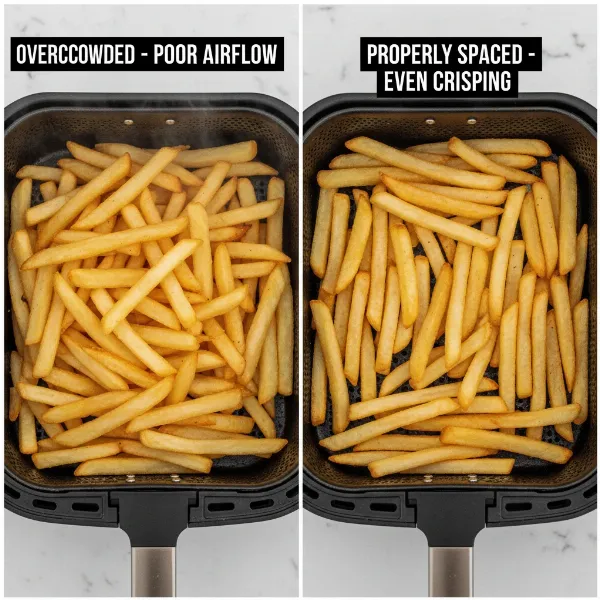
The air fryer has revolutionized kitchen routines, promising crispy, delicious results with less oil and effort. It’s become a go-to gadget for everything from frozen fries to roasted vegetables, lauded for its speed and convenience. However, not every food thrives under the air fryer’s intense, circulating heat. While this appliance is incredibly versatile, attempting to air fry certain items can lead to disappointing meals, a messy cleanup, or even damage to your beloved kitchen tool. Understanding what not to put in your air fryer is just as crucial as knowing what it excels at, ensuring you get the most out of your investment while avoiding common culinary pitfalls.
Understanding Your Air Fryer: What Makes Some Foods Unsuitable?
At its core, an air fryer is a compact convection oven. It works by rapidly circulating hot air around food, mimicking the effects of deep-frying to create a crispy exterior. This powerful convection current is what makes it so effective for achieving that coveted crunch. However, this very mechanism is also responsible for why some foods are simply not compatible with air frying. Lightweight ingredients can get blown around, delicate items can dry out too quickly, and wet batters or loose ingredients can create an unmanageable mess. The direct, high heat can also cause certain foods to burn on the outside before cooking through on the inside, or, in some cases, pose a safety risk. Recognizing these fundamental characteristics helps demystify why some ingredients are best left for other cooking methods.
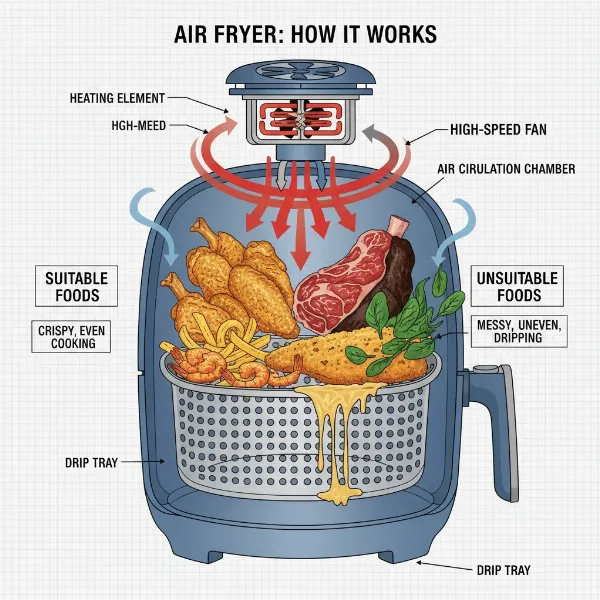 Illustration of an air fryer's hot air circulation and common foods to avoid
The “Never Air Fry” List: 10 Foods to Avoid
To help you navigate your air fryer journey with confidence and avoid kitchen mishaps, here’s a comprehensive list of 10 foods that are generally best kept out of your air fryer basket.
1. Wet Batters
|
Our Picks for the Best Air fryer in 2026
As an Amazon Associate I earn from qualifying purchases.
|
||
| Num | Product | Action |
|---|---|---|
| 1 | Cuisinart Air Fryer Toaster Oven, 1800W, 8-in-1 with Air Fry, Convection, Broil & Warm, 0.6 Cubic Feet, 60-Minute Timer, TOA-70NAS, Stainless Steel |

|
| 2 | Ninja Air Fryer, 8 QT DoubleStack 2-Basket, Space Saving Design, Cooks 2lb Chicken Wings, Feeds up to 6 People, 6-in1 Air Fryer, Roast, Bake & More, Easy to Clean, Dishwasher Safe Parts, Black, SL201 |
|
| 3 | Chefman Air Fryer – 6 QT Compact Airfryer for Quick & Easy Meals in Minutes, Features Hi-Fry Technology for Extra Crisp, Touchscreen Controls with 4 Presets, Nonstick & Dishwasher Safe Basket - Black |
|
| 4 | Chefman TurboX 4-in-1 Air Fryer, 5-Quart Airfryer for Extra Crispy Chicken, Fries, Wings, and More, Air Fry, Bake, Reheat, and Frozen Functions, Digital Touch Controls, Dishwasher Safe |
|
| 5 | Ninja - XL Single Basket Air Fryer - 5.5 QT Capacity fits 3lbs of Wings - 5-in-1Air Fry, Roast, Bake,Reheat & Dehydrate -Dishwasher Safe Parts & Recipe Guide - Grey -AF150AMZ |
|
| 6 | Ninja - Air Fryer - 4 QT Capacity - 4-in1 Roast, Crisp, Roast, Reheats, & Dehydrates - Dishwasher Safe Parts - Includes 20 Easy & Healthy Recipes - Compact - Grey - AF101 |
|
| 7 | bella 4Qt Slim Air Fryer, Fits-anywhere™ Kitchenware, EverGood™ Ceramic Nonstick Coating, Adjustable Temperature, 6 Preset Cooking Options, 60 Min Auto Shutoff w Audible Tone, 3.3lb Capacity, Oatmilk |
|
| 8 | Cosori 9-in-1 TurboBlaze Air Fryer 6 Qt, Premium Ceramic Coating, 90°–450°F, Precise Heating for Even Results, Air Fry, Roast, Bake, Broil, Dry, Frozen, Proof, Reheat, Keep Warm, 120V, Dark Gray |
|
| 9 | Ninja Crispi Pro 6-in-1 Glass Air Fryer - 450°F, Nontoxic, 6qt & 2.5qt Containers & Lids - Microwave, Freezer, Dishwasher Safe - Max Crisp, Air Fry, Bake, Roast, Recrisp, Dehydrate -Cyberspace AS101CY |
|
| 10 | Ninja - Air Fryer - 4-in-1 Pro Air Fry, Roast, Reheat, Dehydrate - 5QT Capacity fits up to 4lbs of French Fries - 400F Max Temp - Nonstick Basket & Crisper Plate - 120V - Grey - AF141 |
|
While frozen, pre-battered foods like fish sticks or chicken nuggets crisp up beautifully in an air fryer, homemade wet batters are an entirely different story. Think of freshly dipped onion rings or tempura-style vegetables; the liquid batter will simply drip through the air fryer basket before it has a chance to cook and set. This results in a sticky, burnt mess at the bottom of your air fryer and food that is bare and unappetizing. For a successful “fried” texture with homemade ingredients, opt for a dry coating like seasoned flour, breadcrumbs, or cornstarch that can adhere to the food and crisp up effectively.
2. Loose Leafy Greens
Spinach, kale, arugula, and other lightweight leafy greens are not suited for the air fryer. The powerful fan inside the appliance will vigorously blow these light greens around the basket. This uneven movement prevents them from cooking consistently, leading to some parts burning into brittle ashes while others remain uncooked. Additionally, loose greens can get caught in the air fryer’s heating element, which can create smoke and an unpleasant burnt smell. These delicate greens are much better suited for sautéing, steaming, or being used fresh in salads.
3. Whole Roasts or Large Cuts of Meat
While air fryers are fantastic for cooking smaller cuts of meat like chicken wings, thighs, or pork chops, they are generally not designed for large items such as a whole chicken, a pot roast, or a large prime rib. The compact cooking chamber and concentrated heat mean that the exterior of a large roast will likely burn and dry out long before the interior has a chance to cook through to a safe temperature. For juicy, evenly cooked large cuts of meat, traditional ovens, slow cookers, or rotisseries are far more appropriate choices that allow for more controlled and even heat distribution.
4. Lean, Unbreaded Meats
Lean meats with little fat, such as boneless, skinless chicken breasts, lean pork chops, or thin cuts of steak, can quickly become tough and dry in an air fryer. The intense, circulating heat can zap moisture from these cuts at an accelerated rate, leaving you with rubbery and unappetizing results. If you must air fry these items, it’s best to bread them lightly or use a marinade that adds moisture and a protective barrier. Otherwise, pan-searing, grilling, or baking are often superior methods for achieving tender, juicy lean meats.
5. Delicate Fish Fillets
Similar to lean meats, delicate fish fillets like cod, tilapia, or sole are prone to overcooking and drying out in an air fryer’s high-heat environment. These thin fillets cook very quickly, and the aggressive airflow can rapidly strip them of their moisture, resulting in a flaky, rubbery texture that is far from pleasant. For best results with delicate fish, gentle cooking methods like steaming, pan-frying, or baking in foil are usually preferred, allowing the fish to retain its moisture and tender texture.
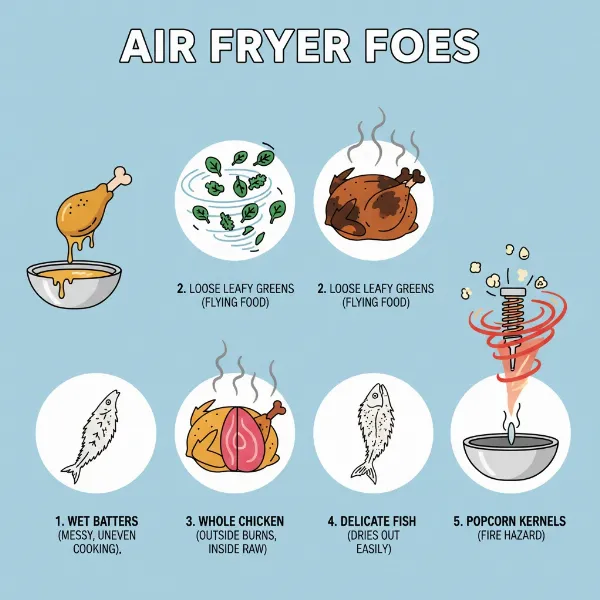 Visual representation of foods that should not be cooked in an air fryer
6. Popcorn Kernels
Although it might seem like a clever hack, attempting to make popcorn directly in your air fryer is generally ill-advised and can be dangerous. The loose kernels are lightweight and can easily get sucked up into the air fryer’s heating element during the popping process. This can lead to burnt popcorn, smoke, a potential fire hazard, and damage to your appliance. Stick to traditional methods like a stovetop popper or a microwave for a safe and successful batch of popcorn.
7. Foods with Excessive Liquid or Sauces
Any dish that involves a significant amount of liquid, such as stews, soups, gravies, or deep casseroles with runny sauces, is unsuitable for an air fryer. The air fryer basket is designed for airflow, not for holding liquids. Sauces and liquids will simply spill through the perforations, creating a huge, messy clean-up and potentially damaging the heating element of your appliance. Air fryers are meant for “dry” cooking methods; liquid-heavy dishes belong on the stovetop or in a conventional oven.
8. Loose/Shredded Cheese
Melty, gooey cheese is undeniably delicious, but putting loose or shredded cheese directly into an air fryer basket without any containment is a recipe for disaster. The rapid air circulation will quickly melt the cheese, causing it to drip through the basket and form a burnt, sticky puddle at the bottom of your air fryer. This not only creates a cleaning nightmare but can also produce smoke and unpleasant odors. If you want to air fry cheesy items, ensure the cheese is fully encased, like in mozzarella sticks, or pressed firmly onto a food item to prevent it from flying around and melting prematurely.
9. Most Homemade Baked Goods and Doughs
While some specialized air fryer recipes for baked goods exist, attempting to translate standard oven recipes for cakes, cookies, or bread dough directly to an air fryer often leads to disappointing results. The concentrated heat and smaller cooking chamber can cause baked goods to dry out, become dense, or cook unevenly – often browning excessively on the outside while remaining undercooked or doughy in the center. For light, fluffy, and evenly baked goods, a conventional oven provides a more consistent and forgiving environment.
10. Regular Toast
If you’re looking for perfectly golden-brown toast, your air fryer is probably not the best tool. While it can “cook” bread, the intense, circulating hot air tends to dry the bread out rather than toast it evenly. You might end up with a hard, cracker-like texture instead of a soft interior and crisp crust. The lightweight slices can also get blown around, leading to uneven browning. For consistent and delightful toast, a toaster or toaster oven remains the superior choice.
Common Misconceptions and Better Alternatives
Many novice air fryer users make the mistake of assuming the appliance can do it all, leading to these common pitfalls. Instead of forcing unsuitable foods into your air fryer, consider alternative cooking methods:
- For wet batters: Use a deep fryer, conventional oven, or pan-fry on the stovetop.
- For leafy greens: Sauté, steam, or enjoy fresh.
- For large meats: Use a conventional oven, slow cooker, or grill.
- For delicate fish and lean meats: Pan-sear, bake, or steam for juicy results.
- For liquid-heavy dishes: Stick to stovetop simmering or oven baking.
- For homemade baked goods: Rely on your conventional oven, unless using a recipe specifically designed for an air fryer.
Maximizing Your Air Fryer’s Potential
Knowing what to avoid helps you truly appreciate the air fryer’s strengths. It excels at delivering crispiness for foods that benefit from rapid, even heat, like frozen appetizers, perfectly roasted vegetables (when cut to size), and breaded items. By understanding its unique cooking mechanism and respecting its limitations, you can prevent culinary disasters and consistently achieve fantastic results with the right ingredients. Your air fryer is a powerful tool, but like any specialized kitchen appliance, it performs best when used for its intended purposes.
Conclusion
The air fryer is undoubtedly a game-changer for modern kitchens, offering a healthier and often quicker way to enjoy many favorite dishes. However, it’s not a universal cooking solution. By understanding the unique way an air fryer operates, particularly its intense, circulating hot air, you can easily identify the foods that are best cooked using other methods. Avoiding wet batters, loose leafy greens, large roasts, and other unsuitable items will not only save you from disappointing meals and messy cleanups but also help prolong the life of your appliance. Embrace the air fryer for what it does best, and for everything else, choose the cooking method that truly allows your food to shine. What culinary experiments will you wisely embark on next with your air fryer?
Frequently Asked Questions
Can you put aluminum foil in an air fryer?
Yes, you can typically use aluminum foil in an air fryer, but with caution. Ensure it’s placed correctly to prevent it from flying around and blocking airflow or coming into contact with the heating element, which could cause a fire. It’s often used to line the basket for easier cleanup or to wrap certain foods.
What foods are best for air frying?
Air fryers excel at cooking foods that benefit from crispy exteriors. This includes frozen snacks like fries, chicken nuggets, and mozzarella sticks, as well as homemade items such as chicken wings, roasted vegetables (broccoli, Brussels sprouts, potatoes), breaded chicken or fish (with dry coatings), and even some baked potatoes.
How do I clean a messy air fryer after a cooking mishap?
For a messy air fryer, first unplug it and let it cool completely. Remove the basket and drawer, and wash them with warm, soapy water. For stubborn, baked-on food, you can soak the parts. For the interior, wipe down with a damp cloth; avoid abrasive cleaners or submerging the main unit in water.