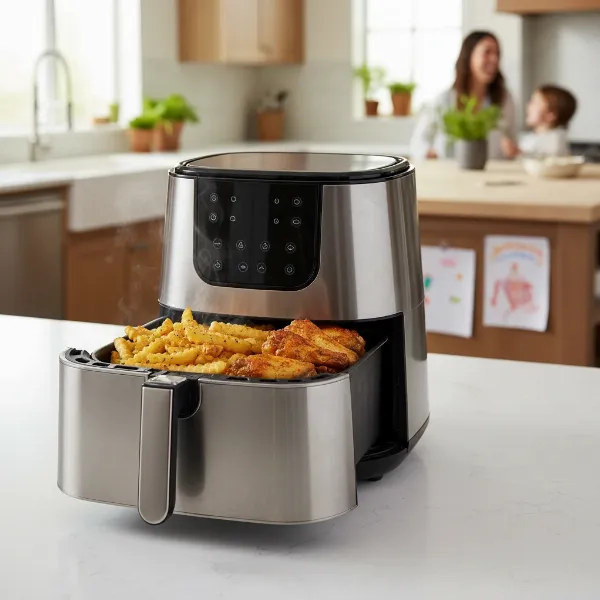
In today’s fast-paced world, convenience foods have become a staple, and frozen meals are often a go-to for busy individuals and families alike. However, cooking frozen foods traditionally can often lead to soggy results in the microwave or a lengthy wait with a conventional oven. Enter the air fryer – a revolutionary kitchen appliance that promises to transform your frozen favorites into perfectly crispy, healthier delights in a fraction of the time. If you’ve ever yearned for that deep-fried texture without the excess oil, the air fryer is your culinary hero, unlocking a world of delicious possibilities right from your freezer.
An Overview of Air Fryers
At its core, an air fryer is a compact convection oven that employs rapid air circulation technology to cook food. Unlike traditional deep-frying, which submerges food in hot oil, an air fryer circulates superheated air around the food, creating a crispy exterior reminiscent of deep-fried dishes but with significantly less, or often no, added oil. This innovative cooking method works by utilizing a heating element and a powerful fan to distribute hot air quickly and evenly throughout the cooking chamber.
The history of the air fryer is relatively short but impactful. Since its introduction, it has evolved from a niche gadget to a household essential, celebrated for its ability to mimic various cooking methods—frying, roasting, grilling, and baking—all within one versatile appliance. For frozen foods, this means bypassing the need to preheat a large oven for extended periods or settling for less-than-ideal textures. The concentrated heat and efficient airflow ensure that moisture is drawn out, and surfaces are browned quickly, giving frozen items that desirable crispness.
The advantages of using an air fryer, especially for frozen foods, are compelling. They include a notably crispier texture compared to oven baking, significantly faster cooking times, reduced oil consumption for healthier meals, and a convenient, easy-to-clean design. While air fryers are incredibly efficient, their main limitation, particularly for larger frozen items or big families, can be their smaller capacity, sometimes requiring cooking in batches to ensure even results.
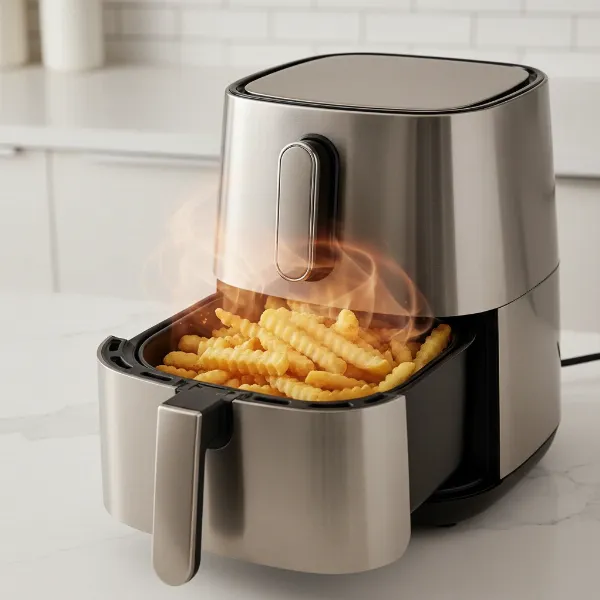 A modern air fryer circulating hot air to cook frozen foods until crispy and golden brown.
Types of Air Fryers
Air fryers come in various designs, each offering unique benefits that can influence your frozen food cooking experience. Understanding these types will help you choose the best model for your kitchen.
By Capacity
The size of an air fryer is typically measured in quarts (or liters) and dictates how much food you can cook at once.
- Small Capacity (1-3 quarts): Ideal for single servings or small snacks, perfect for individual portions of fries, nuggets, or a few mozzarella sticks. They heat up quickly and take up minimal counter space.
- Medium Capacity (3-5 quarts): Suitable for couples or small families, allowing for larger batches of appetizers, a small bag of fries, or a couple of chicken breasts. This is a popular size for everyday use.
- Large Capacity (5+ quarts): Best for families of four or more, or for those who frequently entertain. These can handle larger meals, a whole chicken, or multiple portions of frozen items, reducing the need for multiple batches. Oven-style air fryers often fall into this category.
|
Our Picks for the Best Air fryer in 2026
As an Amazon Associate I earn from qualifying purchases.
|
||
| Num | Product | Action |
|---|---|---|
| 1 | Ninja Air Fryer, 8 QT DoubleStack 2-Basket, Space Saving Design, Cooks 2lb Chicken Wings, Feeds up to 6 People, 6-in1 Air Fryer, Roast, Bake & More, Easy to Clean, Dishwasher Safe Parts, Black, SL201 |

|
| 2 | Ninja - XL Single Basket Air Fryer - 5.5 QT Capacity fits 3lbs of Wings - 5-in-1Air Fry, Roast, Bake,Reheat & Dehydrate -Dishwasher Safe Parts & Recipe Guide - Grey -AF150AMZ |
|
| 3 | Ninja Crispi Pro 6-in-1 Glass Air Fryer - 450°F, Nontoxic, 6qt & 2.5qt Containers & Lids - Microwave, Freezer, Dishwasher Safe - Max Crisp, Air Fry, Bake, Roast, Recrisp, Dehydrate -Cyberspace AS101CY |
|
| 4 | Chefman Air Fryer – 6 QT Compact Airfryer for Quick & Easy Meals in Minutes, Features Hi-Fry Technology for Extra Crisp, Touchscreen Controls with 4 Presets, Nonstick & Dishwasher Safe Basket - Black |
|
| 5 | Ninja - Air Fryer - 4-in-1 Pro Air Fry, Roast, Reheat, Dehydrate - 5QT Capacity fits up to 4lbs of French Fries - 400F Max Temp - Nonstick Basket & Crisper Plate - 120V - Grey - AF141 |
|
| 6 | Cuisinart Air Fryer Toaster Oven, 1800W, 8-in-1 with Air Fry, Convection, Broil & Warm, 0.6 Cubic Feet, 60-Minute Timer, TOA-70NAS, Stainless Steel |
|
| 7 | bella 4Qt Slim Air Fryer, Fits-anywhere™ Kitchenware, EverGood™ Ceramic Nonstick Coating, Adjustable Temperature, 6 Preset Cooking Options, 60 Min Auto Shutoff w Audible Tone, 3.3lb Capacity, Oatmilk |
|
| 8 | Chefman TurboX 4-in-1 Air Fryer, 5-Quart Airfryer for Extra Crispy Chicken, Fries, Wings, and More, Air Fry, Bake, Reheat, and Frozen Functions, Digital Touch Controls, Dishwasher Safe |
|
| 9 | Cosori 9-in-1 TurboBlaze Air Fryer 6 Qt, Premium Ceramic Coating, 90°–450°F, Precise Heating for Even Results, Air Fry, Roast, Bake, Broil, Dry, Frozen, Proof, Reheat, Keep Warm, 120V, Dark Gray |
|
| 10 | Ninja - Air Fryer - 4 QT Capacity - 4-in1 Roast, Crisp, Roast, Reheats, & Dehydrates - Dishwasher Safe Parts - Includes 20 Easy & Healthy Recipes - Compact - Grey - AF101 |
|
By Technology and Design
Beyond capacity, air fryers differ in their overall structure and heating mechanisms.
- Basket-Style Air Fryers: These are the most common type, featuring a pull-out basket where food is placed. They are excellent for shaking food during cooking, which is perfect for fries, tater tots, and other small, loose frozen items to ensure even crisping.
- Oven-Style Air Fryers (Air Fryer Toaster Ovens): These resemble mini convection ovens and often come with multiple racks, a rotisserie function, and a larger internal capacity. They are versatile for baking, roasting, and can accommodate larger frozen items like pizzas or multiple trays of appetizers, though they may take slightly longer to preheat than basket models.
- Paddle/Stirring Air Fryers: Less common, these models feature an automatic paddle that gently stirs the food during cooking, eliminating the need to manually shake the basket. While convenient, the paddle might break up delicate frozen items.
By Features
Modern air fryers boast a range of features that enhance convenience and cooking precision.
- Pre-set Programs: Many air fryers include pre-programmed settings for common foods like “fries,” “chicken,” or even “frozen food,” which automatically adjust time and temperature.
- Temperature Control and Timer: Essential features allowing precise control over cooking. Look for models with a wide temperature range and a timer with an automatic shut-off.
- Shake Reminders: Some smart air fryers will beep to remind you to shake or flip your food halfway through the cooking cycle, ensuring uniform results.
- Smart Features: Wi-Fi connectivity allows remote control, recipe access, and cooking monitoring via a smartphone app.
- Visibility: Newer models sometimes feature clear windows, allowing you to monitor your food’s progress without opening the basket and disrupting cooking.
Popular Air Fryer Brands for Frozen Foods
While many brands offer air fryers, some have consistently delivered models that excel at cooking frozen foods, known for their powerful convection and user-friendly features.
- Philips: Often credited with popularizing the air fryer, Philips models are known for their robust build quality and patented “TurboStar” or “Rapid Air” technology, which ensures exceptionally even cooking and crispiness. Their larger models are particularly adept at handling various frozen items efficiently.
- Ninja: Ninja air fryers are highly popular for their powerful performance and often include multiple cooking functions beyond air frying, such as roasting, reheating, and dehydrating. Their dual-basket models are especially convenient for cooking different frozen foods simultaneously at varying temperatures.
- Cosori: Cosori has gained a strong following for offering feature-rich air fryers at competitive price points. Many Cosori models come with intuitive digital displays and dedicated pre-set programs, including specific functions for frozen foods like fries or chicken, simplifying the cooking process.
- Instant Pot (Instant Brands): Known for their multi-cookers, Instant Pot also produces highly-rated air fryers and air fryer toaster ovens. Their Vortex series, like the Instant Vortex Plus XL 6-Quart, is lauded for its ability to deliver crispy results for frozen fries and other items, often faster than other models due to efficient preheating.
- Lock&Lock: A well-known brand in many markets, including Vietnam, Lock&Lock offers air fryers that are generally reliable and user-friendly, suitable for everyday frozen food cooking. They typically focus on essential functions with good performance.
When evaluating brands for cooking frozen foods, consider the fan power, basket design (square baskets often offer more usable space than round ones), and the availability of pre-set cooking programs that simplify temperature and time adjustments.
Detailed Comparison of Air Fryer Models
To help you navigate the choices, here’s a comparative look at some representative air fryer models, focusing on features relevant to cooking frozen foods.
| Brand | Model | Capacity (Quarts/Liters) | Key Features Relevant to Frozen Foods | Price Range (Approx.) | Performance with Frozen Foods |
|---|---|---|---|---|---|
| Philips | Premium XXL Smart Sensing | 7 qt (6.2 L) | Smart sensing technology, automatic cooking adjustment, keep warm function | High | Excellent, especially for larger batches, consistent crispiness, minimal monitoring needed. |
| Ninja | Foodi DualZone Air Fryer | 8 qt (7.6 L) | Two independent baskets, Sync/Match cook functions, wide temperature range | Mid-High | Exceptional for cooking two different frozen items simultaneously with optimal settings. |
| Cosori | Pro II Air Fryer | 5.8 qt (5.5 L) | 12 one-touch cooking functions (including dedicated frozen options), shake reminder | Mid | Very good, user-friendly presets for various frozen items, consistent results. |
| Instant | Vortex Plus XL 6-Quart | 6 qt (5.7 L) | ClearCook window, EvenCrisp technology, 6-in-1 functions, preheat function | Mid | Highly praised for quick, evenly cooked, and crispy frozen fries and snacks. |
| Lock&Lock | EJF357BLK Air Fryer | 5.2 L | Digital touch screen, 8 preset functions, non-stick basket | Low-Mid | Reliable for basic frozen food needs, good value, straightforward operation. |
Note: Price ranges are approximate and can vary based on retailer and region.
How to Cook Frozen Foods in an Air Fryer
Mastering the art of air frying frozen foods involves a few key techniques to ensure optimal crispiness and thorough cooking.
Preparation Before Air Frying
One of the greatest benefits of air frying frozen foods is that no thawing is typically required. You can usually transfer items directly from the freezer to the air fryer basket. For some items, particularly those that are not pre-fried or that you want extra crispy, a light spray of oil can make a difference. Use a manual oil mister filled with a high-smoke-point oil (like avocado, grapeseed, or canola oil) rather than aerosol sprays, which can damage the air fryer’s non-stick coating.
Setting Temperature and Time
Air fryers cook faster and more intensely than conventional ovens. As a general rule, when adapting oven instructions for your air fryer:
- Reduce the temperature: Lower the suggested oven temperature by about 20-30°F (10-15°C).
- Reduce the cooking time: Start by cutting the suggested oven time by 20-50%, then check for doneness and add time in small increments as needed.
For instance, if oven instructions call for 400°F (200°C) for 20 minutes, try 375°F (190°C) for 10-15 minutes in your air fryer, checking frequently. Preheating your air fryer for 3-5 minutes before adding food is also recommended to achieve optimal crispiness and even cooking. Many air fryers reach their target temperature much faster than traditional ovens.
Cleaning and Maintenance
Proper cleaning ensures longevity and optimal performance of your air fryer.
- Unplug and Cool: Always unplug your air fryer and allow it to cool completely before cleaning.
- Wash Basket and Tray: Most air fryer baskets and removable trays are non-stick and dishwasher-safe, making cleanup a breeze. For handwashing, use warm, soapy water and a non-abrasive sponge to protect the non-stick coating.
- Wipe Down Exterior: Wipe the exterior with a damp cloth.
- Internal Cleaning: Periodically, wipe down the internal heating element with a damp cloth (ensure it’s completely dry before use).
Safety Tips When Using an Air Fryer
- Do Not Overcrowd: This is critical for air fryers. Overcrowding prevents hot air from circulating effectively, leading to unevenly cooked and soggy food. Cook in single layers or small batches if necessary, allowing ample space around each item.
- Shake or Flip: For even cooking and browning, especially with items like fries or nuggets, shake the basket or flip the food halfway through the cooking time.
- Monitor Food: Air fryers cook quickly, so keep an eye on your food, especially when trying a new recipe or food item.
- Use Air Fryer-Safe Accessories: Ensure any parchment paper, silicone liners, or other accessories used are designed for air fryer temperatures to prevent fire hazards.
- Avoid Aerosol Sprays: As mentioned, propellants in aerosol cooking sprays can damage the non-stick coating of your air fryer basket. Use a pump sprayer with pure oil instead.
- Check Internal Temperature: For meats and poultry, always use a food thermometer to ensure they reach a safe internal temperature.
Top Frozen Foods to Cook in an Air Fryer
The air fryer truly shines when it comes to transforming frozen foods into quick, satisfying meals and snacks. Here are some of the best frozen items to cook, along with general tips for each.
Crispy Classics
These are the quintessential air fryer frozen foods, delivering restaurant-quality crispness with ease.
- French Fries (Thin, Crinkle, Waffle, Steak-cut): The air fryer is unbeatable for fries, yielding a crispy exterior and fluffy interior. Cook at 380-400°F (190-200°C) for 10-20 minutes, shaking the basket frequently.
- Tater Tots & Hash Browns: Similar to fries, these potato favorites crisp up beautifully. Cook at 380-400°F (190-200°C) for 12-18 minutes, shaking often.
- Onion Rings: Achieve golden-brown, crunchy onion rings without the deep-fryer mess. Cook at 380-390°F (190-195°C) for 8-12 minutes, flipping halfway.
Quick Bites & Appetizers
Perfect for snacks, party food, or a speedy side.
- Chicken Nuggets & Tenders: Get them perfectly golden and crispy. Cook at 380-400°F (190-200°C) for 10-15 minutes, flipping halfway.
- Mozzarella Sticks: Achieve a gooey interior and a perfectly crispy, non-greasy breading. Cook at 380-390°F (190-195°C) for 6-8 minutes, being careful not to overcook them as the cheese can leak.
- Pizza Rolls & Bagel Bites: These classic snacks cook quickly and come out with a much better texture than microwave versions. Cook at 380-390°F (190-195°C) for 6-10 minutes, shaking halfway.
- Potstickers/Dumplings/Spring Rolls/Egg Rolls: Achieve a wonderfully crisp wrapper. Cook at 375-400°F (190-200°C) for 10-15 minutes, flipping or shaking frequently. A light oil spray can enhance crispiness.
Seafood Favorites
Enjoy healthier, crispy seafood.
- Frozen Shrimp (Breaded or Plain): Breaded shrimp gets incredibly crispy. Cook plain shrimp at 380-400°F (190-200°C) for 8-10 minutes. Breaded shrimp might take 7-9 minutes.
- Fish Sticks/Fillets (Breaded): These become golden and crunchy on the outside while staying tender inside. Cook at 380-400°F (190-200°C) for 8-12 minutes, flipping halfway.
Veggies Made Delicious
Even frozen vegetables can be elevated in an air fryer, making them a delicious side dish.
- Broccoli, Brussels Sprouts, Cauliflower, Green Beans, Asparagus: These transform from bland to flavorful with crispy edges. Toss lightly with oil and seasonings (salt, pepper, garlic powder) before air frying. Cook at 380-400°F (190-200°C) for 8-15 minutes, shaking frequently, until tender-crisp.
Breakfast & Sweet Treats
Start your day right or enjoy a quick dessert.
- Frozen Waffles & Pancakes: Achieve a wonderfully crispy exterior that a toaster or microwave can’t match. Cook waffles at 380°F (190°C) for 6-8 minutes.
- Garlic Bread/Texas Toast: Crispy on the outside, soft on the inside, with perfectly melted garlic butter. Cook at 350-375°F (175-190°C) for 5-8 minutes.
- Small Frozen Pizzas/Personal Pizzas: The air fryer delivers a remarkably crispy crust and perfectly melted cheese much faster than a conventional oven. Cook at 375-400°F (190-200°C) for 8-12 minutes, depending on thickness.
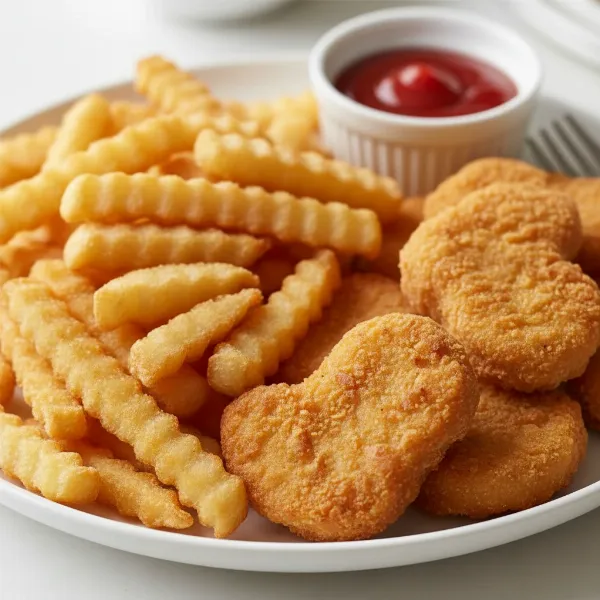 A plate filled with perfectly golden and crispy air-fried frozen french fries and chicken nuggets ready to eat.
“The air fryer has revolutionized how we approach frozen meals, turning what used to be a compromise into a culinary advantage. The speed and crispness it delivers make it an indispensable tool for modern kitchens,” says Cathy Yoder, a renowned air fryer expert and cookbook author.
Buying Guide: Choosing the Best Air Fryer for Your Frozen Food Needs
Selecting the right air fryer ensures you get the most out of your frozen food cooking experience. Consider these factors before making your purchase.
Assess Your Needs
Start by considering how you plan to use your air fryer.
- Number of People: If you’re cooking for one or two, a smaller 2-4 quart model might suffice. For families of four or more, a 5+ quart or oven-style air fryer will be more practical to avoid multiple batches.
- Types of Frozen Food: If you mostly cook small snacks like fries and nuggets, a basket-style air fryer is efficient. For larger items like frozen pizzas, or if you want to cook multiple items simultaneously, an oven-style or dual-basket model might be better.
- Available Space: Air fryers vary in size. Measure your counter space to ensure the appliance fits comfortably.
Capacity and Power
- Capacity: As discussed, choose a capacity that matches your household size and cooking habits. Larger capacity models generally offer more flexibility.
- Wattage: Higher wattage (typically 1500-1800W) usually means faster heating and more consistent results, which is beneficial when cooking dense frozen items.
Essential Features
- Temperature Control: Look for a wide temperature range, ideally from 180°F to 400°F (80°C to 200°C), to accommodate various frozen foods.
- Timer with Auto Shut-off: This is a standard safety and convenience feature, preventing overcooking.
- Pre-set Programs: While not strictly necessary, pre-sets for common frozen foods can simplify operation, especially for beginners.
- Ease of Cleaning: Dishwasher-safe baskets and non-stick coatings are major advantages for quick cleanup.
- Shake Reminder: This feature helps ensure even cooking, especially for items that need tossing.
Warranty and After-Sales Service
Investigate the brand’s warranty policy and customer support reputation. A good warranty provides peace of mind, and reliable customer service is invaluable if you encounter any issues or have questions about your appliance.
Price Comparison and Reputable Retailers
Air fryer prices vary significantly. Establish a budget, then compare models within that range. Purchase from reputable retailers, whether online or in-store, to ensure you receive a genuine product with valid warranty coverage. Reading user reviews, particularly those mentioning frozen food performance, can also provide valuable insights.
Conclusion
The air fryer has undoubtedly earned its place as a game-changer in modern kitchens, especially for anyone who loves the convenience and versatility of frozen foods. By harnessing the power of rapid hot air circulation, it transforms everything from humble french fries to gourmet frozen appetizers into crispy, golden perfection, often with less fat and in significantly less time than traditional methods. No longer do you have to choose between convenience and quality; the air fryer delivers both, making healthier, delicious meals more accessible than ever. Whether you’re whipping up a quick snack, preparing a family meal, or experimenting with new frozen delights, your air fryer is an indispensable tool. What frozen food will you air fry next to elevate your culinary experience?
Frequently Asked Questions
Can you put any frozen food in an air fryer?
While most frozen foods that are typically oven-baked or deep-fried perform exceptionally well in an air fryer, delicate items like certain pastries or foods with very thin coatings might require careful monitoring or slight adjustments. Generally, breaded items, potatoes, and vegetables are ideal.
Do I need to preheat my air fryer for frozen food?
Yes, preheating your air fryer for 3-5 minutes is highly recommended. It ensures the air fryer is at the optimal temperature from the start, leading to more even cooking and a crispier texture for your frozen foods, preventing them from coming out soggy.
How do I make frozen food crispy in an air fryer?
To achieve maximum crispiness, avoid overcrowding the basket, cook in a single layer if possible, and shake or flip the food halfway through. A light spritz of high-smoke-point oil can also enhance browning and crispness for many items.
Is air frying frozen food healthier than oven baking?
Air frying frozen food is often considered healthier than deep-frying because it uses little to no added oil. Compared to oven baking, it’s generally similar in terms of health, though the air fryer’s efficiency can sometimes yield a crispier result with less fat than if you were to add oil for crispness in an oven.
How long does it take to cook frozen food in an air fryer compared to an oven?
Air fryers typically cook frozen foods 20-50% faster than a conventional oven. This is due to the smaller cooking chamber and the powerful circulation of hot air. Always start with a reduced cooking time and check frequently, adding more time as needed.