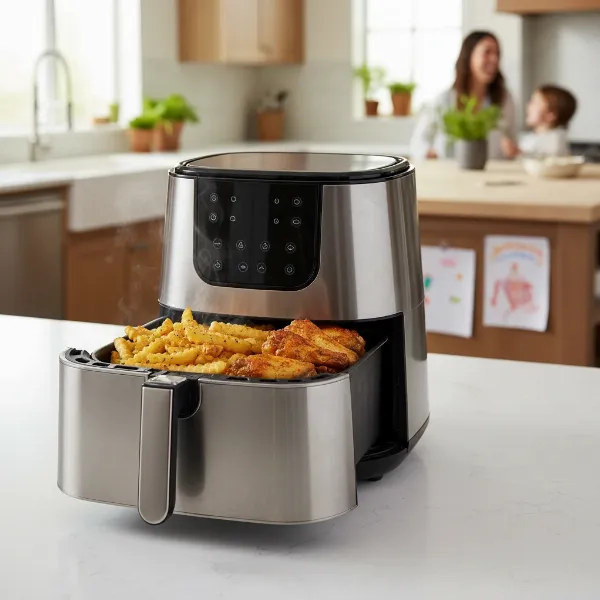
Waking up to a fridge full of delicious leftovers can be one of life’s simple pleasures, but the crucial question often arises: how do you bring that meal back to life without sacrificing its original flavor and texture? The battle between the air fryer and the microwave for reheating supremacy is a common one in kitchens worldwide. While both appliances offer convenience, their unique heating mechanisms produce vastly different results. This article dives deep into the capabilities of air fryers and microwaves to help you determine which is the superior choice for various types of food, ensuring your reheated meals are as enjoyable as the first bite.
Understanding Your Reheating Champions
To effectively choose between an air fryer and a microwave for your leftovers, it’s essential to understand how each appliance operates and the fundamental principles behind their heating processes.
The Air Fryer: Convection for Crispiness
|
Our Picks for the Best Air fryer in 2026
As an Amazon Associate I earn from qualifying purchases.
|
||
| Num | Product | Action |
|---|---|---|
| 1 | Ninja Crispi Pro 6-in-1 Glass Air Fryer - 450°F, Nontoxic, 6qt & 2.5qt Containers & Lids - Microwave, Freezer, Dishwasher Safe - Max Crisp, Air Fry, Bake, Roast, Recrisp, Dehydrate -Cyberspace AS101CY |

|
| 2 | Cosori 9-in-1 TurboBlaze Air Fryer 6 Qt, Premium Ceramic Coating, 90°–450°F, Precise Heating for Even Results, Air Fry, Roast, Bake, Broil, Dry, Frozen, Proof, Reheat, Keep Warm, 120V, Dark Gray |
|
| 3 | Chefman Air Fryer – 6 QT Compact Airfryer for Quick & Easy Meals in Minutes, Features Hi-Fry Technology for Extra Crisp, Touchscreen Controls with 4 Presets, Nonstick & Dishwasher Safe Basket - Black |
|
| 4 | Cuisinart Air Fryer Toaster Oven, 1800W, 8-in-1 with Air Fry, Convection, Broil & Warm, 0.6 Cubic Feet, 60-Minute Timer, TOA-70NAS, Stainless Steel |
|
| 5 | Chefman TurboX 4-in-1 Air Fryer, 5-Quart Airfryer for Extra Crispy Chicken, Fries, Wings, and More, Air Fry, Bake, Reheat, and Frozen Functions, Digital Touch Controls, Dishwasher Safe |
|
| 6 | Ninja - Air Fryer - 4 QT Capacity - 4-in1 Roast, Crisp, Roast, Reheats, & Dehydrates - Dishwasher Safe Parts - Includes 20 Easy & Healthy Recipes - Compact - Grey - AF101 |
|
| 7 | Ninja - XL Single Basket Air Fryer - 5.5 QT Capacity fits 3lbs of Wings - 5-in-1Air Fry, Roast, Bake,Reheat & Dehydrate -Dishwasher Safe Parts & Recipe Guide - Grey -AF150AMZ |
|
| 8 | Ninja Air Fryer, 8 QT DoubleStack 2-Basket, Space Saving Design, Cooks 2lb Chicken Wings, Feeds up to 6 People, 6-in1 Air Fryer, Roast, Bake & More, Easy to Clean, Dishwasher Safe Parts, Black, SL201 |
|
| 9 | Ninja - Air Fryer - 4-in-1 Pro Air Fry, Roast, Reheat, Dehydrate - 5QT Capacity fits up to 4lbs of French Fries - 400F Max Temp - Nonstick Basket & Crisper Plate - 120V - Grey - AF141 |
|
| 10 | bella 4Qt Slim Air Fryer, Fits-anywhere™ Kitchenware, EverGood™ Ceramic Nonstick Coating, Adjustable Temperature, 6 Preset Cooking Options, 60 Min Auto Shutoff w Audible Tone, 3.3lb Capacity, Oatmilk |
|
An air fryer is essentially a compact convection oven, designed to cook and reheat food by circulating superheated air around it at high speeds. This rapid air technology creates a “fryer-like” effect, achieving a crispy exterior with little to no added oil.
For reheating, the air fryer excels at revitalizing foods that were originally fried, roasted, or baked, such as chicken wings, pizza, and roasted vegetables. Its convection heat works by removing moisture from the food’s surface, which helps to restore that desirable crunch and prevents sogginess that often plagues microwave reheating. However, this strength can also be a weakness; the constant circulation of hot air can sometimes dry out more delicate foods if not managed carefully with appropriate temperatures and timings. Air fryers also typically require preheating and take longer than a microwave to bring food to temperature.
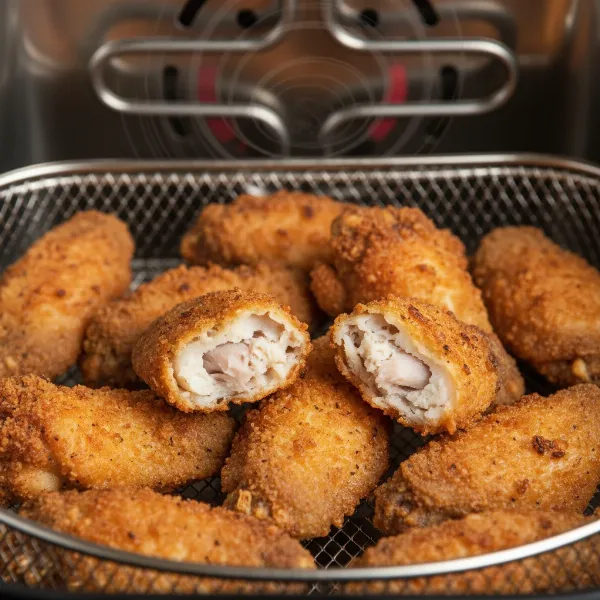 Golden crispy chicken wings reheated in an air fryer, showcasing perfect texture and browning.
The Microwave: Speed and Convenience
The microwave, a ubiquitous kitchen appliance, heats food using electromagnetic waves, specifically microwaves. These waves penetrate the food, causing its water molecules to vibrate rapidly, generating heat from within. This process makes microwaves incredibly fast and efficient for heating certain types of food.
When reheating, the microwave’s primary advantage is speed. It can quickly warm up soups, stews, sauces, and many casseroles in a matter of minutes. However, this rapid, internal heating often comes at the cost of texture. Foods that rely on crispiness, like fried chicken or spring rolls, tend to become soft and unappetizingly soggy in a microwave. Additionally, microwaves are notorious for uneven heating, leading to frustrating “hot spots” and “cold spots” within the same dish, especially with denser foods.
“The magic of reheating isn’t just about temperature; it’s about texture. A microwave quickly warms, but an air fryer can genuinely revive a meal’s original crispness.” – Chef Lena Pham, Culinary Institute Instructor
Head-to-Head: Air Fryer vs. Microwave for Reheating
When deciding which appliance to use, the outcome largely depends on the specific food item and your desired result. Let’s break down the key comparative factors.
Texture and Taste: The Crispy vs. Soft Debate
This is where the most significant difference lies. If you crave that satisfying crunch and golden-brown finish for your leftovers, the air fryer is the undisputed champion. It breathes new life into items like leftover pizza, French fries, chicken nuggets, spring rolls, and even steak, making them taste almost freshly cooked. The circulating hot air crisps the exterior while keeping the interior moist.
Conversely, the microwave struggles with texture. Its reliance on water molecule excitation means food often becomes steamed or rubbery. While perfectly acceptable for soft, moist dishes, it will inevitably turn crispy foods into a soggy disappointment. For dishes where a soft or tender texture is preferred, such as pasta, rice, or mashed potatoes, the microwave can be an efficient choice, provided you manage moisture levels.
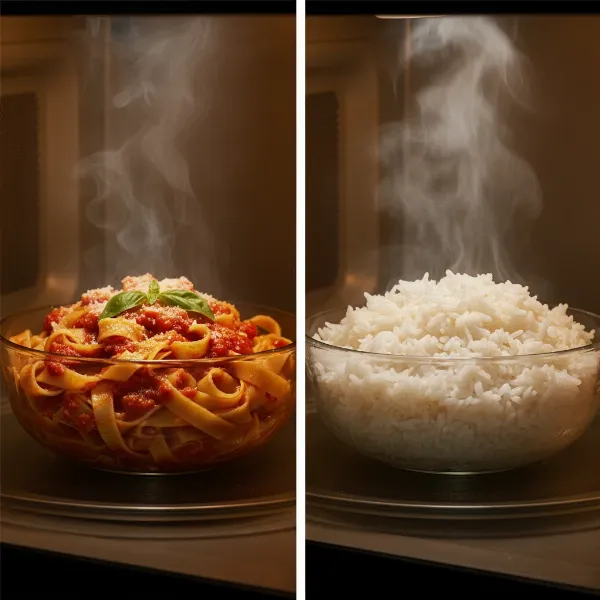 Steaming bowl of pasta and a separate bowl of rice being reheated in a microwave, emphasizing convenience.
Speed and Efficiency: When Time is of the Essence
For sheer speed, the microwave typically wins, especially for smaller portions and liquids. If you need to quickly warm a mug of soup or a small bowl of pasta for lunch, the microwave will get the job done in minutes, often without preheating.
An air fryer, on the other hand, requires a short preheating period (usually 2-5 minutes) and generally takes longer to reheat food compared to a microwave. While still faster and more energy-efficient than a traditional oven for small batches, the air fryer might not be your first pick when you’re in a serious rush. The trade-off is often superior texture for the extra time invested.
Evenness of Heating: Avoiding Cold Spots
Both appliances can present challenges with even heating, but in different ways. Microwaves are well-known for creating unevenly heated food, where some parts are scalding hot and others remain cold. This is due to the way microwaves interact with food, which can be affected by the food’s density and moisture content. To mitigate this, stirring, rotating, and using lower power settings are often recommended.
Air fryers, with their consistent circulation of hot air, generally offer more even heating for solid food items. However, overcrowding the basket can impede airflow, leading to less consistent results. For optimal evenness in an air fryer, it’s crucial to arrange food in a single layer and shake or flip it halfway through the reheating process.
Energy Consumption: Which Appliance is More Eco-Friendly?
The energy efficiency of each appliance can vary depending on the specific task and model. For very quick reheating tasks (under 5 minutes), a microwave is generally more energy-efficient because of its rapid heating time. It uses energy to directly heat the food’s water molecules, whereas an air fryer heats a chamber of air.
However, for longer reheating times or when comparing to a full-sized oven, an air fryer can be more energy-efficient. Its smaller cooking chamber heats up faster and requires less energy to maintain temperature than a large oven. So, for reheating a larger portion of crispy food that would typically go into an oven, an air fryer is often the more energy-conscious choice.
Food Suitability: Matching the Tool to the Meal
Choosing the right appliance boils down to the type of food you’re reheating. Here’s a quick guide:
| Food Type | Best for Air Fryer | Best for Microwave |
|---|---|---|
| Crispy/Fried Foods | French fries, chicken wings, fried chicken, spring rolls, onion rings, pizza slices, breaded fish | Not recommended (will become soggy) |
| Roasted/Baked Foods | Roasted vegetables, baked potatoes, grilled meats (steak, chicken breasts), pastries | Can work for some, but texture may soften |
| Moist/Liquid Foods | Not recommended (can dry out or splash) | Soups, stews, gravies, sauces, casseroles, pasta, rice |
| Sandwiches/Wraps | Toasted sandwiches, burritos, quesadillas | Can make bread soggy |
| Delicate Items | Some pastries (at lower temps) | Not ideal (can become tough/rubbery) |
Mastering Reheating: Tips for Both Appliances
Regardless of your chosen appliance, a few smart techniques can elevate your reheating game.
Air Fryer Reheating Best Practices
To achieve the best results with your air fryer, remember these tips:
- Preheat: Always preheat your air fryer for 2-3 minutes before adding food. This ensures immediate crisping and prevents food from steaming in a cold basket.
- Don’t Overcrowd: Arrange food in a single layer, giving it space for hot air to circulate freely. Overcrowding leads to uneven heating and soggy spots. Work in batches if necessary.
- Light Oil Spray: For some foods, a quick spritz of olive oil or cooking spray can help achieve extra crispiness and prevent drying.
- Shake or Flip: For items like fries or wings, shake the basket or flip the food halfway through to ensure even browning and crispness on all sides.
- Lower Temperature, Longer Time: Reheat at a slightly lower temperature (e.g., 350-375°F / 175-190°C) than original cooking for a slightly longer duration to heat through without overcooking the exterior.
Microwave Reheating Strategies
While the microwave might not win on texture, its speed is undeniable. Here’s how to make the most of it:
- Microwave-Safe Dishes: Always use microwave-safe glass or ceramic dishes. Avoid metal, which can cause sparks.
- Cover and Vent: Cover your food with a microwave-safe lid or damp paper towel, leaving a small gap for steam to escape. This helps retain moisture and prevents splattering.
- Stir and Rotate: To combat uneven heating, stir your food halfway through the process, especially for dishes like rice or casseroles. If your microwave doesn’t have a turntable, manually rotate the dish.
- Lower Power Settings: For better, more even heating, especially with denser foods, use a lower power setting for a longer duration instead of blasting it on high.
- Add Moisture: For drier foods like rice or some meats, a splash of water or broth before reheating can help keep them from drying out.
- Food Safety First: Regardless of the appliance, always ensure your reheated food reaches an internal temperature of at least 165°F (74°C) to kill harmful bacteria. Use a food thermometer to verify.
The Verdict: Do You Need Both?
The debate between the air fryer and the microwave for reheating is less about one being universally “better” and more about understanding their specialized strengths. The air fryer reigns supreme for foods where crispiness and a “freshly made” texture are paramount. It transforms soggy leftovers into delightful bites. The microwave, on the other hand, is the uncontested champion of speed and convenience, perfect for liquid-rich dishes, quick defrosting, and when time is truly short.
Ultimately, both appliances offer distinct advantages that complement each other. Many modern kitchens find value in owning both, utilizing the air fryer for crispy items and the microwave for everything else. Your lifestyle, the types of food you typically reheat, and your kitchen space will be the deciding factors in which appliance—or combination—best suits your needs. Consider what aspects you prioritize most in your reheated meals: speed or texture?
Frequently Asked Questions
Can you reheat soup in an air fryer?
Reheating soup in an air fryer is generally not recommended. Air fryers circulate hot air, which is not suitable for liquids and can lead to splashing and uneven heating. For soups, stews, or other liquid-rich dishes, the microwave or stovetop are far better options, offering quick and even heating.
Why does my microwave make food soggy?
Microwaves heat food by exciting water molecules, essentially steaming the food from the inside out. This rapid moisture creation, especially without proper ventilation, softens crispy textures. To combat sogginess, try covering your food with a vented lid or damp paper towel and reheating at a lower power setting for a longer time.
Is it safe to reheat food multiple times?
While it is generally safe to reheat food, it’s best to limit reheating to one time for safety and quality. Each time food is cooled and reheated, it passes through the “danger zone” (40-140°F / 4-60°C) where bacteria can multiply. Ensure food reaches 165°F (74°C) each time it’s reheated.
What temperature should food reach when reheated?
For food safety, all reheated leftovers should reach an internal temperature of at least 165°F (74°C). This temperature ensures that any harmful bacteria that may have grown during storage are killed. Always use a food thermometer to verify the internal temperature, especially for meats and dense dishes.