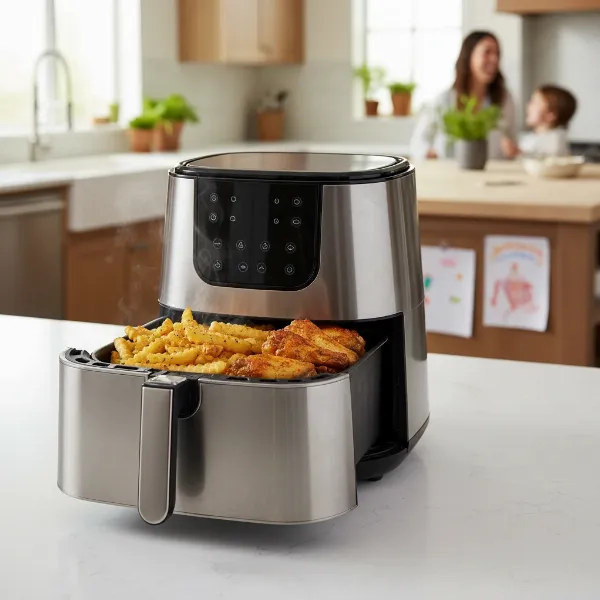
In today’s health-conscious world, home cooks are increasingly seeking kitchen appliances that not only deliver delicious results but also prioritize well-being. The air fryer has revolutionized how we prepare crispy, guilt-free meals, yet a growing concern lingers around the materials used in many conventional models. If you’re looking to minimize exposure to harmful chemicals and embrace truly clean cooking, understanding the benefits of stainless steel air fryers is crucial. This comprehensive guide will navigate the landscape of non-toxic, plastic-free air frying, helping you choose an appliance that aligns with your healthy lifestyle goals.
Understanding Air Fryers and the Quest for Non-Toxic Cooking
An air fryer functions much like a convection oven in miniature, circulating intensely hot air around food to achieve a crispy, often “fried” texture with significantly less oil than traditional deep frying. This ingenious method has made it a favorite for preparing everything from golden fries to succulent chicken wings, offering a healthier alternative to oil-heavy cooking.
However, the rapid rise of air fryers brought an unfortunate side effect: concerns over potential toxicity. Many traditional air fryer baskets and interiors feature non-stick coatings made with chemicals like per- and polyfluoroalkyl substances (PFAS), including PFOA. These are often dubbed “forever chemicals” due to their persistence in the environment and the human body. Experts like toxicologist Dr. Bruce Jarnot warn that when scratched or overheated (typically above 450°F or 232°C), these coatings can degrade and leach harmful compounds into food and air. Exposure to PFAS has been linked to various health issues, including increased cholesterol, high blood pressure, and even certain cancers. This awareness has spurred a demand for safer alternatives, with materials like stainless steel, ceramic, and glass emerging as preferred choices.
Why Choose Stainless Steel Air Fryers? Benefits and Considerations
For those prioritizing health and durability, stainless steel air fryers present a compelling option. This material offers a robust solution to many of the concerns associated with conventional non-stick appliances.
Unmatched Durability and Longevity
|
Our Picks for the Best Air fryer in 2026
As an Amazon Associate I earn from qualifying purchases.
|
||
| Num | Product | Action |
|---|---|---|
| 1 | bella 4Qt Slim Air Fryer, Fits-anywhere™ Kitchenware, EverGood™ Ceramic Nonstick Coating, Adjustable Temperature, 6 Preset Cooking Options, 60 Min Auto Shutoff w Audible Tone, 3.3lb Capacity, Oatmilk |

|
| 2 | Chefman Air Fryer – 6 QT Compact Airfryer for Quick & Easy Meals in Minutes, Features Hi-Fry Technology for Extra Crisp, Touchscreen Controls with 4 Presets, Nonstick & Dishwasher Safe Basket - Black |
|
| 3 | Ninja Crispi Pro 6-in-1 Glass Air Fryer - 450°F, Nontoxic, 6qt & 2.5qt Containers & Lids - Microwave, Freezer, Dishwasher Safe - Max Crisp, Air Fry, Bake, Roast, Recrisp, Dehydrate -Cyberspace AS101CY |
|
| 4 | Cosori 9-in-1 TurboBlaze Air Fryer 6 Qt, Premium Ceramic Coating, 90°–450°F, Precise Heating for Even Results, Air Fry, Roast, Bake, Broil, Dry, Frozen, Proof, Reheat, Keep Warm, 120V, Dark Gray |
|
| 5 | Ninja - Air Fryer - 4-in-1 Pro Air Fry, Roast, Reheat, Dehydrate - 5QT Capacity fits up to 4lbs of French Fries - 400F Max Temp - Nonstick Basket & Crisper Plate - 120V - Grey - AF141 |
|
| 6 | Ninja Air Fryer, 8 QT DoubleStack 2-Basket, Space Saving Design, Cooks 2lb Chicken Wings, Feeds up to 6 People, 6-in1 Air Fryer, Roast, Bake & More, Easy to Clean, Dishwasher Safe Parts, Black, SL201 |
|
| 7 | Ninja - XL Single Basket Air Fryer - 5.5 QT Capacity fits 3lbs of Wings - 5-in-1Air Fry, Roast, Bake,Reheat & Dehydrate -Dishwasher Safe Parts & Recipe Guide - Grey -AF150AMZ |
|
| 8 | Ninja - Air Fryer - 4 QT Capacity - 4-in1 Roast, Crisp, Roast, Reheats, & Dehydrates - Dishwasher Safe Parts - Includes 20 Easy & Healthy Recipes - Compact - Grey - AF101 |
|
| 9 | Chefman TurboX 4-in-1 Air Fryer, 5-Quart Airfryer for Extra Crispy Chicken, Fries, Wings, and More, Air Fry, Bake, Reheat, and Frozen Functions, Digital Touch Controls, Dishwasher Safe |
|
| 10 | Cuisinart Air Fryer Toaster Oven, 1800W, 8-in-1 with Air Fry, Convection, Broil & Warm, 0.6 Cubic Feet, 60-Minute Timer, TOA-70NAS, Stainless Steel |
|
Stainless steel is renowned for its exceptional durability. Unlike non-stick coatings that can chip, scratch, or peel over time, solid stainless steel interiors are resistant to such damage, ensuring a much longer lifespan for your appliance. This resilience means your air fryer can withstand daily use and high temperatures without compromising its structural integrity or releasing unwanted particles into your food.
Eliminating Harmful Coatings and Plastic Exposure
The primary appeal of stainless steel air fryers is their freedom from problematic coatings. By choosing a model with a stainless steel cooking basket and interior, you effectively eliminate the risk of PFAS, PFOA, and other potentially harmful chemicals leaching into your meals. Furthermore, many non-toxic stainless steel air fryers also prioritize plastic-free construction for food-contact surfaces, addressing concerns about BPA and microplastic contamination, especially at high temperatures. This commitment to pure materials provides peace of mind for health-conscious consumers.
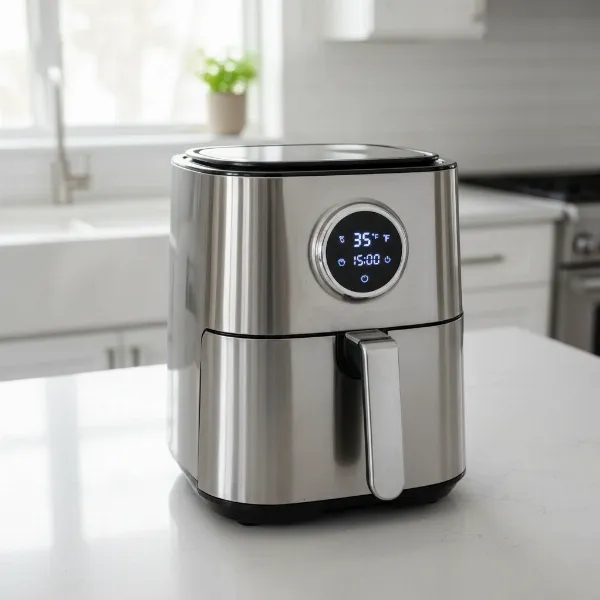 A sleek, modern stainless steel air fryer standing on a kitchen counter, clean and ready for use.
Consistent Performance and Even Cooking
Stainless steel is an excellent conductor of heat, allowing for quick preheating and remarkably even heat distribution throughout the cooking chamber. This uniform heating ensures that your food cooks thoroughly and consistently, resulting in perfectly crispy exteriors and tender interiors without unevenly cooked spots. Many stainless steel air fryers, particularly the toaster oven-style models, also offer multi-level cooking, maximizing efficiency for family meals.
Important Considerations
While stainless steel air fryers offer significant advantages, it’s essential to be aware of a few points:
- Not Naturally Non-Stick: Unlike coated baskets, food can stick more readily to stainless steel. This means you might need to use a small amount of oil, parchment paper, or silicone liners, and cleaning may require a bit more effort, often involving soaking and gentle scrubbing.
- Trace Metal Leaching: In very rare instances, stainless steel can leach trace amounts of nickel or chromium, which could be a concern for individuals with extreme sensitivities or allergies to these metals. However, for most people, this is not a significant health risk.
- Cost: High-quality stainless steel air fryers often come at a premium price compared to their non-stick counterparts, reflecting the superior materials and construction.
Types of Stainless Steel Air Fryers
Stainless steel air fryers typically come in two main forms, each offering distinct advantages:
Basket-Style Air Fryers
While less common for entirely stainless steel interiors, some traditional basket-style air fryers feature stainless steel components, particularly for the outer casing and sometimes internal racks. These are often compact and ideal for smaller households or single servings. However, ensure the actual food-contact basket is also stainless steel or a confirmed non-toxic ceramic.
Air Fryer Toaster Ovens
This category represents the majority of truly stainless steel air fryers on the market. These versatile appliances combine the functions of a toaster oven with air frying capabilities, often featuring spacious stainless steel interiors, racks, and sometimes even French doors. They are excellent for larger families, cooking multiple items simultaneously, and offering a broader range of cooking modes like baking, roasting, broiling, and dehydrating. Their design often allows for better visibility of your food as it cooks.
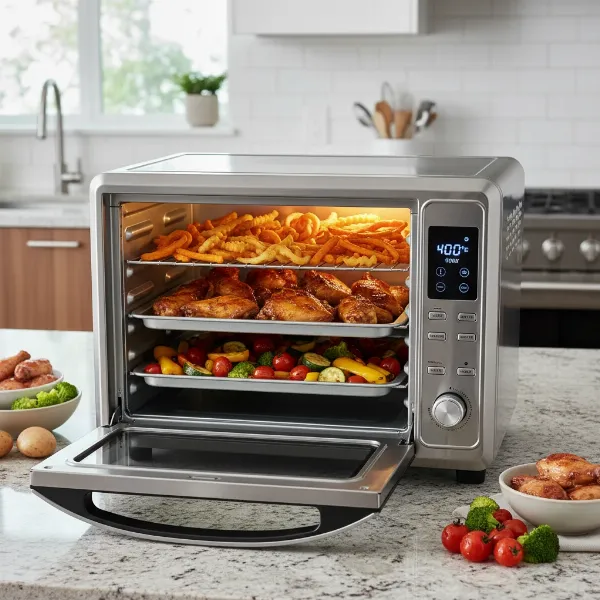 A stainless steel air fryer toaster oven with an open door, revealing multiple racks and various foods cooking inside.
Top Stainless Steel Air Fryers: Expert Picks for 2026
When searching for a non-toxic, plastic-free air fryer, several models stand out for their stainless steel construction and commitment to safety. Here are some of the top choices identified by experts:
- Midea Flexify French Door Air Fryer Oven: This model is frequently praised for its accessible French door design and spacious stainless steel interior. It’s explicitly marketed as PFAS-free and offers 10 cooking functions, making it a versatile and good-value option for families.
- Our Place Wonder Oven Pro: Featuring a stainless steel frame with quartz and stainless-steel heating elements, the Wonder Oven Pro is a stylish and safe choice. It includes a ceramic non-stick coating on its bake pan and chromed steel racks and basket, boasting eight cooking modes and a steam-infusion feature.
- Cuisinart Air Fryer Toaster Oven: Cuisinart offers several air fryer toaster oven models known for their robust stainless steel construction, which often includes stainless steel racks and internal components. These are highly versatile for various cooking tasks.
- Breville Smart Oven Air Fryer Pro: A premium choice often recommended for its multi-functionality and high-quality stainless steel interior, capable of handling a wide array of cooking needs from air frying to dehydrating.
- Emeril Lagasse Extra Large French Door Air Fryer Toaster Oven Combo: This appliance is noted for its dual heating elements, stainless steel exterior, and non-toxic basket, providing efficient and healthy cooking for larger quantities.
- Instant Vortex Plus (Stainless Steel version): Users commend the full stainless steel trays of this model, highlighting its reliability and absence of non-stick coating issues.
| Brand | Model | Capacity | Power (Watts) | Key Features | General Review |
|---|---|---|---|---|---|
| Midea | Flexify French Door Air Fryer Oven | Spacious (family) | 1800 | French doors, 10 functions, stainless steel interior, PFAS-free | Excellent value, quick heating, suitable for families, may require food rotation for even browning. |
| Our Place | Wonder Oven Pro | 30 L (family) | 1700 | Stainless steel frame, ceramic-coated bake pan, steam infusion, 8 modes | Smart, safe, aesthetically pleasing, quick cooking, versatile, but can be expensive and requires hand-washing for some accessories. |
| Cuisinart | Air Fryer Toaster Oven | Varied | Varied | Stainless steel interior/racks, multi-functional (toast, bake, broil) | Reliable, versatile, good for various tasks, some models offer spacious cooking. |
| Breville | Smart Oven Air Fryer Pro | Large | Varied | Multi-function, precise control, robust stainless steel build | High-performance, durable, great for advanced cooking tasks, but typically on the higher end of the price spectrum. |
| Emeril Lagasse | Extra Large French Door Air Fryer | Extra Large | Varied | Dual heating, stainless steel, non-toxic basket, French doors | Efficient, good for large batches, health-conscious design. |
| Instant | Vortex Plus (SS) | Varied | Varied | Full stainless steel trays, easy to clean | Solid performance, durable, non-toxic cooking surfaces, user-friendly. |
How to Use and Maintain Your Stainless Steel Air Fryer Safely
To maximize the performance and longevity of your stainless steel air fryer while ensuring safe, non-toxic cooking, proper usage and maintenance are key.
Preparing Food and Setting Temperatures
Stainless steel excels at high-heat cooking. When preparing food, a light brush of olive oil or other high smoke point oils can help achieve crispiness and prevent sticking. For baked goods or delicate items, parchment paper or silicone liners designed for air fryers can be incredibly useful. Always ensure food is arranged in a single layer for optimal air circulation and even cooking. While air fryers efficiently cook at high temperatures, most recipes stay within the 350-400°F (175-200°C) range. Be mindful of cooking times, as air fryers often cook faster than conventional ovens. For starchy foods, aim for a golden yellow rather than dark brown to minimize acrylamide formation.
Effective Cleaning and Care
Cleaning stainless steel requires a slightly different approach than non-stick surfaces. Since food can adhere more easily, prompt cleaning after each use is recommended.
- Soak Immediately: Fill the basket or tray with warm, soapy water shortly after use to loosen any stuck-on food.
- Gentle Scrubbing: Use a soft sponge, cloth, or a nylon brush. Avoid abrasive scrubbers like steel wool, which can scratch the surface.
- Dishwasher Safe: Many stainless steel components are dishwasher safe, but always check your model’s manual for specific instructions.
- Natural Cleaners: For stubborn residue, a paste of baking soda and water can be effective. Apply, let sit for 15-20 minutes, then scrub gently.
- Drying: Dry thoroughly to prevent water spots and maintain the shine of the stainless steel.
Safety Tips and Best Practices
- Avoid Overheating: While stainless steel handles high heat well, continuously operating at maximum temperatures can potentially stress components. Most recipes perform optimally below 450°F (232°C).
- No Lecithin Sprays: Steer clear of light commercial oil sprays that contain lecithin. This emulsifier can slowly break down coatings, even ceramic ones, and is best avoided for all non-toxic air fryers. Instead, use pure olive oil or other cooking oils in a reusable mister.
- Use Proper Utensils: Stick to wooden, silicone, or plastic utensils to avoid scratching any surfaces, even if they are stainless steel.
- Regular Inspections: Periodically check your air fryer for any signs of wear, damage, or loose parts. If you notice any issues, consult the manufacturer or discontinue use.
The Ultimate Buying Guide for Non-Toxic Air Fryers
Choosing the right stainless steel air fryer involves more than just picking a brand. A thoughtful approach ensures your investment meets both your culinary and health requirements.
Assessing Your Needs: Size, Capacity, and Functions
Consider your household size and typical cooking habits.
- Capacity: Smaller 2-4 quart models suit singles or couples, while 5-8 quart or larger air fryer ovens are better for families or batch cooking.
- Functions: Do you just need air frying, or would multi-functional capabilities like roasting, baking, toasting, or dehydrating be beneficial? Air fryer toaster ovens offer greater versatility.
Material Matters: Beyond Just Stainless Steel
While stainless steel is a fantastic non-toxic choice, it’s worth noting other safe alternatives.
- Glass Air Fryers: Offer inert cooking surfaces and the ability to visually monitor food, though they can be fragile.
- Ceramic-Coated Air Fryers: Many brands now offer PFAS-free ceramic non-stick coatings, which provide easy release but still require careful handling to prevent scratching. Ensure the ceramic is certified PFAS-free.
Always look for explicit declarations like “PFAS-free,” “PFOA-free,” and “BPA-free” in product specifications.
Smart Features and User-Friendly Design
Modern air fryers come with a host of features designed to enhance your cooking experience:
- Digital Touchscreens: Offer precise control over temperature and time.
- Pre-set Cooking Modes: Simplify cooking for common dishes like fries, chicken, or vegetables.
- Integrated Temperature Probes: Ensure perfectly cooked proteins by monitoring internal temperatures.
- Ease of Cleaning: Look for models with removable, dishwasher-safe components to simplify post-cooking cleanup.
Warranty, Brand Reputation, and Value for Money
Invest in reputable brands known for quality and customer support. A good warranty indicates the manufacturer’s confidence in their product. While stainless steel air fryers might have a higher upfront cost (typically $80-$200, often higher for premium models), their durability and health benefits often provide greater long-term value. Reading expert reviews and customer testimonials can offer further insights into real-world performance and reliability.
Conclusion
Embracing a non-toxic, plastic-free approach to air frying is a significant step towards a healthier kitchen. Stainless steel air fryers, with their inherent durability, chemical-free cooking surfaces, and efficient performance, offer an outstanding solution for health-conscious individuals and families. By making an informed choice and understanding how to properly use and maintain your appliance, you can confidently enjoy the convenience and delicious results of air frying for years to come. Isn’t it time to upgrade your cooking experience with an appliance that truly cares for your well-being?
Frequently Asked Questions
Are all air fryers toxic?
No, not all air fryers are toxic. The primary concern lies with traditional non-stick coatings containing PFAS (per- and polyfluoroalkyl substances). Many modern air fryers, particularly those made with stainless steel, ceramic, or glass, are designed to be PFAS-free and non-toxic, offering a safer cooking experience.
How do I know if my current air fryer is non-toxic?
Check the product specifications on the manufacturer’s website for terms like “PFAS-free,” “PFOA-free,” or “BPA-free.” Also, inspect the cooking surface for any chips, flakes, or scratches; if the non-stick coating is damaged, it’s best to replace the appliance to avoid potential chemical exposure.
Can stainless steel air fryers really replace an oven?
Many larger, toaster oven-style stainless steel air fryers can effectively replace a conventional oven for most everyday tasks, including baking, roasting, broiling, and, of course, air frying. They often preheat faster and consume less energy for smaller meals, making them a versatile kitchen workhorse.
Are there specific oils to avoid with non-stick air fryers?
Yes, avoid light commercial oil sprays that contain lecithin, as this emulsifier can damage non-stick coatings over time, even those marketed as non-toxic ceramic. Opt for pure cooking oils like olive oil in a reusable spray bottle or choose commercially available oil sprays with simple ingredient lists.
How do I clean stainless steel air fryer baskets if they’re not non-stick?
For optimal cleaning, soak stainless steel baskets or trays in warm, soapy water immediately after use. Then, gently scrub with a soft sponge, cloth, or nylon brush. For tougher residue, a baking soda paste can be effective. Always avoid abrasive cleaners or metal scouring pads to prevent scratching.