The excitement of unboxing a new air fryer can quickly turn to frustration when a distinct plastic smell fills your kitchen. Many home cooks encounter this peculiar odor, often questioning its origin and safety. While an initial plastic scent is a common experience, understanding its causes and implementing the right solutions can ensure your air fryer delivers perfectly crisp, odor-free meals every time. This comprehensive guide will delve into why your air fryer might smell like plastic and provide actionable steps to eliminate the odor for good.
Understanding Why Your Air Fryer Smells Like Plastic
Before you can tackle the problem, it’s crucial to understand why your air fryer might be emitting that unwelcome plastic aroma. Several factors, ranging from normal manufacturing processes to overlooked cleaning needs, can contribute to this issue.
New Appliance Odor: The “Factory Fresh” Scent
When you first use a brand-new air fryer, a slight plastic or chemical smell is often normal. This phenomenon is frequently referred to as “new appliance syndrome” and is akin to the scent of a new car.
- Manufacturing Residues: During production, components may accumulate residual oils or protective coatings designed to safeguard metal parts during shipping. When these materials heat up for the first few times, they can release these initial odors.
- Plastic Components and Coatings: Many air fryers feature heat-resistant plastic housings and internal drawers. Additionally, baskets often have PTFE (Teflon) non-stick coatings. The combination of these materials reaching high temperatures during the first few uses can cause the appliance to give off a smell. The plastic components, being mold-injected, need time for their fumes to vent through cycles of heating and cooling.
- Electronic Break-In: Even the fan bearings and heating element’s electric soldering can emit odors during their initial “break-in” period until everything settles.
|
Our Picks for the Best Air fryer in 2026
As an Amazon Associate I earn from qualifying purchases.
|
||
| Num | Product | Action |
|---|---|---|
| 1 | Cosori 9-in-1 TurboBlaze Air Fryer 6 Qt, Premium Ceramic Coating, 90°–450°F, Precise Heating for Even Results, Air Fry, Roast, Bake, Broil, Dry, Frozen, Proof, Reheat, Keep Warm, 120V, Dark Gray |

|
| 2 | Chefman Air Fryer – 6 QT Compact Airfryer for Quick & Easy Meals in Minutes, Features Hi-Fry Technology for Extra Crisp, Touchscreen Controls with 4 Presets, Nonstick & Dishwasher Safe Basket - Black |
|
| 3 | Ninja - Air Fryer - 4-in-1 Pro Air Fry, Roast, Reheat, Dehydrate - 5QT Capacity fits up to 4lbs of French Fries - 400F Max Temp - Nonstick Basket & Crisper Plate - 120V - Grey - AF141 |
|
| 4 | Chefman TurboX 4-in-1 Air Fryer, 5-Quart Airfryer for Extra Crispy Chicken, Fries, Wings, and More, Air Fry, Bake, Reheat, and Frozen Functions, Digital Touch Controls, Dishwasher Safe |
|
| 5 | bella 4Qt Slim Air Fryer, Fits-anywhere™ Kitchenware, EverGood™ Ceramic Nonstick Coating, Adjustable Temperature, 6 Preset Cooking Options, 60 Min Auto Shutoff w Audible Tone, 3.3lb Capacity, Oatmilk |
|
| 6 | Ninja Crispi Pro 6-in-1 Glass Air Fryer - 450°F, Nontoxic, 6qt & 2.5qt Containers & Lids - Microwave, Freezer, Dishwasher Safe - Max Crisp, Air Fry, Bake, Roast, Recrisp, Dehydrate -Cyberspace AS101CY |
|
| 7 | Ninja Air Fryer, 8 QT DoubleStack 2-Basket, Space Saving Design, Cooks 2lb Chicken Wings, Feeds up to 6 People, 6-in1 Air Fryer, Roast, Bake & More, Easy to Clean, Dishwasher Safe Parts, Black, SL201 |
|
| 8 | Ninja - Air Fryer - 4 QT Capacity - 4-in1 Roast, Crisp, Roast, Reheats, & Dehydrates - Dishwasher Safe Parts - Includes 20 Easy & Healthy Recipes - Compact - Grey - AF101 |
|
| 9 | Cuisinart Air Fryer Toaster Oven, 1800W, 8-in-1 with Air Fry, Convection, Broil & Warm, 0.6 Cubic Feet, 60-Minute Timer, TOA-70NAS, Stainless Steel |
|
| 10 | Ninja - XL Single Basket Air Fryer - 5.5 QT Capacity fits 3lbs of Wings - 5-in-1Air Fry, Roast, Bake,Reheat & Dehydrate -Dishwasher Safe Parts & Recipe Guide - Grey -AF150AMZ |
|
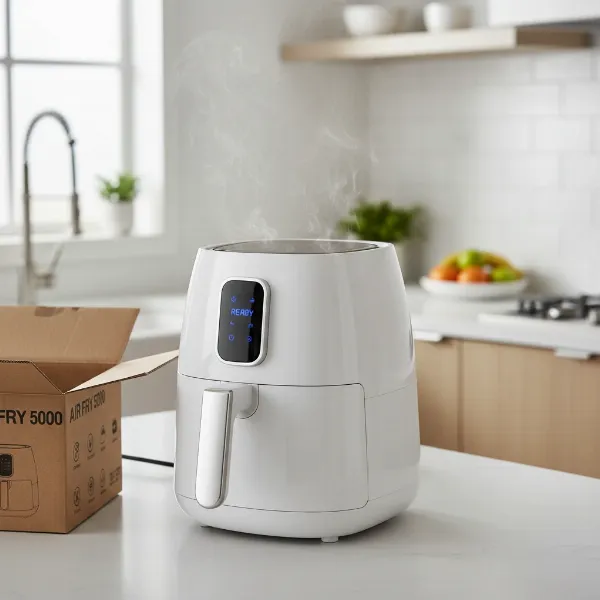 A brand new air fryer ready for its first use, illustrating initial manufacturing odors.
Hidden Culprits: Unseen Plastic, Food Debris, and Grease Buildup
Sometimes, the plastic smell isn’t just a “new appliance” issue but stems from other sources that require attention.
- Forgotten Packaging: It’s essential to thoroughly inspect your new air fryer for any remaining plastic wrapping, protective film, or small pieces of packaging that might be caught in the basket or around the heating element. These can melt and produce a strong, acrid smell.
- Food Debris: Even tiny specks of burnt food lodged in the crevices of the basket, around the heating element, or in hard-to-reach areas can create an unpleasant, plastic-like burning odor. These hidden crumbs can be difficult to spot but burn each time the air fryer is used.
- Grease Buildup: If you frequently cook greasy foods and don’t clean your air fryer meticulously, grease residue can accumulate over time. This old, baked-on grease can eventually produce a burnt plastic-like odor, even though nothing is actually melting. The chemical breakdown of old grease at high temperatures can mimic the scent of burning plastic.
When to Be Concerned
While a faint, temporary odor with a new air fryer is usually harmless, there are instances when a plastic smell warrants more serious concern.
- Persistent or Extremely Strong Odor: If the smell is overwhelming, distinctly chemical, or doesn’t dissipate after several uses and cleaning cycles, it could indicate an underlying problem.
- Visible Smoke or Melting: Any signs of smoke, visible melting plastic, or unusual sounds should prompt immediate disconnection of the appliance and discontinuation of use.
- Odor Imparting Taste to Food: If the plastic smell transfers to your food, making it unpalatable, it’s a clear sign that something is amiss.
In these concerning scenarios, it is highly advisable to contact the manufacturer or retailer for assistance.
Step-by-Step Guide to Eliminate Air Fryer Plastic Smell
Successfully removing the plastic smell involves a combination of initial preparation, deep cleaning, and natural odor neutralization techniques.
Initial Cleaning and Burn-Off
This crucial first step addresses the “new appliance” smell and prepares your air fryer for safe, odor-free cooking.
- Unpack and Inspect: Carefully remove all packaging materials from your new air fryer. Inspect every nook and cranny for any overlooked plastic wrapping or protective films, especially around the heating element.
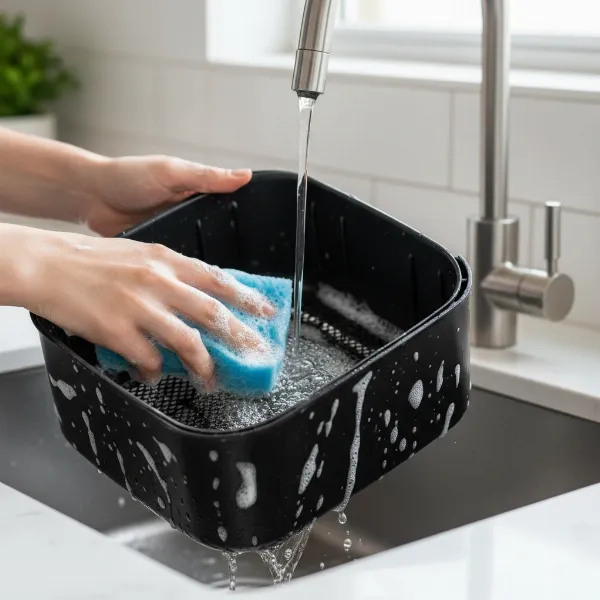
- Thorough Washing: Disassemble all removable parts, such as the basket and separator tray. Wash them thoroughly with warm water and a strong dishwashing soap that has good degreasing power. Use the soft side of a scrubbing pad to avoid scratching non-stick coatings. Rinse and dry all parts completely. This step removes manufacturing oils, dust, and any small plastic particles.
- Initial Burn-Off Cycle: Place the clean basket and tray back into the empty air fryer. Run the air fryer at its highest temperature setting, typically around 350-400°F (175-200°C), for 10-40 minutes. This process, often called “breaking in” or “burning off,” helps release residual fumes from the plastic components and protective coatings. Repeat this cycle 2-4 more times if the smell persists, allowing the unit to cool for 15 minutes between cycles.
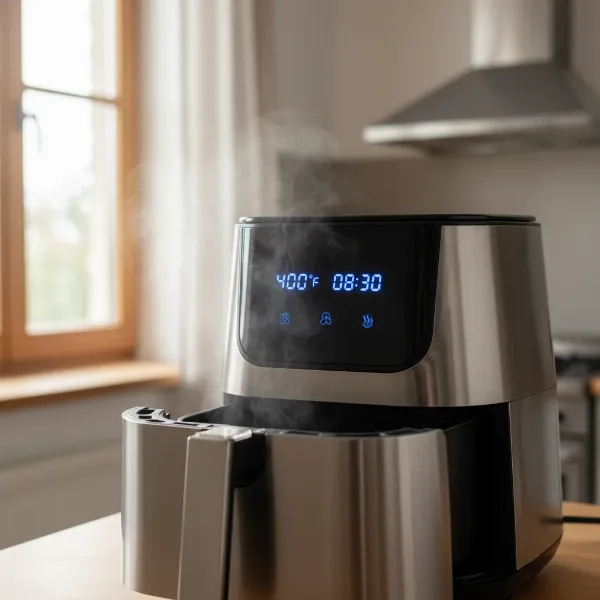 An air fryer operating at a high temperature for a burn-off cycle to eliminate plastic odors.
“Run your air fryer at 400°F for 10 minutes to burn off any residues. Keep the room well-ventilated during this first cycle to help disperse any lingering smells.” – Sarah Clary, Senior Product Manager at Hamilton Beach
Natural Odor Neutralizers: Vinegar, Lemon, and Baking Soda Solutions
Once the initial burn-off is complete, or if the smell returns, natural remedies can be highly effective.
- The Vinegar and Lime/Lemon Steam Bath:
- In a small, oven-safe dish (like a ramekin), combine equal parts distilled white vinegar and lime or lemon juice (1-2 tablespoons of each is usually sufficient).
- Place the dish in the air fryer basket.
- Set the air fryer to 350-400°F (175-200°C) and run it for 3-5 minutes.
- Allow the air fryer to cool with the dish inside for an additional 15 minutes. The steam generated will help neutralize any lingering odors.
- Afterward, wash the basket again with soap and wipe the inside of the appliance with a damp cloth.
- Baking Soda Paste:
- Baking soda is a powerful odor absorber. Create a thick paste by mixing baking soda with a small amount of water.
- Apply this paste to the inside of the air fryer basket and other removable parts, paying attention to areas where food debris or grease might accumulate.
- Let the paste sit for a few hours or overnight to absorb odors, then rinse thoroughly and dry. This method is particularly effective for stubborn smells or baked-on grease.
Routine Maintenance for a Fresh-Smelling Air Fryer
Preventative measures are key to keeping your air fryer odor-free in the long run.
- Clean After Every Use: Always clean your air fryer thoroughly after each cooking session. This includes washing the basket, separator tray, and any other removable parts with hot, soapy water. Many are dishwasher-safe.
- Wipe Down the Interior: Use a damp cloth to wipe down the inside of the air fryer, especially around the heating element, to remove any grease or food residue.
- Allow to Air Dry Completely: Ensure all parts are completely dry before reassembling and storing the air fryer. Avoid storing it with the basket and tray sealed inside to promote air circulation.
- Monthly Steam Bath: Incorporate the vinegar and lime/lemon steam bath into your monthly cleaning routine to keep odors at bay.
Advanced Troubleshooting and Prevention Tips
For persistent odors or to ensure your air fryer remains fresh-smelling, consider these additional tips.
Inspecting for Damaged Components
If the plastic smell persists despite thorough cleaning and burn-off cycles, or if it intensifies, a more detailed inspection is warranted.
- Check Heating Element: Carefully inspect the heating element for any signs of melted plastic, stuck food, or unusual discoloration. A soft toothbrush or bendy bottle brush can help reach awkward spaces.
- Manufacturer Contact: If you suspect internal damage, or if the smell is accompanied by smoke or visible melting, discontinue use immediately and contact the air fryer’s manufacturer. They can advise on potential defects or recall information.
Optimizing Ventilation
Proper ventilation is crucial, especially during the initial uses of a new air fryer or when performing burn-off cycles.
- Use in a Well-Ventilated Area: Operate your air fryer in a kitchen with an extractor fan running, or near an open window. If the initial smell is very strong, consider doing the burn-off cycles outdoors in a garage or on a covered patio, provided you have access to an electrical outlet.
- Don’t Overcrowd: Avoid overloading your air fryer, as this can impede airflow and potentially lead to uneven cooking and residue buildup, contributing to odors.
Choosing Quality: Impact of Materials on Long-Term Odor
While many air fryers use heat-resistant plastic, the quality of these materials can influence how quickly and effectively initial odors dissipate.
- Research Brands: Some users have noted that certain brands or models are less prone to persistent plastic smells. If you are in the market for a new air fryer, research reviews regarding initial odors.
- Stainless Steel Options: Some newer air fryer models are designed with more stainless steel components, which can reduce the reliance on plastics and potentially mitigate initial chemical smells.
Conclusion
A plastic smell from your air fryer can be an alarming experience, but in most cases, it’s a normal and manageable issue, especially with new appliances. By thoroughly cleaning your air fryer, performing initial burn-off cycles, and utilizing natural odor neutralizers like vinegar and lemon, you can effectively banish these unwelcome smells. Consistent cleaning after each use and ensuring proper ventilation are key to maintaining a fresh-smelling appliance. Should a strong, persistent, or concerning odor arise, don’t hesitate to consult the manufacturer. Embrace these tips to troubleshoot and enjoy the unparalleled convenience and delicious results your air fryer brings to your kitchen.
What steps will you take to ensure your air fryer always smells fresh?
Frequently Asked Questions
Is it safe to use an air fryer that smells like plastic?
A slight plastic smell during the first few uses of a new air fryer is generally considered normal and harmless. However, if the smell is extremely strong, chemical-like, or persistent after multiple cleaning and burn-off cycles, it could indicate a problem and warrants contacting the manufacturer for advice.
How do I get the burning plastic smell out of my food?
Unfortunately, if the plastic smell has infused into your cooked food, it’s generally best to discard the food. To prevent this, always ensure your air fryer no longer has any “factory fresh” or chemical smells before cooking food, by following the recommended initial burn-off and cleaning procedures.
How long does the plastic smell last in a new air fryer?
The initial plastic smell in a new air fryer typically dissipates after a few uses, especially if you perform the recommended burn-off cycles and thorough cleaning. For some, it may take a couple of weeks for the fumes to fully release and settle.
Can I use my air fryer outside to get rid of the smell?
While air fryers are designed for indoor use, performing the initial “burn-off” cycle in a well-ventilated outdoor area like a garage with an open door or a covered patio (with access to an electrical outlet) can help disperse strong plastic fumes more effectively without filling your home with the odor.
What causes a plastic smell after cleaning my air fryer?
If the plastic smell returns after cleaning, check for residual dish soap, which can burn and create an odor. Also, thoroughly inspect for any hidden food debris, especially around the heating element, or accumulated grease in hard-to-reach areas, as these can produce a burnt plastic-like smell when heated.