The delightful sizzle of food and the promise of crispy perfection are what we love about our air fryers. But what happens when that familiar hum of the fan goes silent, leaving your food unevenly cooked or the appliance completely unresponsive? It’s a frustrating scenario for any home cook, turning your go-to kitchen gadget into a puzzling problem. Don’t let a silent fan dim your culinary ambitions; often, a few simple troubleshooting steps can bring your air fryer back to life, ensuring perfectly circulated heat for every meal.
Understanding the Air Fryer Fan’s Crucial Role
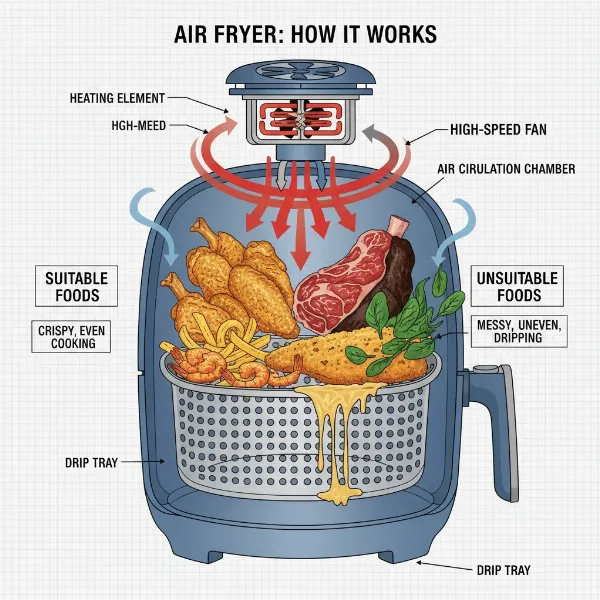
An air fryer functions on a surprisingly simple yet effective principle: it circulates superheated air rapidly around your food, mimicking the results of deep frying with minimal oil. At the heart of this process is the powerful fan, which is responsible for distributing the hot air evenly throughout the cooking chamber. This consistent airflow is what ensures your food cooks uniformly, developing that coveted crispy exterior and tender interior.
Without a functioning fan, the air fryer essentially becomes a small oven, heating food primarily from the top element. This leads to uneven cooking, with some parts potentially burnt while others remain raw or undercooked. Beyond performance issues, a non-spinning fan can also indicate deeper problems that might pose safety risks, such as overheating. Understanding its importance highlights why a silent fan warrants immediate investigation.
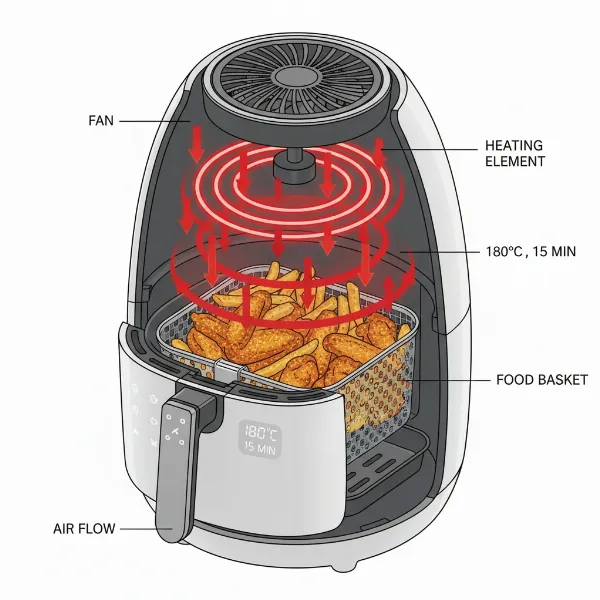 Illustration of an air fryer's internal fan circulating hot air around food
Common Causes of an Air Fryer Fan Malfunction
When your air fryer fan stops working, it can stem from several common issues, ranging from simple fixes to more complex internal problems. Identifying the root cause is the first step toward a solution.
Power Supply Issues
|
Our Picks for the Best Air fryer in 2026
As an Amazon Associate I earn from qualifying purchases.
|
||
| Num | Product | Action |
|---|---|---|
| 1 | Ninja Crispi Pro 6-in-1 Glass Air Fryer - 450°F, Nontoxic, 6qt & 2.5qt Containers & Lids - Microwave, Freezer, Dishwasher Safe - Max Crisp, Air Fry, Bake, Roast, Recrisp, Dehydrate -Cyberspace AS101CY |

|
| 2 | Cosori 9-in-1 TurboBlaze Air Fryer 6 Qt, Premium Ceramic Coating, 90°–450°F, Precise Heating for Even Results, Air Fry, Roast, Bake, Broil, Dry, Frozen, Proof, Reheat, Keep Warm, 120V, Dark Gray |
|
| 3 | Ninja Air Fryer, 8 QT DoubleStack 2-Basket, Space Saving Design, Cooks 2lb Chicken Wings, Feeds up to 6 People, 6-in1 Air Fryer, Roast, Bake & More, Easy to Clean, Dishwasher Safe Parts, Black, SL201 |
|
| 4 | Ninja - Air Fryer - 4-in-1 Pro Air Fry, Roast, Reheat, Dehydrate - 5QT Capacity fits up to 4lbs of French Fries - 400F Max Temp - Nonstick Basket & Crisper Plate - 120V - Grey - AF141 |
|
| 5 | Chefman Air Fryer – 6 QT Compact Airfryer for Quick & Easy Meals in Minutes, Features Hi-Fry Technology for Extra Crisp, Touchscreen Controls with 4 Presets, Nonstick & Dishwasher Safe Basket - Black |
|
| 6 | Cuisinart Air Fryer Toaster Oven, 1800W, 8-in-1 with Air Fry, Convection, Broil & Warm, 0.6 Cubic Feet, 60-Minute Timer, TOA-70NAS, Stainless Steel |
|
| 7 | Ninja - XL Single Basket Air Fryer - 5.5 QT Capacity fits 3lbs of Wings - 5-in-1Air Fry, Roast, Bake,Reheat & Dehydrate -Dishwasher Safe Parts & Recipe Guide - Grey -AF150AMZ |
|
| 8 | bella 4Qt Slim Air Fryer, Fits-anywhere™ Kitchenware, EverGood™ Ceramic Nonstick Coating, Adjustable Temperature, 6 Preset Cooking Options, 60 Min Auto Shutoff w Audible Tone, 3.3lb Capacity, Oatmilk |
|
| 9 | Ninja - Air Fryer - 4 QT Capacity - 4-in1 Roast, Crisp, Roast, Reheats, & Dehydrates - Dishwasher Safe Parts - Includes 20 Easy & Healthy Recipes - Compact - Grey - AF101 |
|
| 10 | Chefman TurboX 4-in-1 Air Fryer, 5-Quart Airfryer for Extra Crispy Chicken, Fries, Wings, and More, Air Fry, Bake, Reheat, and Frozen Functions, Digital Touch Controls, Dishwasher Safe |
|
Often, the simplest explanation is the correct one. A loose plug, a tripped circuit breaker, or a faulty electrical outlet can prevent your air fryer from receiving the necessary power to operate its fan. Damaged power cords with frayed wires or kinks can also interrupt the electrical flow.
Debris and Grease Buildup
Over time, food particles, grease, and other cooking residues can accumulate around the fan blades and within the air fryer’s internal components. This buildup can physically obstruct the fan, preventing it from spinning freely. A sticky, greasy residue can also weigh down the blades or interfere with the motor’s smooth operation.
Overheating Protection
Most modern air fryers are equipped with safety features, including an automatic shut-off mechanism that activates if the appliance begins to overheat. If the fan isn’t working, heat can build up excessively, triggering this protective measure to prevent damage to the unit or potential hazards. Once triggered, the air fryer may not resume operation until it has cooled down sufficiently.
Motor Issues
The fan motor is a critical component, and like any mechanical part, it can wear out over time. A burnt-out motor, damaged bearings, or internal electrical faults within the motor itself can cause the fan to cease functioning. Sometimes, you might hear grinding noises or a low hum if the motor is struggling but unable to turn the blades.
Control Board or Sensor Problems
The air fryer’s internal thermostat and control board regulate the appliance’s functions, including the fan’s operation. If these electronic components become faulty, they may fail to send the correct signals to the fan motor, leading to its inactivity. This can be one of the more complex issues to diagnose without professional expertise.
Overloading the Basket
While not a direct cause of fan failure, consistently overloading the air fryer basket can put undue strain on its internal components, including the fan motor. Excessive food can block airflow, leading to overheating, which in turn triggers the safety shut-off and can contribute to premature wear and tear on the motor.
Step-by-Step Troubleshooting Your Air Fryer Fan
Before you consider calling a technician or replacing your appliance, a systematic approach to troubleshooting can often resolve the issue. Always prioritize safety when inspecting any electrical appliance.
Step 1: Prioritize Safety – Unplug the Unit
The very first and most crucial step is to unplug your air fryer from the power outlet. This eliminates any electrical hazards and allows you to safely inspect the appliance.
Step 2: Check the Power Connection
- Inspect the plug and outlet: Ensure the power plug is fully inserted into a functioning wall outlet. Test the outlet with another appliance to confirm it’s supplying power.
- Examine the power cord: Look for any visible damage, such as cuts, frayed wires, or kinks. A damaged cord should be replaced by a qualified professional.
- Reset the circuit breaker: If other appliances on the same circuit are also not working, check your home’s circuit breaker box and reset any tripped breakers.
Step 3: Clean the Fan and Vents
- Access the fan area: Depending on your model, you might need to remove the basket and possibly the bottom plate to access the fan blades. Consult your user manual for specific instructions.
- Remove obstructions: Use a soft brush, a dry cloth, or even a vacuum cleaner with a brush attachment to gently remove any accumulated food particles, grease, or debris from the fan blades and the surrounding housing.
- Clean air vents: Ensure that the air intake and exhaust vents on the air fryer’s exterior are clear of dust and blockages, as restricted airflow can lead to overheating.
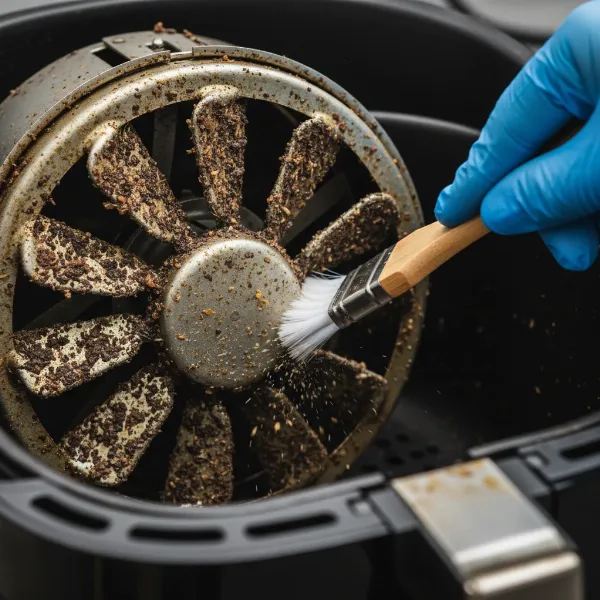 A hand using a brush to clean accumulated grease and debris from an air fryer's fan blades
If your air fryer stopped working mid-cycle, it might have activated its overheating protection. Unplug the unit and allow it to cool down completely for at least 30 minutes to an hour. Once cooled, plug it back in and try operating it again.
For many electronic appliances, a hard reset can clear temporary glitches. Unplug your air fryer for a full 10-15 minutes, then plug it back in and attempt to turn it on. This can sometimes reset the internal electronics and resolve minor software or sensor issues.
Your air fryer’s user manual is an invaluable resource. It often contains specific troubleshooting tips unique to your model, along with diagrams for disassembly (if safe to do so) and contact information for customer support.
With the unit unplugged, carefully inspect the fan blades for any visible damage, such as bends or breaks. If the blades are deformed, they may be hitting the housing, preventing rotation. Inspect the internal motor area (if safely accessible per your manual) for any signs of burning or loose wires.
When to Call a Professional or Consider Replacement
While many air fryer fan issues can be resolved with basic troubleshooting, there are times when professional intervention or a new appliance is the best course of action.
If you’ve exhausted all troubleshooting steps and the fan still refuses to work, it’s likely a more complex internal issue. This could involve a faulty motor, a malfunctioning control board, or intricate electrical wiring problems that are best left to experienced technicians. Attempting to repair these components without proper knowledge and tools can be dangerous and may void your warranty.
Consider the age of your air fryer and its warranty status. If it’s still under warranty, contact the manufacturer or retailer for repair or replacement options. For older units, weigh the cost of professional repair against the price of a new air fryer. Sometimes, especially with severe motor or electronic board failures, a new appliance might be more cost-effective in the long run. Safety should always be your top priority; if you suspect a significant electrical fault, do not use the air fryer.
Tips for Maintaining Your Air Fryer Fan
Proactive maintenance is key to extending the life of your air fryer and preventing future fan issues. A little care goes a long way in ensuring your appliance continues to perform optimally.
- Regular Cleaning: Make a habit of cleaning your air fryer after every few uses, or more frequently if you cook greasy foods. Pay special attention to the basket, tray, and the visible fan area to prevent grease and food particle buildup. Use warm soapy water and a soft cloth, ensuring the unit is unplugged and completely dry before its next use.
- Avoid Overloading: Always adhere to the manufacturer’s recommended capacity for your air fryer. Overfilling the basket restricts airflow, forces the fan to work harder, and can lead to uneven cooking and premature wear on components.
- Ensure Proper Ventilation: Air fryers require adequate space around them for proper air circulation and heat dissipation. Do not place your air fryer in an enclosed space or directly against a wall when in use. Clear the air intake and exhaust vents regularly.
- Gentle Handling: While air fryers are built for daily use, treat them with care. Avoid banging the basket or dropping the unit, as this can damage internal components, including the delicate fan assembly.
- Follow Manufacturer’s Guidelines: Refer to your air fryer’s manual for specific cleaning instructions, maintenance tips, and usage recommendations to ensure longevity and safe operation.
Conclusion
A non-functioning air fryer fan can be a major inconvenience, but it doesn’t always spell the end for your beloved kitchen appliance. By systematically checking the power supply, thoroughly cleaning the unit, allowing for proper cooling, and performing a simple reset, you can often diagnose and resolve the issue yourself. Remember, prioritizing safety by unplugging the unit before any inspection is paramount. While many problems have straightforward solutions, knowing when to seek professional help or consider a replacement is equally important for your safety and investment. With proper maintenance and a little troubleshooting know-how, you can keep your air fryer fan spinning and continue enjoying those perfectly crispy, guilt-free meals for years to come.
What steps will you take to ensure your air fryer fan keeps circulating perfection in your kitchen?