Air fryers have revolutionized kitchens worldwide, offering a quick, convenient, and often healthier way to enjoy crispy favorites with minimal oil. From golden fries to succulent chicken, these versatile appliances have earned their place on countless countertops. Yet, like any powerful kitchen appliance, an air fryer demands respect and proper handling. Unlocking its full potential while ensuring the safety of your home and family hinges on understanding and implementing essential safety practices. Ignoring these precautions doesn’t just risk imperfect meals; it can lead to potential hazards like electrical issues, burns, or even fires. This comprehensive guide will equip you with all the vital safety tips, transforming you into a confident and responsible air fryer user.
Understanding Air Fryer Safety Basics
At its core, an air fryer works by rapidly circulating superheated air around your food, mimicking the effects of deep-frying with significantly less oil. This high-heat, fan-driven operation is what makes it so effective, but it also underscores the importance of safety. The powerful heating elements and internal fans can generate intense temperatures, making proper usage crucial to prevent accidents. Prioritizing safety means recognizing the potential for overheating, electrical issues, and even fire hazards, ensuring your cooking experience remains enjoyable and worry-free.
A fundamental step to safe air fryer use is always to thoroughly read your appliance’s owner’s manual. Each model can have unique specifications, ventilation requirements, and cleaning instructions. The manufacturer’s guide is your primary resource for understanding how your specific air fryer operates safely and efficiently.
Essential Air Fryer Placement and Ventilation
The location and surrounding environment of your air fryer play a critical role in its safe operation. Proper placement isn’t just about convenience; it’s about preventing overheating and potential fire risks.
Choosing the Right Surface
|
Our Picks for the Best Air fryer in 2026
As an Amazon Associate I earn from qualifying purchases.
|
||
| Num | Product | Action |
|---|---|---|
| 1 | Ninja - Air Fryer - 4-in-1 Pro Air Fry, Roast, Reheat, Dehydrate - 5QT Capacity fits up to 4lbs of French Fries - 400F Max Temp - Nonstick Basket & Crisper Plate - 120V - Grey - AF141 |

|
| 2 | Ninja Crispi Pro 6-in-1 Glass Air Fryer - 450°F, Nontoxic, 6qt & 2.5qt Containers & Lids - Microwave, Freezer, Dishwasher Safe - Max Crisp, Air Fry, Bake, Roast, Recrisp, Dehydrate -Cyberspace AS101CY |
|
| 3 | Ninja Air Fryer, 8 QT DoubleStack 2-Basket, Space Saving Design, Cooks 2lb Chicken Wings, Feeds up to 6 People, 6-in1 Air Fryer, Roast, Bake & More, Easy to Clean, Dishwasher Safe Parts, Black, SL201 |
|
| 4 | Ninja - Air Fryer - 4 QT Capacity - 4-in1 Roast, Crisp, Roast, Reheats, & Dehydrates - Dishwasher Safe Parts - Includes 20 Easy & Healthy Recipes - Compact - Grey - AF101 |
|
| 5 | Cuisinart Air Fryer Toaster Oven, 1800W, 8-in-1 with Air Fry, Convection, Broil & Warm, 0.6 Cubic Feet, 60-Minute Timer, TOA-70NAS, Stainless Steel |
|
| 6 | Chefman TurboX 4-in-1 Air Fryer, 5-Quart Airfryer for Extra Crispy Chicken, Fries, Wings, and More, Air Fry, Bake, Reheat, and Frozen Functions, Digital Touch Controls, Dishwasher Safe |
|
| 7 | bella 4Qt Slim Air Fryer, Fits-anywhere™ Kitchenware, EverGood™ Ceramic Nonstick Coating, Adjustable Temperature, 6 Preset Cooking Options, 60 Min Auto Shutoff w Audible Tone, 3.3lb Capacity, Oatmilk |
|
| 8 | Ninja - XL Single Basket Air Fryer - 5.5 QT Capacity fits 3lbs of Wings - 5-in-1Air Fry, Roast, Bake,Reheat & Dehydrate -Dishwasher Safe Parts & Recipe Guide - Grey -AF150AMZ |
|
| 9 | Chefman Air Fryer – 6 QT Compact Airfryer for Quick & Easy Meals in Minutes, Features Hi-Fry Technology for Extra Crisp, Touchscreen Controls with 4 Presets, Nonstick & Dishwasher Safe Basket - Black |
|
| 10 | Cosori 9-in-1 TurboBlaze Air Fryer 6 Qt, Premium Ceramic Coating, 90°–450°F, Precise Heating for Even Results, Air Fry, Roast, Bake, Broil, Dry, Frozen, Proof, Reheat, Keep Warm, 120V, Dark Gray |
|
Always place your air fryer on a flat, stable, and heat-resistant surface. Kitchen countertops made of stone, tile, or solid wood are generally suitable. Avoid placing it on unstable surfaces that could cause it to wobble or tip, as well as on flammable materials like tea towels, tablecloths, or directly on wooden shelves. The heat generated by the appliance can damage these surfaces or, worse, ignite them.
Ensuring Ample Clearance
Adequate airflow is crucial for an air fryer to dissipate heat effectively and prevent overheating. Maintain at least 5 to 6 inches (12 to 15 cm) of clearance on all sides of the appliance, including the back, to allow for proper ventilation. Never position your air fryer directly against a wall or under low-hanging cabinets, as this can block the exhaust vents and trap hot air, leading to performance issues and fire hazards. If steam regularly comes into contact with the underside of cabinets, it can cause damage over time.
Keeping Vents Unobstructed
The top and sides of your air fryer typically house ventilation components designed to release hot air and steam. It’s imperative to keep these vents clear during operation. Avoid placing any items, such as paper towels, cookbooks, or plastic bags, on top of or next to your air fryer. Blocked vents force the appliance to work harder, increasing the risk of overheating and potentially damaging the unit or creating a fire hazard.
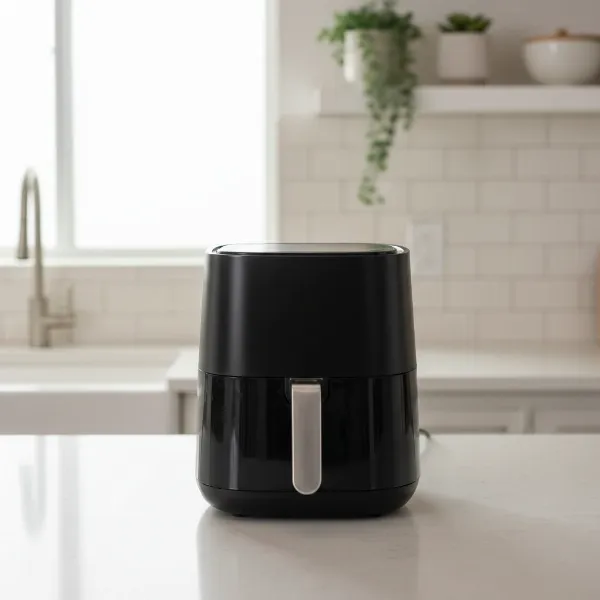 Air fryer on a kitchen countertop with proper clearance for safe ventilation and heat dissipation.
Safe Electrical Practices for Your Air Fryer
Electrical safety is paramount when using any high-wattage kitchen appliance, and air fryers are no exception. Following best practices can prevent electrical overloads and potential fires.
Direct Plugging is Best
Always plug your air fryer directly into a wall socket. Avoid using extension cords, especially flimsy or unrated ones, as they can overheat and pose a significant fire risk. If an extension cord is absolutely necessary, ensure it is heavy-duty, properly rated for the appliance’s wattage, and fully uncoiled to prevent overheating. It’s also wise to avoid sharing an outlet with other high-power appliances to prevent circuit overloads. A loose adapter can also heat up and increase fire risks.
Inspecting Cords and Plugs
Before each use, take a moment to inspect the power cord and plug for any signs of damage, such as fraying, cuts, or bent prongs. Never use an air fryer with a damaged cord or plug. Faulty wiring can lead to electrical shorts, shocks, or fires. If you notice any damage, discontinue use immediately and have the appliance serviced by a qualified professional.
Unplugging When Not in Use
Make it a habit to unplug your air fryer when it’s not in use. This simple step prevents accidental activation, especially for models with “soft-touch” switches that can sometimes perish over time and switch on unknowingly. Unplugging also helps extend the life of your appliance and eliminates the risk of electrical overheating when idle. Allow the unit to cool completely before unplugging and storing it.
Proper Usage and Common Mistakes to Avoid
Even experienced cooks can sometimes overlook critical safety points. Being mindful of these common pitfalls ensures safe and optimal air fryer performance.
Avoiding Overfilling the Basket
One of the most frequent mistakes is overcrowding the air fryer basket. While tempting to cook a large batch at once, overfilling restricts hot air circulation, leading to unevenly cooked food and potentially overworking the appliance. More critically, if food touches the heating element, it can cause smoking or even a fire. Cook in smaller batches if necessary, allowing ample space around each food item for proper crisping and safe operation.
Mindful Oil Usage
Air fryers are designed to use minimal oil, and how you apply it matters. Traditional cooking oils can smoke or splatter at high temperatures if used excessively. Instead of pouring oil directly into the basket, lightly brush oil onto your food or use a high-heat oil spray. Avoid aerosol cooking sprays, as their propellants can damage the non-stick coating over time and create a sticky residue that is difficult to clean, potentially impacting the unit’s longevity and safety.
What NOT to Cook
While incredibly versatile, air fryers aren’t suitable for every type of food. Be aware of items that pose safety risks:
- Wet Batters and Saucy Dishes: Foods with very wet batters or a lot of sauce can drip through the basket, create a mess, fail to crisp properly, and even smoke or splatter, potentially hitting the heating element.
- Lightweight Items: Lightweight foods like plain bread slices or loose dried herbs can get sucked up into the heating element by the powerful fan, posing a serious fire hazard.
- Excessive Oil: Using too much oil, particularly oils with low smoke points, can lead to excessive smoke, splattering, and potential fire.
Using the Right Accessories
Always use accessories specifically designed for your air fryer model or those confirmed to be air fryer safe. Universal or improvised accessories may not fit properly, restricting airflow, touching heating elements, or even damaging the appliance. Ensure any liners or inserts are perforated to allow for optimal air circulation. Silicone-tipped tongs and wooden spatulas are recommended for handling food to prevent scratches on non-stick surfaces.
Never Leave Unattended
Despite often being marketed as “set and forget,” it’s crucial to never leave your air fryer unattended while in use, especially when trying new recipes or cooking at higher temperatures. Air fryers cook quickly, and food can easily burn if not monitored. Stay nearby, check your food regularly, and be ready to respond quickly to any issues like excessive smoke or unusual smells, which could indicate a fault or hazard.
Protecting Against Burns
The internal and external components of an air fryer get extremely hot during operation. Always use oven mitts or heat-safe grips when handling the hot basket, tray, or any other hot surfaces. When removing the basket, place it on a trivet or a heat-safe mat to protect your countertop from heat damage. Keep children and pets at a safe distance from the operating air fryer.
Maintaining Your Air Fryer for Long-Term Safety
Regular cleaning and proper maintenance are not just about hygiene; they are fundamental for ensuring your air fryer’s safe operation and extending its lifespan.
Importance of Regular Cleaning
Grease and food particle buildup inside the air fryer can ignite during subsequent uses, creating smoke or even a fire hazard. Cleaning your air fryer after every use prevents this accumulation. Neglecting to clean can also affect the taste of your food and the appliance’s performance over time.
Step-by-Step Cleaning Guide
- Cool Down: Always allow your air fryer to cool down completely (at least 30 minutes) before attempting to clean it. Unplug the appliance once cooled.
- Remove Parts: Take out the basket, pan, and any racks or trays.
- Wash Removable Parts: Wash these components with warm, soapy water and a non-abrasive sponge. Many baskets and trays are dishwasher-safe, but always check your manual. Avoid harsh cleaning agents, abrasive cleansers, or metal scouring pads, as these can damage non-stick coatings.
- Clean Interior: For the main unit, use a damp microfiber cloth to wipe down the inside, removing any grease or food splatter. For tougher grime, a paste of baking soda and a few drops of dish soap can be gently applied with a soft brush, then wiped clean.
- Steam Cleaning Trick: For hard-to-reach areas or stubborn baked-on gunk, some users find success with a steam cleaning method. Fill the basket with about 1-2 inches of water, add a few drops of dish soap and a lemon wedge, then run the air fryer at 350°F (175°C) for 10-15 minutes. This helps loosen grime, which can then be easily wiped away once cooled.
- Exterior Wipe Down: Wipe the exterior with a damp cloth to keep it sparkling.
- Dry Thoroughly: Ensure all parts are completely dry before reassembling or storing to prevent electrical hazards and mold growth.
Proper Storage
Once clean and dry, store your air fryer in a dry place away from moisture, direct sunlight, or extreme temperatures. If it remains on your countertop, ensure it is away from the stove, sink, or other heat and water sources. Proper storage protects the appliance from damage and keeps it ready for safe use.
Choosing a Safe Air Fryer: A Buying Guide
Investing in a new air fryer involves more than just selecting size and features; prioritizing safety in your purchase decision is crucial.
Looking for Safety Certifications
When buying an air fryer, always look for reputable safety certifications such as UL, ETL, or CSA. These certifications indicate that the appliance has been independently tested and meets established safety standards for electrical components, construction, and performance. Choosing a certified product provides an extra layer of assurance regarding its quality and safety.
Features that Enhance Safety
Modern air fryers often come with features designed to enhance user safety:
| Safety Feature | Benefit for Air Fryer Safety |
|---|---|
| Auto Shut-Off | Automatically turns off the appliance if it overheats or if the basket is removed mid-cycle, reducing fire risk. |
| Cool-Touch Exterior | Keeps the outer surface of the air fryer cool to the touch, preventing accidental burns. |
| Non-Slip Feet | Ensures the air fryer remains stable on your countertop, preventing accidental tipping or movement during use. |
| Overload Protection | Guards against electrical surges and helps prevent damage to the appliance and your home’s electrical system. |
| Dishwasher-Safe Parts | Simplifies cleaning, making it easier to maintain hygiene and prevent dangerous grease buildup. |
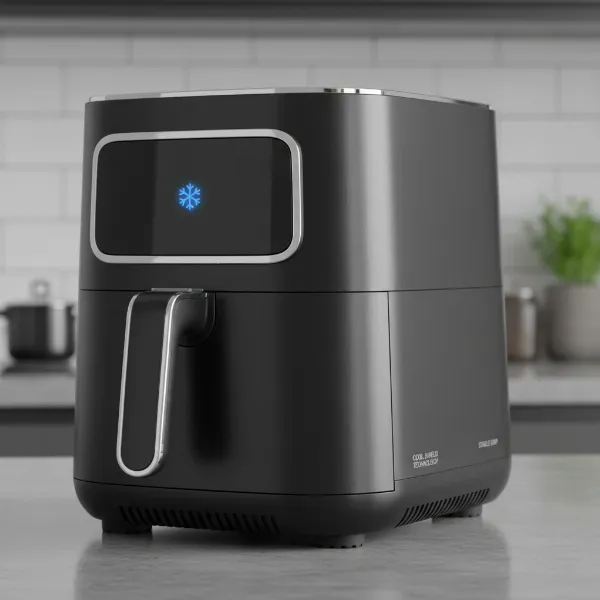 Modern air fryer showcasing safety features like a cool-touch exterior and non-slip feet on a kitchen counter.
Reputable Brands vs. Unknowns
While budget-friendly options can be appealing, investing in an air fryer from a reputable brand often means better quality control, more robust safety features, and reliable customer support. Lesser-known or cheaply made air fryers might use substandard materials, have faulty wiring, or lack essential safety mechanisms, leading to increased risks of melting, electrical issues, or fires. Prioritize trusted manufacturers known for producing durable and safe kitchen appliances.
“Safety in the kitchen starts with knowledge and extends to vigilance. An air fryer is a fantastic tool, but it’s not a set-it-and-forget-it device when it comes to fire prevention and proper handling.” – Admin, airfryerhouse.com, Air Fryer Technician
Conclusion
The air fryer has undoubtedly transformed home cooking, making healthy, crispy meals more accessible than ever. However, the convenience and efficiency of this appliance should always be balanced with a diligent approach to safety. By understanding the fundamentals of air fryer operation, adhering to proper placement and electrical guidelines, avoiding common usage mistakes, and committing to regular cleaning, you can dramatically reduce potential risks. Always choose certified products with essential safety features, and never underestimate the power of your owner’s manual. With these safety tips in mind, you’re not just cooking smarter; you’re cooking safer, ensuring many years of delicious, worry-free air-fried meals for you and your loved ones. What new, safe air fryer creation will you whip up first?
Frequently Asked Questions
Can I use aluminum foil or parchment paper in my air fryer?
Yes, you can use aluminum foil or parchment paper, but only in moderation and correctly. Ensure they don’t block airflow, touch heating elements, or cover the entire basket. Always place food on top of the foil or paper to weigh it down, preventing it from flying into the heating element and causing a fire hazard.
Why is my air fryer smoking during use?
Smoking can be caused by various factors, including excessive oil dripping onto the heating element, food particles burned from previous cooking sessions, or cooking foods with high fat content. To prevent this, use minimal oil, clean your air fryer regularly, and trim excess fat from meats before cooking. If smoking persists, unplug the unit and allow it to cool before inspecting it.
Is it safe to leave my air fryer plugged in all the time?
It is not recommended to leave your air fryer plugged in when not in use. Unplugging it helps prevent accidental activation, reduces the risk of electrical overheating, and can extend the appliance’s lifespan. This simple habit adds an extra layer of electrical safety to your home.
Can I put water in the air fryer basket for cleaning?
Yes, some cleaning methods involve adding water with soap or lemon to the basket and running the air fryer for a short period to loosen grime. However, never immerse the entire air fryer unit in water, as this can damage electrical components. Always follow specific steam cleaning instructions or manufacturer guidelines.
What should I do if my air fryer catches fire?
In the unfortunate event of an air fryer fire, never use water to extinguish an electrical fire. Immediately unplug the appliance if safe to do so, use a fire blanket or a fire extinguisher rated for electrical fires (Class C or E), and call the fire brigade if necessary. Your safety is the top priority.