Have you ever found yourself standing in the kitchen appliance aisle, pondering the difference between an air fryer and a convection oven? Both promise healthier, crispier results by circulating hot air, yet they aren’t interchangeable. As a seasoned technician with over a decade of experience in the air fryer domain, I’ve had the opportunity to thoroughly test, evaluate, and repair countless models. This article will cut through the confusion, clearly defining each appliance, detailing their working principles, and highlighting the critical distinctions that empower you to make an informed choice for your culinary needs.
Understanding Air Fryers and Convection Ovens
While both appliances leverage the power of circulating hot air, their design and intended function create unique cooking experiences. The core principle for both is convection, where heat is distributed evenly by a fan. This method ensures faster and more consistent cooking compared to a traditional oven, which relies primarily on radiant heat.
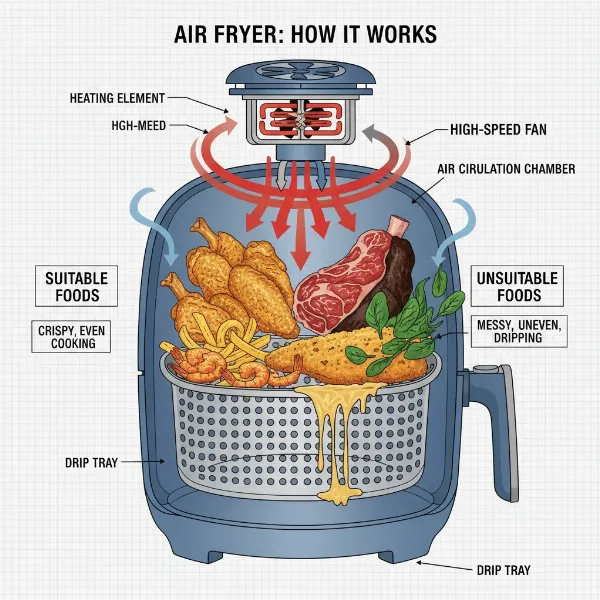
An air fryer is essentially a compact, high-powered convection oven specifically engineered to mimic the results of deep-frying without the excessive oil. Its history is relatively recent, gaining widespread popularity in the last decade as a healthier alternative to traditional frying. These countertop units typically feature a heating element at the top and a powerful fan that rapidly circulates superheated air around a small cooking basket. This intense airflow creates a crispy exterior on foods like fries, chicken wings, and vegetables with minimal oil.
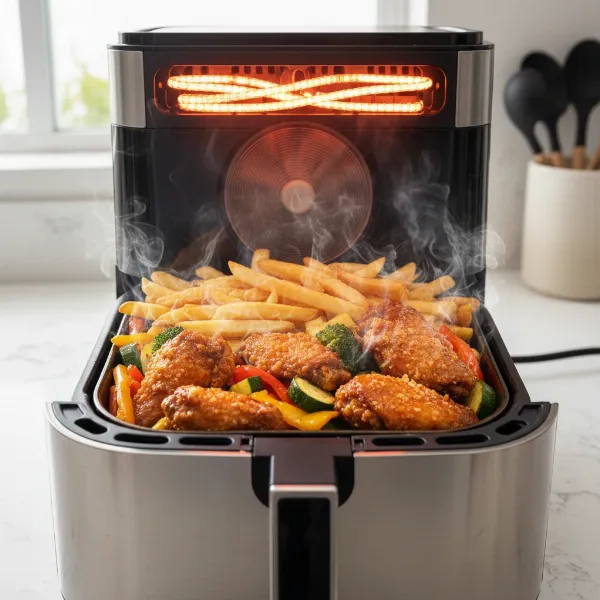 Close-up of food cooking inside an air fryer, achieving crispy texture with minimal oil.
A convection oven, on the other hand, is a larger appliance, often a full-sized wall oven or range oven, that includes a fan to circulate hot air throughout the oven cavity. While it also uses convection, it’s designed for a broader range of cooking tasks, from baking and roasting to broiling and dehydrating. The concept of convection in ovens has been around much longer, evolving to provide more even cooking and faster times than conventional ovens. The fan in a convection oven typically operates at a lower speed than an air fryer’s fan, creating a gentler, more uniform heat distribution suitable for delicate baking or roasting larger items.
Core Differences: Air Fryer vs. Convection Oven
Understanding the nuanced differences between these two popular kitchen appliances is crucial for maximizing their potential and choosing the right one for your culinary style.
Heating Mechanism and Airflow
|
Our Picks for the Best Air fryer in 2026
As an Amazon Associate I earn from qualifying purchases.
|
||
| Num | Product | Action |
|---|---|---|
| 1 | Cosori 9-in-1 TurboBlaze Air Fryer 6 Qt, Premium Ceramic Coating, 90°–450°F, Precise Heating for Even Results, Air Fry, Roast, Bake, Broil, Dry, Frozen, Proof, Reheat, Keep Warm, 120V, Dark Gray |

|
| 2 | Chefman Air Fryer – 6 QT Compact Airfryer for Quick & Easy Meals in Minutes, Features Hi-Fry Technology for Extra Crisp, Touchscreen Controls with 4 Presets, Nonstick & Dishwasher Safe Basket - Black |
|
| 3 | Cuisinart Air Fryer Toaster Oven, 1800W, 8-in-1 with Air Fry, Convection, Broil & Warm, 0.6 Cubic Feet, 60-Minute Timer, TOA-70NAS, Stainless Steel |
|
| 4 | Ninja - Air Fryer - 4 QT Capacity - 4-in1 Roast, Crisp, Roast, Reheats, & Dehydrates - Dishwasher Safe Parts - Includes 20 Easy & Healthy Recipes - Compact - Grey - AF101 |
|
| 5 | Ninja Air Fryer, 8 QT DoubleStack 2-Basket, Space Saving Design, Cooks 2lb Chicken Wings, Feeds up to 6 People, 6-in1 Air Fryer, Roast, Bake & More, Easy to Clean, Dishwasher Safe Parts, Black, SL201 |
|
| 6 | Ninja Crispi Pro 6-in-1 Glass Air Fryer - 450°F, Nontoxic, 6qt & 2.5qt Containers & Lids - Microwave, Freezer, Dishwasher Safe - Max Crisp, Air Fry, Bake, Roast, Recrisp, Dehydrate -Cyberspace AS101CY |
|
| 7 | Ninja - Air Fryer - 4-in-1 Pro Air Fry, Roast, Reheat, Dehydrate - 5QT Capacity fits up to 4lbs of French Fries - 400F Max Temp - Nonstick Basket & Crisper Plate - 120V - Grey - AF141 |
|
| 8 | Chefman TurboX 4-in-1 Air Fryer, 5-Quart Airfryer for Extra Crispy Chicken, Fries, Wings, and More, Air Fry, Bake, Reheat, and Frozen Functions, Digital Touch Controls, Dishwasher Safe |
|
| 9 | bella 4Qt Slim Air Fryer, Fits-anywhere™ Kitchenware, EverGood™ Ceramic Nonstick Coating, Adjustable Temperature, 6 Preset Cooking Options, 60 Min Auto Shutoff w Audible Tone, 3.3lb Capacity, Oatmilk |
|
| 10 | Ninja - XL Single Basket Air Fryer - 5.5 QT Capacity fits 3lbs of Wings - 5-in-1Air Fry, Roast, Bake,Reheat & Dehydrate -Dishwasher Safe Parts & Recipe Guide - Grey -AF150AMZ |
|
The fundamental difference lies in how they move and apply hot air. An air fryer uses a powerful, high-speed fan and a concentrated heating element to rapidly circulate intensely hot air in a small chamber. This creates a highly aggressive convection current that quickly crisps the food’s exterior, simulating the effect of deep-frying. Think of it as a focused blast of superheated air.
Conversely, a convection oven employs a fan to circulate hot air throughout a larger oven cavity, typically at a lower speed. The goal here is even heat distribution for consistent cooking and browning across a wider array of dishes, rather than rapid crisping. While some modern ovens boast “true convection” with an additional heating element around the fan, the airflow remains more gentle and encompassing than an air fryer’s direct assault.
Size, Capacity, and Design
Air fryers are renowned for their compact, countertop design, making them ideal for smaller kitchens or for preparing individual servings and small batches. Their basket-style or oven-style designs often prioritize quick, easy access and clean-up.
Convection ovens, however, are typically integrated into full-sized ranges or wall ovens, offering significantly larger capacities. This allows for multi-rack cooking, accommodating larger roasts, multiple baking sheets, or an entire family meal. Their design is built for versatility in volume and cooking methods.
Cooking Speed and Efficiency
Due to their smaller cooking chamber and highly concentrated airflow, air fryers preheat much faster and generally cook food more quickly than convection ovens. The intense heat transfer means your fried favorites can be ready in a fraction of the time compared to a traditional oven or even a convection oven. This speed makes them incredibly efficient for weeknight meals or quick snacks.
Convection ovens also cook faster than conventional ovens because of the circulating hot air, reducing overall cooking times by about 25% compared to non-convection settings. However, their larger volume means they still take longer to preheat and reach target temperatures than a compact air fryer.
Versatility and Culinary Scope
Convection ovens are the more versatile appliance, capable of handling a vast spectrum of cooking tasks beyond just crisping. They excel at baking cakes, roasting large cuts of meat, dehydrating fruits, and even broiling. Their multiple rack positions and larger space make them suitable for complex meals and various cooking techniques.
Air fryers, while increasingly versatile with various accessories, are primarily designed for achieving crispy, “fried-like” textures. They shine with dishes like frozen snacks, vegetables, and smaller portions of meat. While you can bake and roast in many air fryers, their smaller size and aggressive airflow may not always be ideal for delicate pastries or large roasts.
Ideal Applications and Results
An air fryer is your go-to for achieving that desirable golden-brown crispness without submerging food in oil. Think perfectly crispy french fries, crunchy chicken nuggets, or beautifully roasted Brussels sprouts. If you love fried foods but want a healthier alternative, the air fryer delivers.
“For achieving that perfect crisp, an air fryer uses intensely directed heat and powerful airflow to mimic deep frying. It’s truly unmatched for quick, crunchy results with less oil.” – Chef Amry, Designer Appliances
Convection ovens are best suited for situations requiring even cooking, such as baking multiple trays of cookies, roasting a whole chicken to perfection, or cooking a casserole uniformly. They create a consistent cooking environment that promotes even browning and thorough cooking throughout larger dishes.
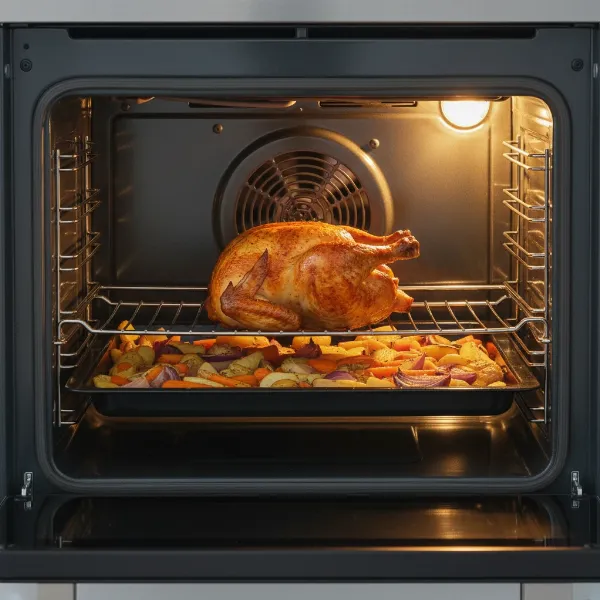 A convection oven with multiple racks, roasting a whole chicken and baking vegetables simultaneously.
Health Aspects and Oil Usage
Both appliances contribute to healthier cooking by reducing the need for excessive oil compared to traditional deep-frying. However, air fryers push this further, often requiring only a tablespoon or two of oil (or even none) to achieve a crispy texture. This significantly slashes the fat content of your favorite “fried” foods.
Convection ovens also enable healthier cooking by distributing heat evenly, allowing you to roast and bake with minimal oil. They provide a healthier alternative to pan-frying or conventional oven cooking, promoting less fat usage across a broader range of dishes.
Detailed Feature Comparison
| Feature | Air Fryer | Convection Oven |
|---|---|---|
| Mechanism | Intense, rapid hot air circulation in a small chamber | Gentle, even hot air circulation in a large cavity |
| Fan Speed | Very High, aggressive | Moderate to Low, gradual |
| Heat Intensity | Highly concentrated, direct | Evenly distributed, ambient |
| Capacity | Small (1-8 quarts), ideal for 1-4 servings | Large (2-6 cubic feet), ideal for families/groups |
| Primary Use | Frying, crisping, reheating | Baking, roasting, broiling, dehydrating |
| Common Foods | Fries, wings, vegetables, frozen snacks | Roasts, cakes, cookies, casseroles |
| Preheating Time | Very fast (2-5 minutes) | Moderate (10-15 minutes) |
| Versatility | Specialized for “fried” results; growing versatility | Highly versatile for diverse cooking |
| Kitchen Footprint | Countertop appliance, compact | Built-in (range/wall oven), larger |
| Price Range | Generally lower ($50-$200+) | Higher ($500-$3000+) |
When to Choose Which Appliance (Buying Guide)
Deciding between an air fryer and a convection oven (or perhaps utilizing both) boils down to your specific culinary habits and kitchen environment.
Assessing Your Kitchen Needs
Consider how often you cook and for how many people. If you frequently prepare meals for one or two and love crispy foods like fries, chicken tenders, or roasted vegetables, a dedicated air fryer offers unmatched speed and convenience for those specific tasks. For larger families or if you enjoy baking, roasting full meals, and cooking multiple dishes simultaneously, a convection oven’s capacity and versatility will be more beneficial.
Considering Your Cooking Style
Are you primarily looking for a healthier way to enjoy “fried” foods? An air fryer is tailored for this niche, providing excellent crisping with minimal oil. If your cooking repertoire includes a broader range of techniques such as baking delicate pastries, roasting large cuts of meat, or dehydrating ingredients, a convection oven offers the necessary control and space. Many modern ovens now integrate an “Air Fry” mode, which combines the oven’s large capacity with higher fan speeds, offering a hybrid solution for some users.
Space and Budget Considerations
Air fryers are countertop appliances, so ensure you have adequate space. They are also generally more affordable, making them an accessible entry point into convection cooking. Convection ovens, being full-sized appliances, require a dedicated spot within your kitchen layout and represent a more significant investment. Evaluate your kitchen’s footprint and your budget before deciding.
Maintenance and Cleaning
Air fryers, especially basket models, are typically easy to clean due to their non-stick components and removable parts. Many baskets and trays are dishwasher safe. Convection ovens, particularly larger models, require more effort to clean the entire interior, though self-cleaning functions can assist. Regular wiping down of both appliances is essential for longevity and hygiene.
Mastering Your Appliance: Tips for Best Results
Whether you choose an air fryer, a convection oven, or use both, a few simple tips can elevate your cooking.
Prepping Food for Optimal Crispness
For air frying, ensure food is cut into uniform pieces and patted dry before cooking. A light coating of oil (often just a teaspoon or two) and seasoning will enhance crispness and flavor. Avoid overcrowding the basket, as this restricts airflow and leads to steaming instead of crisping. With convection ovens, arranging food in a single layer on baking sheets also promotes even cooking and browning.
Temperature and Time Adjustments
Air fryers cook much faster than traditional methods, so it’s crucial to reduce cooking times and sometimes temperatures from conventional recipes. Start with a lower temperature and shorter time, checking frequently until you achieve the desired doneness. For convection ovens, reducing the recipe’s recommended temperature by 25°F (about 15°C) and checking for doneness sooner is a good practice, as the circulating air cooks food more quickly and evenly.
Cleaning and Care for Longevity
Regular cleaning is paramount. For air fryers, wash the basket and drawer after each use. For convection ovens, wipe down the interior regularly to prevent grease buildup, and use the self-cleaning function if available. Always ensure appliances are unplugged and cooled before cleaning.
Safety Best Practices
Always place your air fryer on a heat-resistant surface away from walls to allow for proper ventilation. Ensure food is cooked to safe internal temperatures. With both appliances, avoid touching heating elements and use oven mitts when handling hot food and trays. Never leave cooking unattended.
Conclusion
The distinction between an air fryer and a convection oven, while sometimes blurred by marketing, lies in their specialized design and intended primary function. An air fryer is a fast, powerful crisping machine best for smaller, “fried-like” dishes with minimal oil, making it an excellent addition for quick, healthy convenience. A convection oven, conversely, offers expansive capacity and versatile, even cooking for a wide range of culinary tasks, from baking delicate cakes to roasting family-sized meals. Understanding these differences empowers you to select the tool that truly aligns with your cooking aspirations and kitchen dynamics, ultimately leading to more enjoyable and efficient meal preparation.
Which appliance will become your kitchen’s MVP for healthier, more delicious meals?
Frequently Asked Questions
Can an air fryer replace a convection oven entirely?
No, an air fryer cannot entirely replace a convection oven. While both use circulating hot air, an air fryer is optimized for rapid crisping in small batches, ideal for “fried” foods. A convection oven, with its larger capacity and gentler airflow, is far more versatile for baking, roasting large items, and cooking multiple dishes simultaneously.
Is an air fryer just a small convection oven?
While an air fryer is a type of convection oven, it’s more accurate to call it a specialized, high-performance convection oven. Its compact design, more powerful fan, and concentrated heating element deliver a much more aggressive airflow than a standard convection oven, specifically engineered to create crispy, fried textures quickly.
Which appliance is healthier for everyday cooking?
Both appliances promote healthier cooking by reducing the need for excess oil compared to traditional deep-frying. The air fryer excels at drastically reducing fat for traditionally fried foods. The convection oven offers even cooking for a wider variety of healthy roasted and baked meals. Ultimately, the healthier choice depends on the specific dishes you prepare and your cooking habits.