The air fryer revolution has transformed home cooking, promising crispy, delicious results with significantly less oil. Yet, as you step into the world of these fantastic appliances, you’re immediately faced with a crucial decision: should you opt for a sleek, compact basket-style air fryer or a more expansive, multi-functional oven-style model? This choice isn’t just about aesthetics; it profoundly impacts your cooking experience, kitchen space, and the variety of meals you can prepare. Understanding the core differences and how each design caters to specific needs is the first step toward finding your perfect kitchen companion.
Understanding Air Fryers: The Basics
At its heart, an air fryer is a miniature convection oven. It operates by rapidly circulating hot air around your food, mimicking the effects of deep-frying—creating a wonderfully crispy exterior while keeping the inside tender. This innovative cooking method allows you to enjoy traditionally “fried” foods like French fries, chicken wings, and spring rolls with just a fraction of the oil, making meals healthier without sacrificing flavor or texture. Beyond frying, many models can roast, bake, and grill, offering versatility that rivals traditional ovens in a smaller, more energy-efficient package. The evolution of the air fryer from a niche gadget to a kitchen staple reflects a growing desire for quick, convenient, and health-conscious meal preparation.
Basket Style Air Fryers: Compact Powerhouses
Basket-style air fryers are the classic, widely recognized form of this appliance. They typically feature a pull-out drawer with a removable basket, often non-stick, where your food is placed. The heating element and a powerful fan are usually located at the top of the unit, directing hot air downward and around the food.
Design and Operation
|
Our Picks for the Best Air fryer in 2026
As an Amazon Associate I earn from qualifying purchases.
|
||
| Num | Product | Action |
|---|---|---|
| 1 | Chefman TurboX 4-in-1 Air Fryer, 5-Quart Airfryer for Extra Crispy Chicken, Fries, Wings, and More, Air Fry, Bake, Reheat, and Frozen Functions, Digital Touch Controls, Dishwasher Safe |

|
| 2 | Ninja - Air Fryer - 4 QT Capacity - 4-in1 Roast, Crisp, Roast, Reheats, & Dehydrates - Dishwasher Safe Parts - Includes 20 Easy & Healthy Recipes - Compact - Grey - AF101 |
|
| 3 | Ninja - XL Single Basket Air Fryer - 5.5 QT Capacity fits 3lbs of Wings - 5-in-1Air Fry, Roast, Bake,Reheat & Dehydrate -Dishwasher Safe Parts & Recipe Guide - Grey -AF150AMZ |
|
| 4 | Cosori 9-in-1 TurboBlaze Air Fryer 6 Qt, Premium Ceramic Coating, 90°–450°F, Precise Heating for Even Results, Air Fry, Roast, Bake, Broil, Dry, Frozen, Proof, Reheat, Keep Warm, 120V, Dark Gray |
|
| 5 | bella 4Qt Slim Air Fryer, Fits-anywhere™ Kitchenware, EverGood™ Ceramic Nonstick Coating, Adjustable Temperature, 6 Preset Cooking Options, 60 Min Auto Shutoff w Audible Tone, 3.3lb Capacity, Oatmilk |
|
| 6 | Chefman Air Fryer – 6 QT Compact Airfryer for Quick & Easy Meals in Minutes, Features Hi-Fry Technology for Extra Crisp, Touchscreen Controls with 4 Presets, Nonstick & Dishwasher Safe Basket - Black |
|
| 7 | Cuisinart Air Fryer Toaster Oven, 1800W, 8-in-1 with Air Fry, Convection, Broil & Warm, 0.6 Cubic Feet, 60-Minute Timer, TOA-70NAS, Stainless Steel |
|
| 8 | Ninja - Air Fryer - 4-in-1 Pro Air Fry, Roast, Reheat, Dehydrate - 5QT Capacity fits up to 4lbs of French Fries - 400F Max Temp - Nonstick Basket & Crisper Plate - 120V - Grey - AF141 |
|
| 9 | Ninja Crispi Pro 6-in-1 Glass Air Fryer - 450°F, Nontoxic, 6qt & 2.5qt Containers & Lids - Microwave, Freezer, Dishwasher Safe - Max Crisp, Air Fry, Bake, Roast, Recrisp, Dehydrate -Cyberspace AS101CY |
|
| 10 | Ninja Air Fryer, 8 QT DoubleStack 2-Basket, Space Saving Design, Cooks 2lb Chicken Wings, Feeds up to 6 People, 6-in1 Air Fryer, Roast, Bake & More, Easy to Clean, Dishwasher Safe Parts, Black, SL201 |
|
These fryers are characterized by their compact, often rounded or square, vertical design. Food rests in a perforated basket that slides into the main unit. The concentrated heating element and fan create a focused airflow that quickly crisps food from all sides. Many models feature intuitive digital or dial controls for setting time and temperature, making them user-friendly.
Advantages
Basket air fryers are champions of crispiness. Their smaller, enclosed cooking chamber ensures that hot air is intensely concentrated around the food, leading to exceptionally crunchy results, particularly for items like fries, chicken nuggets, and smaller vegetables. They preheat remarkably fast due to their compact size, meaning you can get cooking almost instantly. For single servings or quick snacks, this speed is a game-changer. Cleaning is often a breeze, as many baskets come with non-stick coatings and are dishwasher-safe. The pull-out basket design also makes it incredibly easy to “shake” your food midway through cooking, ensuring even browning and crispness without needing to open a door or use tongs.
Disadvantages
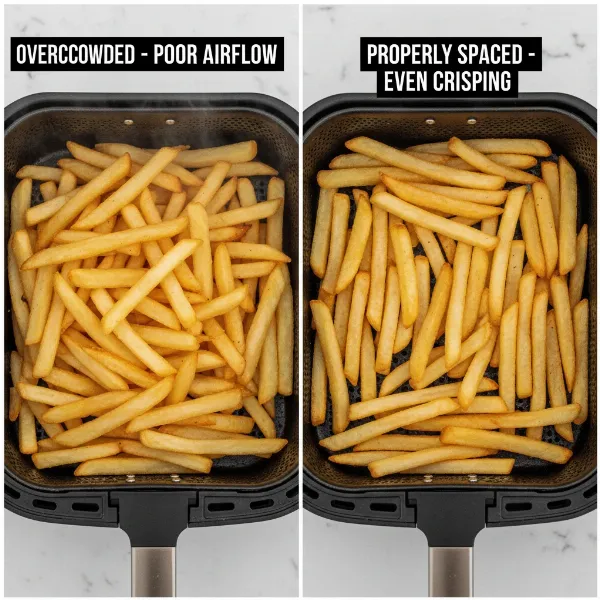
The primary limitation of basket-style air fryers is their capacity. While some larger models exist, they are generally designed for one or two servings, or require cooking in single layers for optimal results. Overcrowding the basket can lead to uneven cooking and less crispiness. This smaller capacity also means they are less versatile for cooking larger items like whole chickens or multiple dishes simultaneously. They typically offer fewer cooking functions compared to their oven-style counterparts, focusing primarily on air frying and basic reheating.
Ideal User
A basket-style air fryer is perfect for individuals, couples, or small families. It’s an excellent choice for those with limited kitchen counter space who primarily want to air fry frozen foods, quick snacks, or small portions of fresh ingredients. If crispy fries and quick clean-up are your top priorities, the basket model will likely be your best fit.
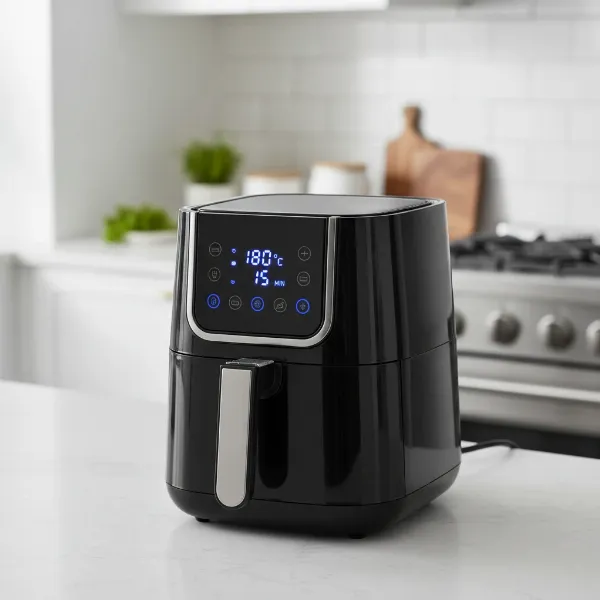 A sleek, compact black basket-style air fryer on a kitchen counter, ready for use.
Oven Style Air Fryers: Versatility and Volume
Oven-style air fryers, also known as air fryer toaster ovens, resemble miniature convection ovens or traditional toaster ovens. They feature a front-opening door and usually come with multiple racks or trays, allowing for more expansive cooking.
Design and Operation
These units often have heating elements on both the top and bottom, combined with a powerful convection fan, providing a more oven-like cooking environment. Their design accommodates various accessories, including multiple cooking racks, rotisserie spits, and sometimes even rotating baskets. The transparent door allows for easy monitoring of food without interrupting the cooking process.
Advantages
The biggest advantage of oven-style air fryers is their superior capacity and versatility. With multiple racks, you can cook larger quantities of food or prepare different items simultaneously, making them ideal for families or entertaining guests. Many models boast additional functions such as toasting, baking, roasting, dehydrating, and even rotisserie, turning one appliance into a multi-tasking kitchen hub. The ability to cook a whole roast chicken on a rotisserie is a popular feature. Furthermore, the glass door provides a clear view of your food, letting you visually assess doneness and crispiness without pausing the cooking cycle.
“For families or those who love to experiment with different cooking methods, the oven-style air fryer offers unmatched flexibility and capacity. It’s essentially a mini kitchen in itself.” – Chef Anya Sharma, Culinary Technology Expert
Disadvantages
Oven-style air fryers typically require more countertop space due to their larger footprint. While versatile, their “air frying” function might sometimes be less intense than a dedicated basket model, resulting in slightly less crispy results for certain foods, although this varies significantly by brand and model. Cleaning can be more involved as well, often requiring scrubbing multiple wire racks and wiping down the interior and door. Flipping food on racks can also be more cumbersome than simply shaking a basket. They also tend to be a more significant investment upfront.
Ideal User
An oven-style air fryer is best suited for larger families, individuals who frequently entertain, or those who desire a multi-functional appliance to replace several others (like a toaster oven, dehydrator, and rotisserie). If you have ample kitchen space and a diverse range of cooking needs that go beyond just “frying,” this style offers excellent value and convenience.
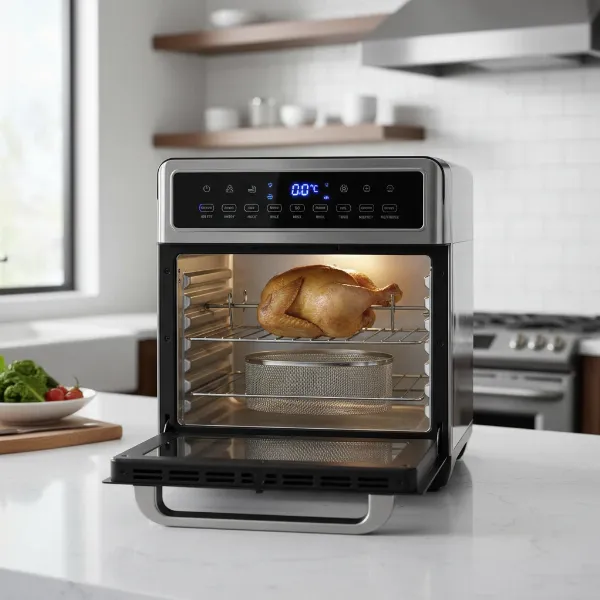 A multi-functional, silver oven-style air fryer with a glass door and multiple racks.
A Side-by-Side Comparison: Basket vs. Oven Air Fryer
To help you visualize the key differences, here’s a direct comparison:
| Feature | Basket Style Air Fryer | Oven Style Air Fryer |
|---|---|---|
| Capacity | Smaller, ideal for 1-4 servings | Larger, suitable for 4+ servings, multiple dishes |
| Cooking Performance | Excellent crispiness, faster cooking (small batches) | Good crispiness, even cooking (larger items), baking/roasting |
| Versatility | Primarily air frying, reheating | Air frying, baking, roasting, dehydrating, rotisserie, toasting |
| Ease of Cleaning | Generally easier (dishwasher-safe baskets) | More involved (multiple racks, interior wiping) |
| Countertop Footprint | Compact, vertical design, less space needed | Bulkier, horizontal design, more space needed |
| Price Range | Generally more affordable | Typically higher price point |
| Best For | Singles, couples, quick snacks, small kitchens | Families, entertaining, diverse cooking, larger kitchens |
Key Considerations Before You Buy
Choosing the right air fryer involves more than just picking a style. Consider these factors to ensure your new appliance truly meets your lifestyle:
Your Household Size and Cooking Habits
Think about how many people you typically cook for. A basket air fryer is efficient for 1-2 people, or for preparing sides for a small family. If you’re consistently feeding a larger family or enjoy cooking substantial meals like whole chickens or multiple side dishes at once, an oven-style air fryer with greater capacity will be far more practical. Also, consider the types of food you’ll primarily cook. If it’s mostly frozen fries and chicken wings, a basket model excels. If you envision roasting vegetables, baking small casseroles, or even dehydrating fruit, the oven style offers more flexibility.
Available Kitchen Space
Air fryers, regardless of style, require counter space and adequate ventilation. Measure your available space carefully. Basket models are generally more compact, making them suitable for smaller kitchens or apartments. Oven-style units, with their larger dimensions, demand more dedicated counter real estate. Remember to account for space around the appliance for proper airflow during operation.
Desired Functions Beyond Air Frying
Do you need an appliance that can do more than just “fry”? Many oven-style air fryers come with a host of additional functions like baking, roasting, toasting, and dehydrating. Some even include rotisserie features for cooking whole chickens or kebabs. If you want to consolidate multiple kitchen appliances into one versatile unit, an oven-style air fryer offers significant advantages. If you already have dedicated appliances for these tasks, or simply want an air fryer for its core function, a basket model might suffice.
Cleaning and Maintenance
Ease of cleaning is a practical consideration that impacts daily use. Basket air fryers often feature non-stick, dishwasher-safe components, making cleanup quick and simple. Oven-style air fryers, with their multiple racks, mesh baskets, and larger interiors, can be more challenging to clean thoroughly, sometimes requiring more manual scrubbing. Consider your willingness to dedicate time to post-cooking cleanup.
Budget
Air fryers come in a wide range of prices. Basket models are generally more budget-friendly, offering excellent performance for their core function. Oven-style air fryers, with their increased capacity and additional features, tend to be more expensive. Determine your budget before you start shopping, but remember that a higher price often correlates with greater versatility, larger capacity, and potentially more advanced features.
Tips for Maximizing Your Air Fryer Experience
No matter which style you choose, these general tips will help you get the most out of your air fryer:
Preparing Food for Optimal Results
Always ensure food is in a single layer to allow hot air to circulate evenly. Overcrowding is the enemy of crispiness. For many items, a light coating of oil (often just a tablespoon or two) can significantly enhance texture and flavor. Use a high smoke point oil like avocado, grapeseed, or canola oil. Patting food dry before adding oil helps achieve a crispier finish.
Temperature and Time Adjustments
Air fryers cook faster and often at slightly higher temperatures than conventional ovens. Start with recommended air fryer recipes, and for traditional oven recipes, begin by reducing the cooking time by 20-25% and checking frequently. Foods closer to the heating element may cook faster, so shake baskets or rotate trays as needed for even results.
Cleaning and Storage Best Practices
Regular cleaning is crucial for longevity and performance. For basket models, clean the basket and drawer after each use, often with warm soapy water or in the dishwasher. For oven styles, wipe down the interior and clean racks/trays thoroughly. A baking sheet placed on a lower rack in oven-style models can catch drips and crumbs, making cleanup easier. Ensure the appliance is completely cool and dry before storing.
Safety Tips
Always place your air fryer on a heat-resistant surface, away from walls and cabinets, to allow for proper ventilation. Never block the air vents. Avoid using metal utensils in non-stick baskets to prevent scratching. Always unplug the unit when not in use and before cleaning.
Conclusion
The choice between a basket-style and an oven-style air fryer boils down to your individual culinary needs, available kitchen space, and desired versatility. Basket air fryers are compact, quick, and ideal for achieving unparalleled crispiness in small batches, making them a perfect fit for singles, couples, or anyone with limited space. Oven-style air fryers, on the other hand, offer expansive capacity, multi-functional capabilities, and the convenience of cooking larger meals or diverse dishes, catering well to families and culinary adventurers.
Ultimately, both styles excel at delivering healthier, convenient, and deliciously crispy meals. By carefully weighing the pros and cons against your specific lifestyle, you can confidently select the air fryer that will truly revolutionize your home cooking. Which air fryer style will you choose to elevate your kitchen experience?
Frequently Asked Questions
Can an oven-style air fryer truly replace my regular oven?
While an oven-style air fryer offers impressive versatility and can handle many tasks like roasting, baking, and air frying, it typically cannot fully replace a traditional large oven, especially for very large roasts or baking multiple dishes simultaneously. It serves as a fantastic, more energy-efficient alternative for most everyday cooking.
Do air fryers use a lot of electricity?
Air fryers are generally more energy-efficient than conventional ovens, especially for smaller meals, because they have a smaller cavity to heat and cook food faster. However, their power consumption can vary depending on the model and wattage, with larger oven-style units potentially drawing more power than compact basket models.
How do I prevent food from sticking in my air fryer?
To prevent food from sticking, always preheat your air fryer if recommended by the recipe, and lightly oil the basket or trays. You can also use parchment paper air fryer liners for easier cleanup, ensuring they don’t cover too much of the basket’s perforations to maintain good airflow.