Have you ever craved the savory, tender bite of classic boiled peanuts but wished for a quicker, less conventional method? While the air fryer is renowned for its ability to crisp and roast, achieving that signature “boiled” texture might seem like a culinary paradox. However, with a few clever techniques, your air fryer can indeed help you create a surprisingly satisfying take on this beloved Southern snack, infusing peanuts with deep, briny flavors and a softer consistency that redefines what an air fryer can do. This guide will reveal the essential steps, from initial preparation to the perfect seasoning, ensuring you can enjoy a unique air-fried version of “boiled” peanuts right from your kitchen.
Understanding “Boiled” Peanuts and the Air Fryer Paradox
Traditional “boiled” peanuts are a Southern delicacy, recognized by their distinct soft, moist texture and deeply absorbed salty, earthy flavor. They are typically made by simmering raw, in-shell peanuts in heavily salted water for several hours until they reach a tender, almost bean-like consistency. The long cooking time allows the peanuts to rehydrate, soften, and fully absorb the savory brine, creating a snack entirely different from their crunchy roasted counterparts.
The air fryer, on the other hand, operates on a fundamentally different principle. It’s a convection oven in miniature, circulating hot air at high speeds to create a crispy, golden-brown exterior on foods, mimicking the results of deep-frying with little to no oil. This dry-heat cooking method seems inherently at odds with the moist, tender outcome associated with boiled peanuts. The primary function of an air fryer is to remove moisture, not to infuse it.
So, how can we bridge this gap? The goal isn’t to literally “boil” peanuts in an air fryer—that would be impossible and potentially damaging to the appliance. Instead, the objective is to mimic the characteristics of boiled peanuts: a rich, briny flavor and a significantly softer texture than typical roasted peanuts, while still leveraging the convenience of the air fryer. The key lies in intensive pre-soaking and a carefully controlled, lower-temperature air frying process designed to gently cook rather than aggressively crisp.
The Essential Ingredients for Air-Fried “Boiled” Peanuts
Creating a successful air-fried rendition of “boiled” peanuts begins with selecting the right ingredients and preparing them meticulously. Each component plays a vital role in achieving that sought-after flavor and texture.
The foundation of this recipe is raw, green peanuts in the shell. “Green” peanuts are fresh, undried peanuts that have a higher moisture content than their dried counterparts, making them ideal for absorbing brine and softening. If green peanuts are unavailable, raw, dried peanuts in the shell can be used, but they will require an even longer soaking time to rehydrate fully. Shelled peanuts are generally not recommended for this method, as the shell acts as a protective barrier, helping to retain moisture and infuse flavor into the nut itself.
Next, you’ll need a robust brine solution. This is where the characteristic salty flavor of boiled peanuts comes from. A basic brine consists of water and a generous amount of salt. For an authentic Southern taste, non-iodized salt like Kosher salt or sea salt is often preferred, as iodine can impart a slightly off-flavor. The salt concentration should be significant—think more like seawater than lightly salted cooking water—to allow for deep penetration into the peanuts.
Beyond salt, seasonings are crucial for developing the complex flavor profile. Common additions include:
- Old Bay Seasoning: A classic choice, providing a savory, slightly spicy, and herbaceous kick.
- Garlic powder and Onion powder: Enhance the savory depth.
- Cayenne pepper or red pepper flakes: For a touch of heat.
- Smoked paprika: Adds a subtle smoky note.
- Bay leaves: Infuse an aromatic complexity.
- Liquid smoke (optional): A tiny drop can provide an outdoor cooking essence.
Finally, while air fryers typically require no oil, a light coating of oil (e.g., olive or vegetable oil), or even aquafaba, can be beneficial if you choose to add a dry seasoning blend after the initial air-frying phase. This helps the seasonings adhere better to the peanuts without burning, though for the “boiled” effect, most seasoning will be in the brine itself.
Step-by-Step Guide: Making “Boiled” Peanuts in Your Air Fryer
The process of making “boiled” peanuts in an air fryer is less about active boiling and more about strategic pre-treatment and gentle, prolonged cooking. Follow these steps to achieve a remarkably tender and flavorful result.
Prepping the Peanuts: The Foundation of Flavor and Texture
|
Our Picks for the Best Air fryer in 2026
As an Amazon Associate I earn from qualifying purchases.
|
||
| Num | Product | Action |
|---|---|---|
| 1 | Ninja - XL Single Basket Air Fryer - 5.5 QT Capacity fits 3lbs of Wings - 5-in-1Air Fry, Roast, Bake,Reheat & Dehydrate -Dishwasher Safe Parts & Recipe Guide - Grey -AF150AMZ |

|
| 2 | bella 4Qt Slim Air Fryer, Fits-anywhere™ Kitchenware, EverGood™ Ceramic Nonstick Coating, Adjustable Temperature, 6 Preset Cooking Options, 60 Min Auto Shutoff w Audible Tone, 3.3lb Capacity, Oatmilk |
|
| 3 | Ninja Air Fryer, 8 QT DoubleStack 2-Basket, Space Saving Design, Cooks 2lb Chicken Wings, Feeds up to 6 People, 6-in1 Air Fryer, Roast, Bake & More, Easy to Clean, Dishwasher Safe Parts, Black, SL201 |
|
| 4 | Ninja - Air Fryer - 4 QT Capacity - 4-in1 Roast, Crisp, Roast, Reheats, & Dehydrates - Dishwasher Safe Parts - Includes 20 Easy & Healthy Recipes - Compact - Grey - AF101 |
|
| 5 | Ninja - Air Fryer - 4-in-1 Pro Air Fry, Roast, Reheat, Dehydrate - 5QT Capacity fits up to 4lbs of French Fries - 400F Max Temp - Nonstick Basket & Crisper Plate - 120V - Grey - AF141 |
|
| 6 | Cuisinart Air Fryer Toaster Oven, 1800W, 8-in-1 with Air Fry, Convection, Broil & Warm, 0.6 Cubic Feet, 60-Minute Timer, TOA-70NAS, Stainless Steel |
|
| 7 | Chefman TurboX 4-in-1 Air Fryer, 5-Quart Airfryer for Extra Crispy Chicken, Fries, Wings, and More, Air Fry, Bake, Reheat, and Frozen Functions, Digital Touch Controls, Dishwasher Safe |
|
| 8 | Ninja Crispi Pro 6-in-1 Glass Air Fryer - 450°F, Nontoxic, 6qt & 2.5qt Containers & Lids - Microwave, Freezer, Dishwasher Safe - Max Crisp, Air Fry, Bake, Roast, Recrisp, Dehydrate -Cyberspace AS101CY |
|
| 9 | Chefman Air Fryer – 6 QT Compact Airfryer for Quick & Easy Meals in Minutes, Features Hi-Fry Technology for Extra Crisp, Touchscreen Controls with 4 Presets, Nonstick & Dishwasher Safe Basket - Black |
|
| 10 | Cosori 9-in-1 TurboBlaze Air Fryer 6 Qt, Premium Ceramic Coating, 90°–450°F, Precise Heating for Even Results, Air Fry, Roast, Bake, Broil, Dry, Frozen, Proof, Reheat, Keep Warm, 120V, Dark Gray |
|
The most critical step in this unconventional recipe is the pre-soaking. This is what transforms raw peanuts, preparing them to absorb flavor and soften, mimicking the effects of prolonged boiling.
Begin by thoroughly washing your raw, in-shell peanuts under cold running water. This removes any dirt or debris. Next, inspect the peanuts and discard any that are damaged, moldy, or appear unusually light.
Now, create your potent brine. In a large bowl, dissolve a significant amount of salt in water. A good starting ratio is about 1/2 cup of salt per 8 cups of water. You can adjust this based on your preference for saltiness and the volume of peanuts. Add your chosen seasonings directly to this brine—Old Bay, garlic powder, onion powder, and a pinch of cayenne or red pepper flakes are excellent starting points. Stir well until all the salt and spices are fully dissolved.
Submerge the washed peanuts completely in the brine. This is vital for flavor absorption. If necessary, place a plate or a smaller bowl on top of the peanuts to keep them fully immersed. Allow the peanuts to soak for an extended period, far longer than for roasting. For green peanuts, aim for at least 12-24 hours. If using dried raw peanuts, you might need to soak them for 24-48 hours, or even longer, changing the brine if it becomes cloudy. This prolonged soaking period allows the peanuts to rehydrate and the briny flavors to penetrate deep into the shells and the nuts themselves.
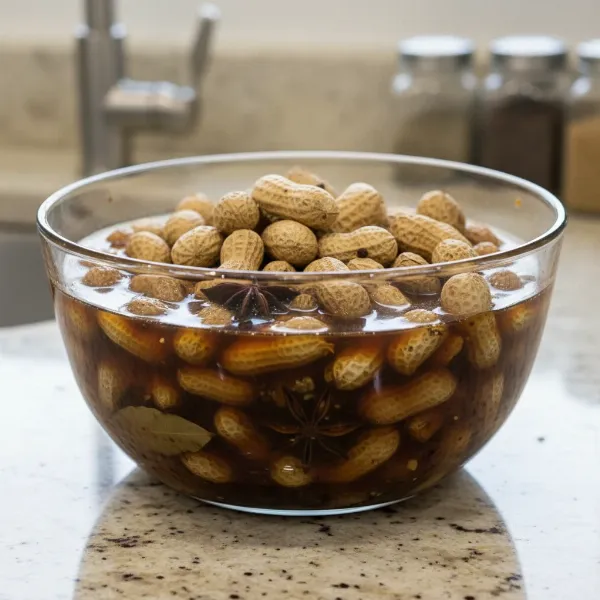 Raw green peanuts in their shells soaking in a bowl of seasoned brine solution.
Air Frying Process: Gentle Cooking, Not Crisping
Once the peanuts have thoroughly soaked, drain them well, but do not rinse. The absorbed brine is essential for their flavor.
Preheat your air fryer to a significantly lower temperature than you would for roasting. Aim for around 200-250°F (95-120°C). The goal here is not to crisp, but to gently cook the peanuts through while allowing some moisture to slowly evaporate and concentrate the flavors.
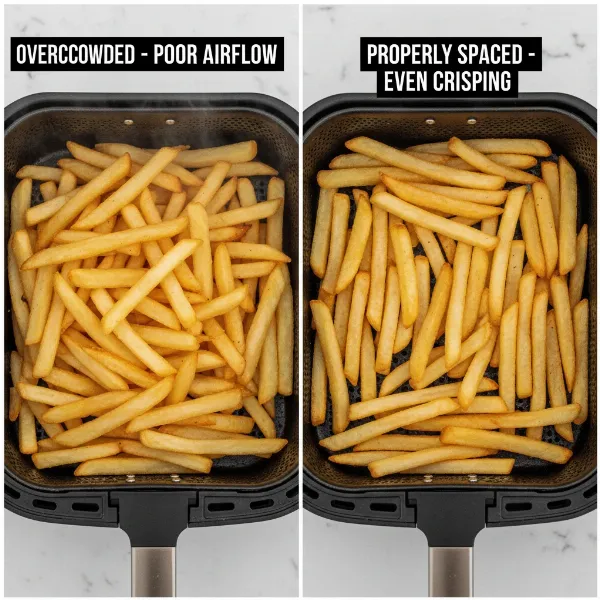
Place the brined peanuts in a single layer in your air fryer basket. Avoid overcrowding, as this can hinder even cooking and prevent the hot air from circulating effectively. You may need to cook in batches depending on the size of your air fryer.
Air fry the peanuts for an extended duration, typically between 1.5 to 3 hours, depending on your air fryer model and the desired tenderness. Shake the basket every 30-45 minutes to ensure even exposure to the circulating hot air. During this process, you’ll notice the shells drying out and becoming firmer, but the prolonged low heat aims to cook the interior gently. It’s crucial to check for doneness periodically by cracking open a peanut to assess its tenderness and flavor. The texture should be soft and yielding, similar to a cooked bean, rather than crunchy. If the peanuts seem to be drying out too quickly on the outside but aren’t tender enough inside, you can lightly mist them with water or a bit of leftover brine to slow the drying process. However, be cautious not to add too much liquid, as an air fryer is not designed for wet cooking.
Achieving the “Boiled” Texture: Patience is Key
The true test of success lies in the texture. These air-fried peanuts will not be identical to those simmered in a pot for hours, but they should be noticeably softer than traditionally roasted peanuts. The long pre-soak is the primary contributor to internal moisture, while the low and slow air frying gently cooks them to tenderness.
As the peanuts cook, their shells will become dry, and the color might deepen slightly. The magic happens inside, where the prolonged moisture exposure from soaking, combined with gentle heat, renders them tender. Crack one open and taste it. The flavor should be robustly savory and seasoned throughout, indicative of successful brine absorption. If they are still too firm, continue air frying in 15-minute increments, checking frequently. Remember, the exact time will vary based on your specific air fryer and the starting moisture content of your peanuts.
Once they reach your desired level of tenderness, remove them from the air fryer. Allow them to cool slightly before cracking them open and enjoying. The texture will firm up a little as they cool, but they should remain tender and flavorful, a unique air fryer interpretation of the classic boiled peanut.
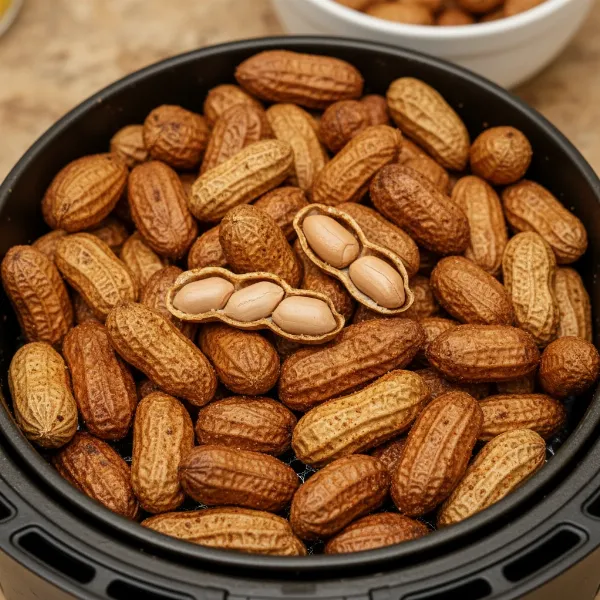 Tender air-fried "boiled" peanuts, some cracked open, in an air fryer basket.
Tips for Perfect Air-Fried “Boiled” Peanuts
Transforming your air fryer into a “boiled” peanut maker requires a blend of technique and intuition. Here are some expert tips to ensure your air-fried rendition is as close to perfect as possible.
Experiment with Seasonings
The beauty of “boiled” peanuts lies in their versatility. Don’t be afraid to experiment with your brine to find your ultimate flavor profile. While classic salt and Old Bay are a fantastic start, consider adding a variety of spices to infuse different notes. For a spicier kick, include extra cayenne pepper, crushed red pepper flakes, or a few sliced jalapeños in the soaking brine. For an earthy depth, a tablespoon of liquid smoke, a few sprigs of fresh rosemary, or a teaspoon of smoked paprika can make a significant difference. If you’re a fan of garlic, a few smashed garlic cloves added to the brine will permeate the peanuts with robust flavor. Remember that the flavors in the brine will concentrate as the peanuts cook, so start with moderate amounts and adjust as needed.
Don’t Overcrowd the Basket
Maintaining proper airflow is paramount in an air fryer. Overcrowding the basket prevents the hot air from circulating efficiently around each peanut, leading to uneven cooking and potentially a less tender result. Aim for a single layer of peanuts in the basket, or at most, a very loose layer where air can still easily pass through. If you’re preparing a larger batch, it’s always better to cook the peanuts in multiple smaller batches. While this might add to the overall cooking time, it guarantees a more consistent and superior outcome for every peanut. Patience in batch cooking pays off with even tenderness and flavor absorption.
Reheating and Storage
Once you’ve achieved your perfect batch of air-fried “boiled” peanuts, proper storage is key to enjoying them later. Allow the peanuts to cool completely to room temperature. Once cooled, transfer them to an airtight container or a resealable bag. Stored in the refrigerator, they will typically remain fresh and delicious for up to 3-5 days.
When it’s time to enjoy them again, reheating is simple. You can gently warm them in the air fryer at a low temperature, around 200°F (95°C), for 5-10 minutes, or until warmed through. Alternatively, a quick reheat in the microwave for 30-60 seconds can also do the trick, though the air fryer method might help to refresh their texture slightly. Avoid overheating, as this can dry them out. If you prefer, they can also be enjoyed cold straight from the refrigerator as a refreshing snack.
Why Choose the Air Fryer Method?
While traditional boiling methods for peanuts are well-established, opting for the air fryer offers several distinct advantages, especially for those seeking a convenient and less hands-on approach to this classic snack. The primary benefit is simplicity and reduced mess. Boiling peanuts on the stovetop often involves large pots, hours of simmering, and potential splashes of briny water. The air fryer contains the cooking process within its basket, minimizing cleanup and freeing up stovetop space.
Another significant advantage is convenience. Once the initial soaking is complete, the air fryer largely takes over. You don’t need to constantly monitor a pot of boiling water, ensuring it doesn’t boil dry or overflow. The set-it-and-forget-it nature of the air fryer, with occasional shaking, makes it a low-effort cooking method ideal for busy households. This convenience makes enjoying “boiled” peanuts more accessible without dedicating an entire afternoon to the task.
Furthermore, the air fryer method offers a unique textural variation. While it won’t replicate the exact water-logged softness of traditionally boiled peanuts, it creates a texture that is tender and deeply flavored from the brine, yet with a slightly firmer, less watery bite. This can be a delightful alternative for those who find traditional boiled peanuts a little too soft. It offers a distinct “air-fried boiled” experience that stands on its own. It’s an innovative way to enjoy the beloved flavor profile with a new textural dimension, proving the versatility of your air fryer beyond just crisping and roasting.
Troubleshooting Common Issues
Even with careful preparation, you might encounter a few hiccups when attempting to make “boiled” peanuts in your air fryer. Understanding how to troubleshoot these common issues can help ensure your success.
If your peanuts turn out too dry or crispy, it usually indicates that the air fryer temperature was too high or the cooking time was too long. The air fryer’s primary function is to remove moisture, so a high heat setting will quickly roast and crisp the peanuts, overriding the goal of a tender, “boiled” texture. To correct this, ensure you are preheating your air fryer to a much lower temperature (200-250°F / 95-120°C) and reduce the cooking duration in your next attempt. Lightly misting with water during cooking can also help retain moisture if you find them drying out too fast.
Conversely, if the peanuts are not tender enough, despite sufficient soaking, it suggests that they haven’t cooked long enough or the soaking period wasn’t adequate. Raw, green peanuts inherently contain more moisture and soften faster than dried raw peanuts. If using dried peanuts, extend the soaking time significantly, potentially up to 48 hours, ensuring they are fully rehydrated before air frying. During the air frying stage, simply continue cooking in 15-20 minute increments at a low temperature, checking for tenderness frequently until they reach your desired consistency.
Another issue might be uneven cooking or seasoning. This often stems from overcrowding the air fryer basket or not shaking it frequently enough. When peanuts are piled too high, hot air cannot circulate evenly, leading to some peanuts being overcooked and others undercooked. Always ensure peanuts are in a single layer or a very loose layer. Make sure to shake the basket thoroughly every 30-45 minutes throughout the entire cooking process to promote uniform heat distribution and seasoning.
Finally, if your peanuts lack flavor, it’s a sign that your brine wasn’t potent enough or the soaking time was too short. The peanuts absorb flavor primarily during the soaking stage. Increase the salt concentration and the amount of seasonings in your brine. Ensure peanuts are fully submerged for the entire recommended soaking duration. A robust brine is the secret to deeply flavorful “boiled” peanuts.
Air Fryer Features for “Boiled” Peanuts
While almost any air fryer can be used for this recipe, certain features can enhance your experience and results when aiming for “boiled” peanuts. Considering these aspects can help you achieve the best possible texture and flavor.
Capacity is a key consideration. Since overcrowding the basket is detrimental to even cooking, a larger air fryer with a higher capacity (typically 5 quarts or more) allows you to cook a more substantial batch of peanuts in a single layer. This is particularly beneficial if you plan to make these as a snack for gatherings or if you want to prepare a larger quantity to store. Smaller air fryers will require you to cook in multiple batches, which can extend the overall preparation time.
A precise temperature control feature is crucial for this recipe. Unlike roasting, which often uses higher temperatures, creating “boiled” peanuts in an air fryer relies on a low, steady heat. An air fryer that allows you to set temperatures accurately in the 200-250°F (95-120°C) range, and ideally maintains that temperature consistently, is best. Some cheaper models might have wider temperature fluctuations, which can make achieving the tender texture more challenging.
Shake reminders or programmable cooking cycles can also be helpful. Given that you’ll be cooking for an extended period and need to shake the basket frequently for even results, an air fryer that alerts you or pauses the cooking process to prompt a shake can be a convenient feature. This ensures you don’t forget to redistribute the peanuts, which is vital for uniform tenderness and flavor absorption.
Lastly, while not strictly a feature, the design of the basket can influence airflow. Air fryers with well-perforated baskets or trays allow for maximum air circulation around the peanuts, which is essential for uniform cooking even at lower temperatures. A removable, non-stick basket also simplifies cleaning after use.
Conclusion
Creating “boiled” peanuts in an air fryer is a fascinating culinary experiment that pushes the boundaries of this versatile appliance. While it won’t replicate the exact method of traditional boiling, the extensive pre-soaking in a flavorful brine, followed by a low-and-slow air frying process, yields a uniquely tender, deeply seasoned peanut that captures the essence of this beloved Southern snack. You can now enjoy a convenient, less messy interpretation of “boiled” peanuts, perfect for satisfying those savory cravings. Are you ready to surprise your taste buds and redefine your air fryer’s capabilities?
Frequently Asked Questions
Can I use raw shelled peanuts for this recipe?
While possible, raw in-shell peanuts are highly recommended. The shell protects the peanut, helping it retain moisture and absorb the brine flavors more effectively during the soaking and air frying process, contributing to a more tender and flavorful “boiled” result.
How long do the air-fried “boiled” peanuts last?
Once cooled, store your air-fried “boiled” peanuts in an airtight container in the refrigerator for up to 3-5 days. They can be enjoyed cold or gently reheated in the air fryer or microwave.
My peanuts are still crunchy after following the steps. What went wrong?
If your peanuts remain crunchy, it’s likely due to insufficient soaking time or too high an air frying temperature. Ensure raw green peanuts soak for at least 12-24 hours, or longer for dried peanuts, and air fry at a very low temperature (200-250°F) to promote tenderness, not crisping.
Can I add different seasonings to the brine?
Absolutely! Experiment with various spices like Old Bay, garlic powder, onion powder, cayenne pepper, smoked paprika, or even bay leaves and liquid smoke to customize the flavor profile of your air-fried “boiled” peanuts to your personal preference.
Do I need to add water to the air fryer during cooking?
No, it is generally not recommended to add water directly into the air fryer basket during cooking for this recipe. Air fryers are designed for dry heat, and adding water can interfere with their function and potentially damage some models. Focus on thorough pre-soaking for moisture.