Imagine waking up to the rich, intoxicating aroma of freshly roasted coffee, knowing that you crafted every bean to perfection right in your kitchen. While traditionally associated with baking and crisping, your versatile air fryer holds a secret superpower: roasting coffee beans. This guide will take you through the exciting journey of transforming raw green coffee into aromatic roasted masterpieces, offering a fresh, customizable coffee experience unlike any other.
Understanding Air Fryer Coffee Roasting
At its core, an air fryer is a compact convection oven, circulating super-heated air around food for even cooking. This very principle makes it an intriguing tool for coffee roasting. The consistent hot air flow aims to distribute heat uniformly, minimizing the risk of scorching that can plague stovetop or conventional oven methods.
The tradition of home coffee roasting dates back centuries, as enthusiasts sought the freshest possible brew. From cast-iron pans over open fires to dedicated drum roasters, the pursuit of the ideal roast has evolved. The air fryer represents a modern, accessible entry point into this world, offering a convenient method for small batches without specialized, expensive equipment.
Pros and Cons: Air Fryer vs. Traditional Methods
Roasting coffee in an air fryer presents a unique set of advantages and disadvantages compared to other home roasting techniques or professional machines.
Advantages:
- Consistency: The circulating hot air provides more even heat distribution than oven or pan roasting, reducing scorching and unevenness.
- Simplicity and Speed: Air fryers are generally easy to use and clean, often completing a roast in a relatively short timeframe (e.g., 5-12 minutes).
- Energy Efficiency: Air fryers are designed to be energy-efficient, potentially costing less to operate for a small batch compared to a conventional oven.
- Fresh Flavor: Roasting at home grants you unparalleled freshness, allowing for a vibrant and complex flavor profile customized to your taste preferences.
Disadvantages:
- Limited Batch Sizes: Air fryers are designed for smaller capacities, meaning you can only roast a limited amount of beans at a time, typically around 50-100 grams.
- Less Control: Compared to dedicated coffee roasters, air fryers offer less precise control over roast parameters like temperature curves and airflow. This requires diligent monitoring.
- Uneven Roasting Potential: While hot air circulates, beans still need agitation (shaking the basket) to ensure uniform roasting, especially in basket-style air fryers. Without it, some beans may bake rather than roast.
- Smoke and Chaff: Coffee roasting produces smoke and a papery byproduct called chaff (the skin of the bean). Proper ventilation is crucial to manage these.
- Flavor Contamination: If your air fryer is regularly used for savory foods, residual odors could potentially transfer to your coffee beans.
- Dark Roast Challenges: Achieving very dark roasts can be tricky in an air fryer, as prolonged high heat may remove too much oil from the beans, potentially impacting their longevity and flavor stability.
|
Our Picks for the Best Air fryer in 2026
As an Amazon Associate I earn from qualifying purchases.
|
||
| Num | Product | Action |
|---|---|---|
| 1 | bella 4Qt Slim Air Fryer, Fits-anywhere™ Kitchenware, EverGood™ Ceramic Nonstick Coating, Adjustable Temperature, 6 Preset Cooking Options, 60 Min Auto Shutoff w Audible Tone, 3.3lb Capacity, Oatmilk |

|
| 2 | Ninja - XL Single Basket Air Fryer - 5.5 QT Capacity fits 3lbs of Wings - 5-in-1Air Fry, Roast, Bake,Reheat & Dehydrate -Dishwasher Safe Parts & Recipe Guide - Grey -AF150AMZ |
|
| 3 | Ninja Crispi Pro 6-in-1 Glass Air Fryer - 450°F, Nontoxic, 6qt & 2.5qt Containers & Lids - Microwave, Freezer, Dishwasher Safe - Max Crisp, Air Fry, Bake, Roast, Recrisp, Dehydrate -Cyberspace AS101CY |
|
| 4 | Cuisinart Air Fryer Toaster Oven, 1800W, 8-in-1 with Air Fry, Convection, Broil & Warm, 0.6 Cubic Feet, 60-Minute Timer, TOA-70NAS, Stainless Steel |
|
| 5 | Chefman TurboX 4-in-1 Air Fryer, 5-Quart Airfryer for Extra Crispy Chicken, Fries, Wings, and More, Air Fry, Bake, Reheat, and Frozen Functions, Digital Touch Controls, Dishwasher Safe |
|
| 6 | Ninja - Air Fryer - 4 QT Capacity - 4-in1 Roast, Crisp, Roast, Reheats, & Dehydrates - Dishwasher Safe Parts - Includes 20 Easy & Healthy Recipes - Compact - Grey - AF101 |
|
| 7 | Ninja Air Fryer, 8 QT DoubleStack 2-Basket, Space Saving Design, Cooks 2lb Chicken Wings, Feeds up to 6 People, 6-in1 Air Fryer, Roast, Bake & More, Easy to Clean, Dishwasher Safe Parts, Black, SL201 |
|
| 8 | Cosori 9-in-1 TurboBlaze Air Fryer 6 Qt, Premium Ceramic Coating, 90°–450°F, Precise Heating for Even Results, Air Fry, Roast, Bake, Broil, Dry, Frozen, Proof, Reheat, Keep Warm, 120V, Dark Gray |
|
| 9 | Chefman Air Fryer – 6 QT Compact Airfryer for Quick & Easy Meals in Minutes, Features Hi-Fry Technology for Extra Crisp, Touchscreen Controls with 4 Presets, Nonstick & Dishwasher Safe Basket - Black |
|
| 10 | Ninja - Air Fryer - 4-in-1 Pro Air Fry, Roast, Reheat, Dehydrate - 5QT Capacity fits up to 4lbs of French Fries - 400F Max Temp - Nonstick Basket & Crisper Plate - 120V - Grey - AF141 |
|
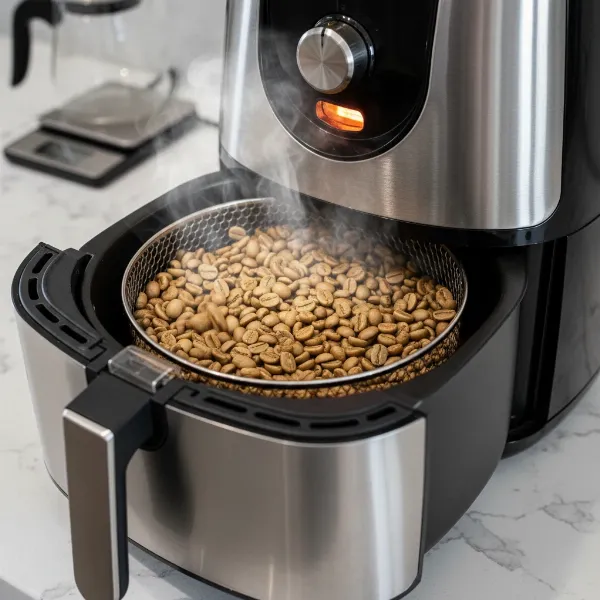 Close-up of green coffee beans roasting inside a modern air fryer basket, circulating hot air.
Preparing for Your Air Fryer Roasting Journey
Before you embark on your first air fryer roast, a little preparation goes a long way in ensuring a successful and enjoyable experience.
Choosing Your Green Coffee Beans
The foundation of a great roast is quality green (unroasted) coffee beans. Source them from reputable suppliers, opting for beans with a consistent size and minimal defects. Experiment with different origins to discover diverse flavor profiles.
Essential Equipment
Beyond your air fryer, you’ll need a few key items:
- Air Fryer: Both basket and oven-style air fryers can work, though oven-style with a rotisserie drum might offer more consistent agitation.
- Cooling Tray: A metal baking sheet or colander, ideally with a fan, for rapidly cooling the beans after roasting.
- Airtight Container: For storing your freshly roasted beans.
- Ventilation: A range hood or open window is essential to deal with smoke and chaff.
- Spoon/Tongs: For stirring or removing hot beans.
- Optional: A small vacuum cleaner or handheld brush to clean up chaff.
Selecting the Right Air Fryer for Roasting
While most air fryers can technically roast coffee, certain features will enhance your experience. Look for models that can reach and maintain higher temperatures (400-450°F or 200-230°C). Air fryers with a clear viewing window are incredibly helpful for monitoring the roast without opening the basket. If you have an oven-style air fryer with a rotisserie function and a compatible drum, this can provide continuous agitation for a more even roast.
Step-by-Step Guide to Roasting Coffee in an Air Fryer
Home roasting is an art form, and the air fryer provides a convenient canvas. Here’s how to achieve your perfect roast:
Step 1: Preheat Your Air Fryer
Start by preheating your air fryer. Optimal temperatures generally range from 375-450°F (190-230°C). Some recipes suggest preheating to 375°F and then roasting at 400°F, while others advise a consistent 450°F. Experiment to find what works best with your specific model. Preheating ensures the beans begin roasting immediately upon entry, preventing a “baked” taste.
Step 2: Load the Green Beans
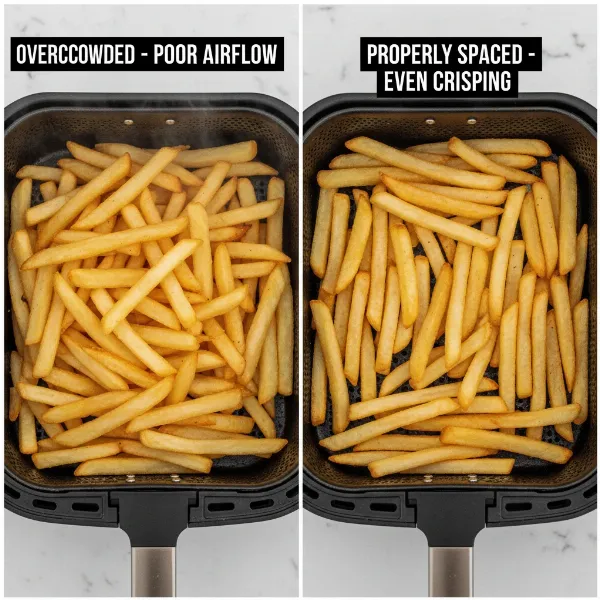
Once preheated, add your green coffee beans to the air fryer basket. It’s crucial to roast in small batches, typically 50-100 grams (about ½ cup), ensuring the beans are spread in a single, even layer. Overcrowding will lead to uneven roasting.
Step 3: The Roasting Process – Temperature and Time
The roasting time can vary significantly, from 5-12 minutes up to 40 minutes, depending on your air fryer and desired roast level. Monitor closely, as beans can roast quickly.
- Agitation: For basket-style air fryers, shake the basket every 60-90 seconds to promote even roasting and prevent burning. While some suggest continuous air circulation might suffice for a single layer, manual agitation is generally recommended for best results.
- Monitoring: Listen intently for two distinct “cracks” and observe color changes.
Step 4: Achieving Your Desired Roast Level
The beauty of home roasting is customizing your roast profile:
- Light Roast (City Roast): Stop roasting shortly after you hear the “first crack.” The beans will be a light brown color with a bright, acidic, and complex flavor profile.
- Medium Roast (City+ to Full City): Continue roasting past the first crack. The beans will darken to a medium brown, and their flavors will become more balanced with reduced acidity and increased body.
- Dark Roast (Full City+ to French Roast): For a darker roast, continue past the first crack towards the “second crack.” Be cautious, as dark roasts can be challenging in an air fryer; the beans can quickly go from perfectly roasted to burnt. Darker roasts will be very dark brown, sometimes oily, with a smoky, bittersweet flavor.
Step 5: Rapid Cooling
Immediately remove the roasted beans from the hot air fryer once they reach your desired roast level. Spread them out on a metal baking sheet or in a colander, ideally under a fan, to cool them as quickly as possible. This halts the roasting process and prevents over-roasting.
Step 6: Degassing and Storage
Freshly roasted coffee beans release carbon dioxide, a process called “degassing.” Allow your beans to rest in an airtight container for 1-2 days before grinding and brewing. This enhances flavor and creates a better crema for espresso. For optimal freshness, use your roasted beans within two weeks.
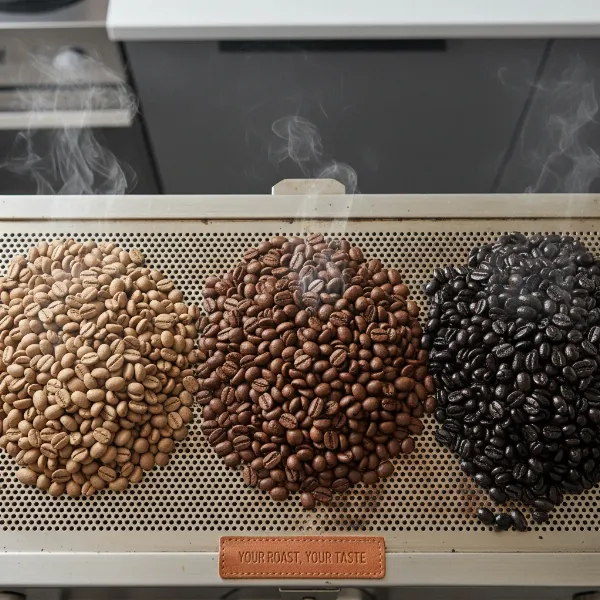 Three stages of roasted coffee beans: light, medium, and dark, cooling on a tray.
Mastering Your Air Fryer Roasting Techniques
Refining your air fryer roasting skills takes practice and observation.
Understanding the “Cracks”
The “first crack” sounds like popcorn popping and signals the beans are entering the light roast stage, expanding as moisture escapes. The “second crack” is a softer, more rapid crackling sound, indicating the beans are moving into medium-dark to dark roast territory. Learning to distinguish these sounds is crucial for consistent roasting.
Achieving Even Roasting
Consistent agitation is key to an even roast. If your air fryer doesn’t have a rotisserie, manual shaking is essential. Roast small batches to allow enough space for beans to move freely and for hot air to circulate.
Managing Smoke and Chaff
Roasting coffee produces smoke and significant amounts of chaff. Always ensure proper ventilation by roasting near an open window or under a powerful range hood. Be prepared for a small amount of mess from the chaff, which can be easily cleaned up with a vacuum or brush.
Troubleshooting Common Issues
- Burnt Beans: If beans are charring on the outside but raw inside, the temperature might be too high, or agitation is insufficient. Lower the temperature slightly and increase shaking frequency.
- Uneven Roast: This often points to insufficient agitation or overcrowding the basket. Reduce batch size and shake more frequently.
- No Cracks: If your beans aren’t cracking, the temperature might be too low or the batch size too large, leading to “baking” rather than roasting. Increase temperature and ensure a single layer.
Air Fryer Coffee Roasting: A Buying Guide Perspective
If you’re considering an air fryer specifically for coffee roasting, keep these points in mind:
Consider Your Air Fryer Type
Basket-style air fryers require manual shaking, while oven-style models with a rotisserie drum can provide automated agitation, leading to potentially more consistent results.
Temperature Control and Consistency
Look for an air fryer that can reliably reach and maintain temperatures between 400-450°F (200-230°C). Consistent heat is vital for effective roasting.
Visibility
A viewing window is invaluable. Being able to observe color changes without interrupting the roasting process by opening the fryer helps immensely in judging the roast level.
Ease of Cleaning
Consider how easily you can clean the basket and interior, especially after managing chaff and any residual oils.
Safety Features
Ensure your chosen model has appropriate safety features and always follow manufacturer instructions. Remember that home roasting produces smoke, so good ventilation is non-negotiable.
Conclusion
Roasting coffee beans in an air fryer is a fascinating and rewarding way to elevate your home brewing game. It offers a convenient, energy-efficient method to achieve fresh, customized roasts, giving you complete control over the flavor profile of your daily cup. While it requires diligent monitoring and attention to detail, the rich aromas and nuanced tastes of freshly roasted coffee are well worth the effort. So, grab some green beans, preheat your air fryer, and unlock a new world of coffee exploration. What unique flavor profiles will you discover first?
Frequently Asked Questions
Is it safe to roast coffee in an air fryer?
Yes, it is generally safe to roast coffee beans in an air fryer, provided you follow safety guidelines. Ensure proper ventilation to manage smoke and chaff, and never leave the air fryer unattended during the roasting process. Roasting at home, regardless of method, requires caution.
What temperature should I roast coffee beans in an air fryer?
Most recommendations suggest preheating your air fryer to a temperature between 375°F and 450°F (190-230°C). The ideal temperature can vary slightly depending on your specific air fryer model and the type of beans you are roasting, requiring some experimentation.
How long does it take to roast coffee beans in an air fryer?
The roasting time can range from 5 to 40 minutes, with many achieving light to medium roasts within 8-12 minutes. The exact duration depends on your air fryer’s power, the bean quantity, and your desired roast level. Constant monitoring, rather than strict adherence to time, is key.
How do I know when my coffee beans are done roasting?
You’ll primarily rely on audible cues—the “first crack” for lighter roasts and, for darker roasts, the “second crack.” Observe the beans’ color changes as well, stopping the roast once they reach your preferred shade of brown.
Can I roast dark coffee in an air fryer?
While possible, achieving very dark roasts in an air fryer can be challenging. Air fryers may struggle to maintain the very high, consistent heat needed for dark roasts without scorching the beans or excessively removing their natural oils, which can impact flavor and storage life.
What should I do about the smoke and chaff?
Coffee roasting produces smoke and chaff, the thin skin of the bean. Always roast in a well-ventilated area, such as near an open window or under a kitchen range hood. Be prepared for some mess from the chaff, which can be easily cleaned once the process is complete and the air fryer has cooled.