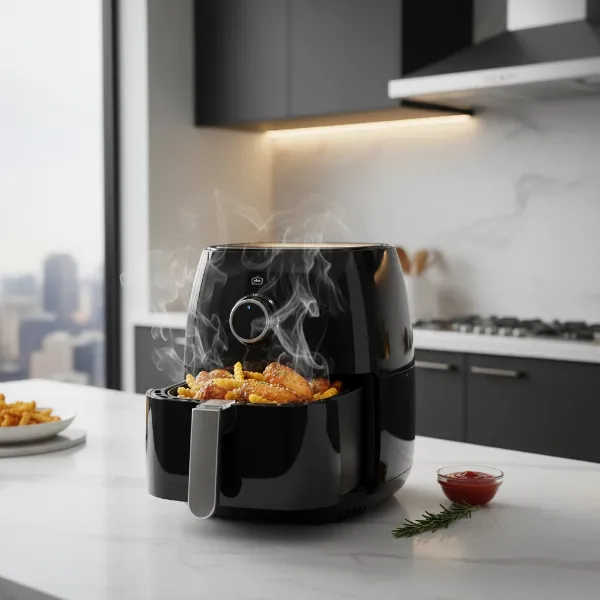
The air fryer has revolutionized home cooking, offering a healthier, quicker way to achieve that coveted crispy texture without excessive oil. Yet, for many home cooks, the compact size of an air fryer presents a common dilemma: how to cook enough food for a family or a gathering without resorting to multiple batches, which can be time-consuming and inconvenient? The temptation to stack food is strong, but improper layering can lead to disappointing, soggy, or unevenly cooked results. This comprehensive guide will unlock the secrets to strategically stacking food in your air fryer, ensuring every bite is perfectly cooked and irresistibly crispy, every time.
Understanding Your Air Fryer: The Importance of Airflow
At its core, an air fryer operates much like a powerful, compact convection oven. It rapidly circulates superheated air around your food, creating a “frying” effect that crisps surfaces and cooks ingredients thoroughly. This principle highlights the absolute necessity of airflow. For the hot air to work its magic evenly, it needs space to circulate around every piece of food.
When you overcrowd the air fryer basket or stack food directly on top of each other without proper consideration, you obstruct this crucial airflow. This leads to a host of common problems: some areas of your food will be exposed to the hot air and crisp up, while others remain shielded, resulting in unevenly cooked spots, a soggy texture instead of crispy, and significantly longer cooking times. In some cases, food might even remain partially raw, posing a safety risk. The golden rule of air frying is to ensure as much surface area of the food as possible is exposed to the circulating hot air for optimal results.
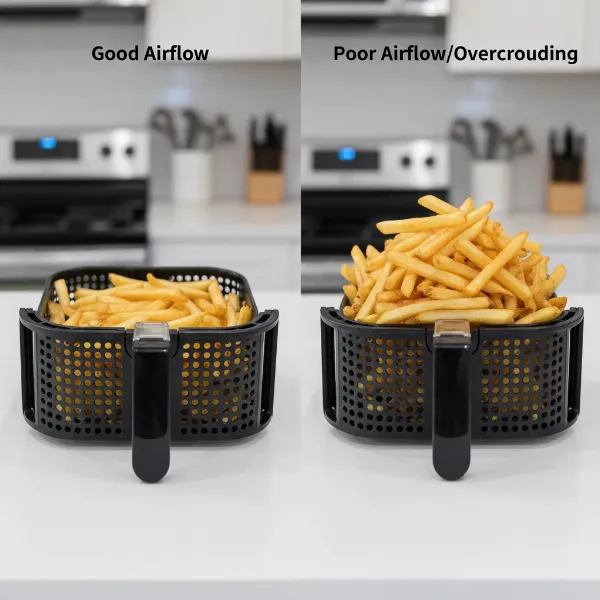 Illustration showing good and bad air fryer stacking for optimal cooking results.
When Stacking Works: Smart Strategies for Your Air Fryer
While the general advice is to avoid direct stacking, there are clever ways to maximize your air fryer’s capacity without sacrificing quality. The key lies in understanding which foods and methods are amenable to layering.
Leveraging Air Fryer Accessories: Racks and Skewers
One of the most effective solutions for multi-layer air frying is to invest in specialized accessories. Air fryer racks, often multi-tiered, are designed to create additional cooking surfaces within the basket while maintaining essential airflow. These racks elevate food, allowing hot air to circulate above and below each layer.
- How multi-tier racks work: These accessories typically consist of two or three layers, allowing you to cook different items or larger quantities of the same item simultaneously. They usually have perforations or a wire design to ensure air can still flow freely around the food.
- Benefits for different food types: Racks are particularly useful for cooking items that benefit from even exposure, such as chicken pieces, fish fillets, vegetables, or even small baked goods. Some sets even include skewers, perfect for making kebabs in layers.
- Choosing the right accessories: Ensure that any racks or accessories you purchase are compatible with your specific air fryer model in terms of size and material. Stainless steel options are durable and easy to clean.
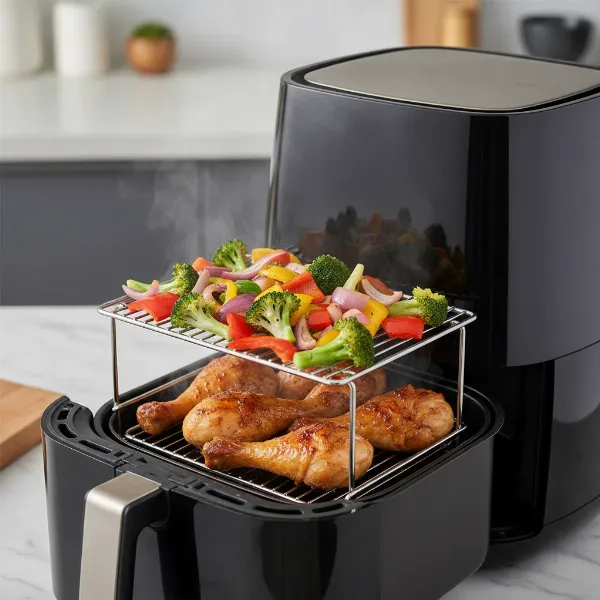 Air fryer with multi-tier rack cooking different food items on separate levels.
|
Our Picks for the Best Air fryer in 2026
As an Amazon Associate I earn from qualifying purchases.
|
||
| Num | Product | Action |
|---|---|---|
| 1 | Ninja - Air Fryer - 4 QT Capacity - 4-in1 Roast, Crisp, Roast, Reheats, & Dehydrates - Dishwasher Safe Parts - Includes 20 Easy & Healthy Recipes - Compact - Grey - AF101 |

|
| 2 | bella 4Qt Slim Air Fryer, Fits-anywhere™ Kitchenware, EverGood™ Ceramic Nonstick Coating, Adjustable Temperature, 6 Preset Cooking Options, 60 Min Auto Shutoff w Audible Tone, 3.3lb Capacity, Oatmilk |
|
| 3 | Ninja - XL Single Basket Air Fryer - 5.5 QT Capacity fits 3lbs of Wings - 5-in-1Air Fry, Roast, Bake,Reheat & Dehydrate -Dishwasher Safe Parts & Recipe Guide - Grey -AF150AMZ |
|
| 4 | Chefman Air Fryer – 6 QT Compact Airfryer for Quick & Easy Meals in Minutes, Features Hi-Fry Technology for Extra Crisp, Touchscreen Controls with 4 Presets, Nonstick & Dishwasher Safe Basket - Black |
|
| 5 | Cosori 9-in-1 TurboBlaze Air Fryer 6 Qt, Premium Ceramic Coating, 90°–450°F, Precise Heating for Even Results, Air Fry, Roast, Bake, Broil, Dry, Frozen, Proof, Reheat, Keep Warm, 120V, Dark Gray |
|
| 6 | Ninja Crispi Pro 6-in-1 Glass Air Fryer - 450°F, Nontoxic, 6qt & 2.5qt Containers & Lids - Microwave, Freezer, Dishwasher Safe - Max Crisp, Air Fry, Bake, Roast, Recrisp, Dehydrate -Cyberspace AS101CY |
|
| 7 | Ninja - Air Fryer - 4-in-1 Pro Air Fry, Roast, Reheat, Dehydrate - 5QT Capacity fits up to 4lbs of French Fries - 400F Max Temp - Nonstick Basket & Crisper Plate - 120V - Grey - AF141 |
|
| 8 | Ninja Air Fryer, 8 QT DoubleStack 2-Basket, Space Saving Design, Cooks 2lb Chicken Wings, Feeds up to 6 People, 6-in1 Air Fryer, Roast, Bake & More, Easy to Clean, Dishwasher Safe Parts, Black, SL201 |
|
| 9 | Chefman TurboX 4-in-1 Air Fryer, 5-Quart Airfryer for Extra Crispy Chicken, Fries, Wings, and More, Air Fry, Bake, Reheat, and Frozen Functions, Digital Touch Controls, Dishwasher Safe |
|
| 10 | Cuisinart Air Fryer Toaster Oven, 1800W, 8-in-1 with Air Fry, Convection, Broil & Warm, 0.6 Cubic Feet, 60-Minute Timer, TOA-70NAS, Stainless Steel |
|
The Art of Strategic Layering: What Foods Can Be Stacked?
Not all foods are created equal when it comes to stacking. Understanding the nuances of different ingredients will help you decide when and how to layer.
- Foods that can be loosely stacked/shaken: Smaller, more uniform items like french fries, tater tots, Brussels sprouts, broccoli florets, or chopped vegetables can often be cooked in a slightly fuller basket. The critical caveat here is the “shake-and-rotate” method, which we’ll discuss next. These foods benefit from constant movement to ensure all sides get crispy.
- Foods that must be in a single layer: Larger items, especially those you want to get very crispy or those with a delicate coating, typically require a single layer to ensure proper air circulation around their entire surface. This includes chicken wings, chicken breasts, fish fillets, breaded items like chicken tenders or mozzarella sticks, and larger cuts of meat. Any area where these foods touch will steam rather than crisp, leading to undesirable textures.
- Understanding “steaming” vs. “crisping” with certain vegetables: For some vegetables, like Brussels sprouts or broccoli, a slightly more crowded basket can lead to a softer, more “steamed” interior while still achieving some browning on exposed surfaces. If your goal is a very soft interior with less crisp, light crowding can be acceptable for these specific vegetables, provided you still shake the basket frequently.
The Shake-and-Rotate Method: Ensuring Even Cooking
Even when using racks or cooking foods that can tolerate some crowding, the “shake-and-rotate” method is indispensable for achieving uniform results.
- Importance of shaking/flipping halfway: For foods like french fries, shaking the basket vigorously halfway through the cooking time ensures that all pieces are exposed to the hot air. This prevents the bottom layer from being undercooked or soggy while the top gets perfectly crisp. For larger items cooked on racks, manually flipping them halfway helps achieve even browning on all sides.
- Swapping rack positions for multi-tier cooking: When using multi-tier racks, remember that most air fryers have their heating element at the top. This means the food on the upper rack will likely cook faster and brown more quickly. To ensure everything cooks evenly, it’s advisable to swap the positions of the racks (top to bottom and vice-versa) halfway through the cooking cycle.
Essential Tips for Successful Multi-Layer Air Frying
Beyond accessories and food selection, several general best practices will elevate your multi-layer air frying game.
Don’t Overcrowd, Even with Racks
While racks expand your cooking capacity, they don’t negate the fundamental need for airflow. Even with multiple layers, avoid piling food too tightly. A good rule of thumb is to leave some visible space between individual food items, allowing the hot air to circulate freely around each piece. Overcrowding, even on separate racks, will still obstruct airflow, leading to uneven cooking and compromising the desired crispy texture.
Pair Foods with Similar Cooking Needs
When cooking different types of food simultaneously on multiple racks, select items that have similar recommended cooking temperatures and times. This minimizes the need for drastic adjustments and ensures that one item isn’t overcooked while another is still raw. For example, chicken tenders and french fries often cook well together, as do salmon and asparagus, if their respective cooking requirements are carefully managed. Be mindful of strong flavors that might transfer between dishes if cooked in close proximity without separation.
Preheat Your Air Fryer
Just like a conventional oven, preheating your air fryer is crucial for optimal results. A preheated air fryer ensures that food starts cooking immediately at the correct temperature, helping to achieve a crisp exterior right from the start. This is especially important when stacking, as it helps to compensate for any minor temperature fluctuations that might occur with a fuller basket.
Monitor and Adjust: The Key to Perfection
Air frying is a dynamic process, and when experimenting with multi-layer cooking, vigilant monitoring is key. Air fryers often cook faster than conventional ovens, and adding more food or layers can alter cooking times. Pay close attention to the progress of your food, especially the items on different racks. Start with the lower end of the recommended cooking time and add more as needed. Don’t hesitate to pull out the basket to shake, flip, or rotate food more frequently than usual to ensure even doneness and crispiness across all layers.
Advanced Air Frying: Innovations in Multi-Layer Cooking
Recognizing the desire for increased capacity, some manufacturers have developed air fryers specifically designed for efficient multi-layer cooking. For instance, models like the Ninja Double Stack Air Fryer offer multiple drawers and specialized racks that allow for cooking on up to four levels simultaneously. These advanced units often feature individual heating elements and fans per drawer, ensuring more even cooking and crisping across all layers without the typical challenges of traditional air fryers. If you frequently cook for larger groups and find capacity a consistent issue, investing in such a specialized model could be a game-changer for your kitchen.
Troubleshooting Common Stacking Issues
Even with the best intentions, you might encounter issues when stacking food in your air fryer. Here are some common problems and their solutions:
- Soggy or Undercooked Food: This is almost always a sign of obstructed airflow. You’ve likely overcrowded the basket or stacked items too densely.
- Solution: Reduce the amount of food, ensure there’s space between items, use racks, and shake or flip more frequently.
- Uneven Browning: One side is crispy, the other isn’t, or food on the top rack browns faster than the bottom.
- Solution: Increase shaking/flipping frequency. If using racks, swap their positions halfway through cooking. Ensure pieces are spread out and not touching.
- Longer Cooking Times: Your food is taking significantly longer than expected.
- Solution: Overcrowding reduces efficiency. Reduce the batch size, ensure proper airflow, and preheat your air fryer.
Air Fryer Buying Guide: Capacity and Accessories
When purchasing an air fryer, consider your typical cooking needs, especially if multi-layer cooking is a priority.
Determining Your Needs
- Number of people: For larger families or frequent entertaining, opt for air fryers with a higher capacity (e.g., 6 quarts or more).
- Type of food: If you often cook larger items like whole chickens or big batches of wings, basket size and shape are crucial.
Prioritizing Features
- Included accessories: Some air fryers come with multi-tier racks or other stacking-friendly accessories. Check what’s included.
- Multi-drawer/stacking designs: If maximizing capacity is paramount, specialized models like the Ninja Double Stack are worth considering, as they are engineered from the ground up for efficient multi-layer cooking.
- Power/Wattage: Higher wattage can mean faster cooking and better crisping, which is beneficial when cooking larger quantities.
Conclusion
Mastering the art of stacking food in your air fryer can transform your cooking experience, allowing you to prepare more food in less time without sacrificing that irresistible crispy perfection. The core principle remains: prioritize airflow. By understanding how your air fryer works, strategically using accessories like multi-tier racks, and employing techniques such as the shake-and-rotate method, you can effectively expand your air fryer’s capacity. Remember to choose foods wisely, pair them with similar cooking needs, and always monitor your progress. Embrace these smart strategies, and your air fryer will become an even more versatile and indispensable tool in your kitchen, delivering perfectly cooked, crispy delights for every meal.
What culinary creations will you experiment with first, now that you know how to stack effectively in your air fryer?
Frequently Asked Questions
Can I put two layers of food in an air fryer?
Yes, you can put two layers of food in an air fryer, but it typically requires using specialized accessories like multi-tier racks or skewers to maintain proper airflow between the layers. Directly stacking food without these aids will likely lead to uneven cooking and soggy results as hot air cannot circulate effectively.
What happens if you stack food in an air fryer?
If you stack food directly in an air fryer without providing space for airflow, the food will not cook evenly. The bottom layers may remain soggy or undercooked, while the top layers might crisp up. It also prolongs cooking times and can result in a less desirable texture overall due to steam rather than crisping.
How do you cook more food in an air fryer?
To cook more food in an air fryer, utilize multi-tier racks or other air fryer accessories designed to create additional cooking layers while maintaining airflow. You can also cook in batches, shake and rotate smaller foods frequently, or consider specialized air fryers with multiple independent drawers for increased capacity.
Can I stack chicken in an air fryer?
Generally, it is not recommended to stack chicken in an air fryer, especially larger pieces like wings or breasts, as they require direct exposure to hot air for even cooking and crispy skin. For best results, cook chicken in a single layer. If you must stack smaller chicken pieces, use a rack and flip/rotate them frequently to ensure even cooking.