The air fryer has rapidly transformed modern kitchens, offering a healthier, quicker alternative to traditional deep frying. What began as a simple hot-air convection device has quickly become an indispensable tool for countless households. But as technology continues to leap forward, where is the air fryer headed next? The future promises even more intelligence, versatility, and seamless integration into our smart homes, redefining convenience and culinary possibilities.
Overview of Air Fryers: Principle and Evolution
An air fryer is essentially a compact convection oven that circulates superheated air around food, mimicking the results of deep frying with little to no oil. This rapid air circulation creates a crispy exterior while keeping the inside tender, making it a favorite for everything from French fries to roasted vegetables. The concept dates back to Fred van der Weij’s invention, with Philips introducing the first commercial air fryer in 2010. Since then, its popularity has surged, driven by health consciousness and the desire for quick, easy meals.
Compared to traditional cooking methods, air fryers boast several advantages, including reduced oil consumption, faster cooking times, and a healthier outcome for many dishes. However, early models sometimes struggled with capacity limitations and uneven cooking for larger portions, often requiring users to shake or flip food manually. These initial challenges have paved the way for the exciting innovations we see emerging today.
Classifying Air Fryers by Evolving Technology
As air fryers evolve, they are no longer just simple appliances but sophisticated kitchen companions. This evolution is driven by advancements in capacity, core technology, and integrated features.
By Capacity: Adapting to Every Household
Future air fryers will continue to cater to diverse needs with a range of capacities:
- Compact Models: Ideal for single servings, small appetizers, or limited counter space, these will become even more efficient and streamlined.
- Mid-Sized Units: The sweet spot for couples or small families, offering versatility for everyday meals.
- Large-Capacity & Dual-Zone Systems: Designed for larger families or meal prepping, these often feature dual baskets or oven-like designs, allowing for simultaneous cooking of different foods at varied settings. Some innovative designs now stack baskets vertically to maximize counter space while offering substantial cooking volume.
|
Our Picks for the Best Air fryer in 2026
As an Amazon Associate I earn from qualifying purchases.
|
||
| Num | Product | Action |
|---|---|---|
| 1 | bella 4Qt Slim Air Fryer, Fits-anywhere™ Kitchenware, EverGood™ Ceramic Nonstick Coating, Adjustable Temperature, 6 Preset Cooking Options, 60 Min Auto Shutoff w Audible Tone, 3.3lb Capacity, Oatmilk |

|
| 2 | Chefman TurboX 4-in-1 Air Fryer, 5-Quart Airfryer for Extra Crispy Chicken, Fries, Wings, and More, Air Fry, Bake, Reheat, and Frozen Functions, Digital Touch Controls, Dishwasher Safe |
|
| 3 | Ninja - Air Fryer - 4 QT Capacity - 4-in1 Roast, Crisp, Roast, Reheats, & Dehydrates - Dishwasher Safe Parts - Includes 20 Easy & Healthy Recipes - Compact - Grey - AF101 |
|
| 4 | Chefman Air Fryer – 6 QT Compact Airfryer for Quick & Easy Meals in Minutes, Features Hi-Fry Technology for Extra Crisp, Touchscreen Controls with 4 Presets, Nonstick & Dishwasher Safe Basket - Black |
|
| 5 | Ninja - Air Fryer - 4-in-1 Pro Air Fry, Roast, Reheat, Dehydrate - 5QT Capacity fits up to 4lbs of French Fries - 400F Max Temp - Nonstick Basket & Crisper Plate - 120V - Grey - AF141 |
|
| 6 | Ninja - XL Single Basket Air Fryer - 5.5 QT Capacity fits 3lbs of Wings - 5-in-1Air Fry, Roast, Bake,Reheat & Dehydrate -Dishwasher Safe Parts & Recipe Guide - Grey -AF150AMZ |
|
| 7 | Ninja Air Fryer, 8 QT DoubleStack 2-Basket, Space Saving Design, Cooks 2lb Chicken Wings, Feeds up to 6 People, 6-in1 Air Fryer, Roast, Bake & More, Easy to Clean, Dishwasher Safe Parts, Black, SL201 |
|
| 8 | Cuisinart Air Fryer Toaster Oven, 1800W, 8-in-1 with Air Fry, Convection, Broil & Warm, 0.6 Cubic Feet, 60-Minute Timer, TOA-70NAS, Stainless Steel |
|
| 9 | Ninja Crispi Pro 6-in-1 Glass Air Fryer - 450°F, Nontoxic, 6qt & 2.5qt Containers & Lids - Microwave, Freezer, Dishwasher Safe - Max Crisp, Air Fry, Bake, Roast, Recrisp, Dehydrate -Cyberspace AS101CY |
|
| 10 | Cosori 9-in-1 TurboBlaze Air Fryer 6 Qt, Premium Ceramic Coating, 90°–450°F, Precise Heating for Even Results, Air Fry, Roast, Bake, Broil, Dry, Frozen, Proof, Reheat, Keep Warm, 120V, Dark Gray |
|
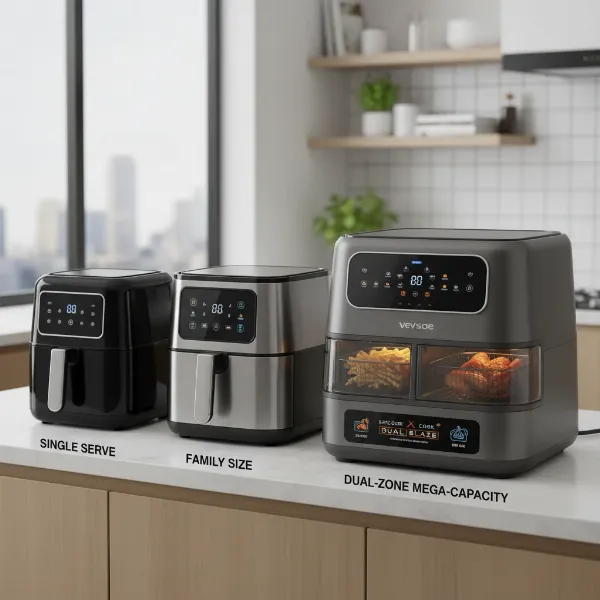 Image showing various air fryer models, including compact, mid-sized, and a large dual-zone unit.
By Core Technology: Beyond Basic Convection
The fundamental hot-air principle is getting a significant upgrade:
- Rapid Air Circulation: While still central, this technology is continuously refined for even faster and more uniform heat distribution.
- Infrared Heating: Emerging models are incorporating infrared technology, which provides advanced heat radiation for highly efficient and consistent cooking, ensuring food is perfectly prepared with consistent crispiness.
- True Convection & Steam Integration: The line between air fryers and full-fledged convection ovens is blurring. Future devices will integrate true convection with thermal radiation and even steam cooking, allowing for juicier results while maintaining crispy textures, often found in advanced combi-fryers.
By Features: The Smart Kitchen Revolution
The most significant advancements are in smart features and multi-functionality:
- Smart Connectivity: The next generation of air fryers will be deeply integrated into the smart home ecosystem. Users can expect remote control via smartphone apps, allowing them to preheat, adjust settings, and monitor progress from anywhere. Voice control through assistants like Alexa or Google Assistant will become standard, enabling hands-free operation.
- AI-Powered Cooking Programs: This is a game-changer. Air fryers will incorporate artificial intelligence to recognize ingredients and automatically adjust cooking settings for optimal results. Imagine placing chicken wings or vegetables inside, and the AI algorithm determines the perfect temperature and time for ideal crispiness and tenderness. Deep learning models, equipped with sensors, will optimize cooking based on food size, shape, thickness, and weight.
- Multi-Functionality & Versatility: Expect air fryers to evolve into true multi-cookers, capable of grilling, baking, roasting, toasting, dehydrating, and even proofing. Some high-end models already combine air frying with steaming, pressure cooking, and slow cooking, reducing kitchen clutter and maximizing culinary creativity.
 A smart air fryer with an advanced touchscreen, showing AI-powered cooking programs, connected to a smartphone app.
Leading Air Fryer Brands and Their Innovations
Many brands are at the forefront of this technological shift, pushing the boundaries of what an air fryer can do.
- Philips: A pioneer in air frying, Philips continues to innovate with models featuring RapidAir Technology and dual-basket systems, allowing for synchronized cooking.
- Ninja: Known for its diverse kitchen appliances, Ninja has introduced innovations like the Double Stack XL air fryer, optimizing space and enabling multiple dishes to be cooked simultaneously with different settings. They also partner with food brands for air fryer-friendly products.
- Cosori: Cosori focuses on user-friendly designs and smart features, including app integration for remote control and precise temperature settings. Future models are expected to further enhance AI capabilities for personalized cooking.
- Cuisinart: Cuisinart is launching next-gen air fryers that emphasize versatility and functionality, such as large digital air fryer ovens with multiple presets and advanced cooking modes, including dual-basket and 15-in-1 capabilities.
- Xiaomi & Salter: These brands are also contributing with smart, stacked designs that offer larger capacities in compact footprints and integrated smart features for a seamless cooking experience.
These brands are continuously refining heating elements, integrating advanced sensors, and developing intuitive interfaces to make air frying more efficient, versatile, and user-friendly.
Detailed Comparison of Emerging Air Fryer Models
While a comprehensive, up-to-the-minute comparison table would require constant updates given the rapid pace of innovation, we can highlight the key differentiating features that define the next generation of air fryers.
| Feature Area | Traditional/Early Air Fryers | Emerging Air Fryer Models |
|---|---|---|
| Heating Technology | Basic rapid air convection | Enhanced rapid air circulation, infrared heating, true convection, integrated steam |
| Smart Features | Manual/digital presets | App control, voice control (Alexa/Google Assistant), AI-powered cooking programs, ingredient recognition, deep learning optimization, live cooking updates, remote notifications, customizable recipes |
| Multi-Functionality | Primarily air fry, some roast | Air fry, grill, bake, roast, dehydrate, steam, pressure cook, slow cook, proof, toast, reheat, self-clean functions |
| Design & Capacity | Single basket, limited sizes | Dual-zone technology (independent controls), stacked designs for space-saving, extra-large oven formats, glass viewing windows, improved non-stick and dishwasher-safe components |
| User Experience | Basic digital controls | Intuitive digital LED touchscreens, innovative shake mode for even cooking, efficient preheating, keep-warm functions, customizable presets, guided cooking, child-safe features, overheating protection, auto-shutoff, cool-touch exteriors, self-cleaning capabilities |
The trend is clear: more power, more precision, and more convenience packed into single, intelligent appliances.
How to Use Future Air Fryers
While the technology may seem advanced, using future air fryers will likely be more intuitive than ever.
Food Preparation
The basic principles remain: prepare your ingredients, apply a light coat of oil if desired (though many foods won’t need it), and place them in the air fryer basket or tray. With AI detection, some future models might even offer suggestions on how to best prepare your food once it identifies the contents.
Setting Up for Cooking
Instead of manually inputting temperature and time, you might simply select a dish from an expansive recipe library on the appliance’s touchscreen or your smartphone app. AI-powered models will automatically detect the food and suggest optimal settings, or even adjust them on the fly based on internal sensors monitoring moisture and temperature. Voice commands could initiate cooking, adjust settings, or provide progress updates.
Cleaning and Maintenance
Future air fryers will prioritize ease of cleaning. Expect more durable non-stick coatings, dishwasher-safe components, and even self-cleaning functions that use water and heat to loosen residue, making maintenance a breeze. Safety features like cool-touch exteriors and automatic shut-off will be standard.
Tips for Delicious Meals with Advanced Air Fryers
Achieving culinary perfection with these next-gen devices will be easier than ever:
- Embrace AI Suggestions: Trust the AI to guide you. Its algorithms are designed for optimal results, ensuring your chicken is crispy and your vegetables are perfectly tender.
- Experiment with Multi-Functions: Don’t limit yourself to just frying. Explore steaming vegetables, dehydrating fruits, or even baking small desserts to fully leverage your appliance’s versatility.
- Utilize Smart Connectivity: Start preheating on your commute home or check cooking progress while tending to other tasks. Remote access will save time and streamline your meal prep.
- Customize & Save: Many smart air fryers will allow you to customize and save your favorite recipes, ensuring consistent, perfect results every time.
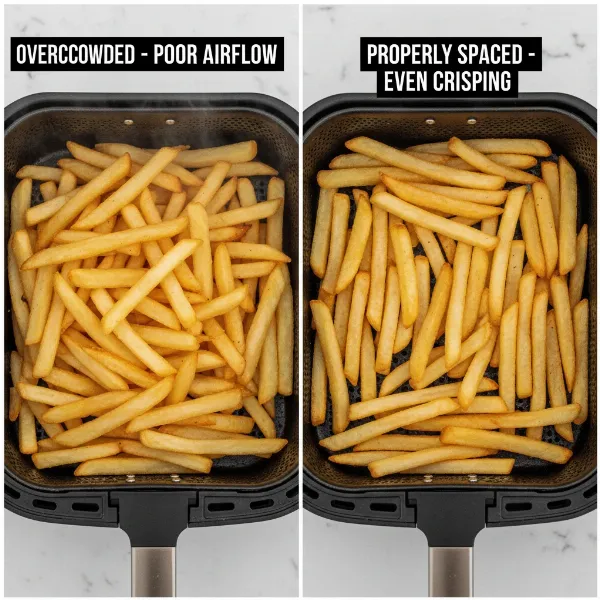
- Proper Loading: Even with advanced circulation, avoid overcrowding the basket to ensure hot air can flow freely around all food surfaces, guaranteeing even cooking and crispiness.
Buying Guide: Navigating the Future of Air Fryers
Choosing a future-proof air fryer involves considering not just current needs but also anticipated technological advancements.
Assess Your Usage Needs
Consider your household size and typical cooking habits. Do you mostly cook for one or two, or do you prepare large family meals? This will dictate the ideal capacity and whether a dual-zone or oven-style model is appropriate. Think about the types of dishes you make most often—do you need steaming, dehydrating, or grilling functions?
Prioritize Capacity and Power
A larger capacity offers more flexibility, especially with multi-functional units. Higher wattage generally means faster heating and more consistent cooking. Look for models with smart stacking designs if counter space is a concern.
Evaluate Smart Features
Decide which smart features are essential for you. Do you value app control, voice commands, or advanced AI ingredient recognition? While basic models will still exist, the future is increasingly connected. Ensure compatibility with your existing smart home ecosystem if integration is important.
Examine Safety and Durability
Look for features like auto-shutoff, cool-touch exteriors, and high-quality, durable non-stick coatings that are easy to clean. Child-safe locks are also a valuable addition for families.
Research Warranty and Support
As with any advanced appliance, robust warranty policies and reliable customer service are crucial. Check reviews regarding brand reliability and after-sales support.
Compare Prices and Retailers
Advanced features often come with a higher price tag. Compare models across different retailers, both online and in-store, to find the best value. Look for sales and promotions, and read user reviews for real-world insights.
“The air fryer’s journey from a niche gadget to a kitchen cornerstone is a testament to its innovation. The next wave of technology, especially AI integration and multi-functionality, will transform it from a mere appliance into an intuitive culinary assistant.” – Chef Elena Rodriguez, Culinary Technology Expert
Conclusion
The air fryer, once a simple solution for crispy, healthier meals, is rapidly evolving into a sophisticated kitchen powerhouse. The future holds a fascinating array of innovations, from AI-driven cooking programs that recognize ingredients to multi-functional units that can steam, grill, and dehydrate with precision. We anticipate enhanced smart connectivity, intuitive user interfaces, and designs that maximize both capacity and counter space. These advancements promise to make healthy, delicious cooking more accessible, efficient, and enjoyable than ever before.
Are you ready to embrace the intelligent kitchen of tomorrow?
Frequently Asked Questions
What are the biggest technological leaps expected in air fryers?
The most significant advancements include widespread AI integration for automatic ingredient recognition and optimized cooking, enhanced multi-functionality combining various cooking methods like steaming and grilling, and seamless smart home connectivity for remote control and voice commands.
Will future air fryers be able to cook entire meals at once?
Yes, the trend towards larger capacities, dual-zone technology, and multi-tiered or stacked designs indicates that future air fryers will be increasingly capable of preparing complete meals, cooking different components simultaneously with independent settings.
How will AI in air fryers benefit the average home cook?
AI will simplify cooking by automatically detecting food items, suggesting optimal cooking programs, and making real-time adjustments based on sensors. This means less guesswork, consistent results, and perfectly cooked meals without needing to constantly monitor the process.
Are future air fryers more energy efficient?
Manufacturers are focused on energy efficiency, with new models often consuming less energy than traditional deep fryers and even conventional ovens for smaller tasks. The efficient heating technologies like infrared and true convection also contribute to faster cooking times, further reducing energy consumption.