Air fryers have transformed kitchens, offering a healthier, quicker way to enjoy crispy favorites. But as you navigate the options, a fundamental choice emerges: digital or analog? Understanding the distinctions between these two control types is crucial to finding the perfect appliance that aligns with your cooking style and needs. Let’s delve into the world of air fryers to uncover the advantages and disadvantages of each, helping you make an informed decision for your culinary adventures.
An Air Fryer Overview: How This Kitchen Marvel Works
At its core, an air fryer is a compact countertop convection oven that uses a powerful fan and heating element to circulate hot air rapidly around food. [cite: 1 (how air fryers work), 2 (how air fryers work), 3 (how air fryers work), 4 (how air fryers work)] This process creates a “Maillard reaction” on the food’s surface, mimicking the crispy texture typically achieved through deep-frying, but with significantly less oil. [cite: 1 (how air fryers work)] Unlike traditional ovens, air fryers boast a smaller cooking chamber and a more intense fan, allowing them to heat up faster and cook food more efficiently, resulting in quicker cook times and more even browning. [cite: 4 (how air fryers work)]
The concept of air frying gained significant traction as consumers sought healthier cooking alternatives without sacrificing taste and texture. Its ability to produce deliciously crisp results with minimal oil has cemented its place as a kitchen essential for many households.
Understanding Air Fryer Types: Digital vs. Analog
While all air fryers operate on the same hot-air circulation principle, their user interfaces and the level of control they offer vary significantly between digital and analog models. This distinction impacts ease of use, precision, and the overall cooking experience.
Digital Air Fryers: The Smart Kitchen Companion
|
Our Picks for the Best Air fryer in 2026
As an Amazon Associate I earn from qualifying purchases.
|
||
| Num | Product | Action |
|---|---|---|
| 1 | Chefman TurboX 4-in-1 Air Fryer, 5-Quart Airfryer for Extra Crispy Chicken, Fries, Wings, and More, Air Fry, Bake, Reheat, and Frozen Functions, Digital Touch Controls, Dishwasher Safe |

|
| 2 | Chefman Air Fryer – 6 QT Compact Airfryer for Quick & Easy Meals in Minutes, Features Hi-Fry Technology for Extra Crisp, Touchscreen Controls with 4 Presets, Nonstick & Dishwasher Safe Basket - Black |
|
| 3 | Cosori 9-in-1 TurboBlaze Air Fryer 6 Qt, Premium Ceramic Coating, 90°–450°F, Precise Heating for Even Results, Air Fry, Roast, Bake, Broil, Dry, Frozen, Proof, Reheat, Keep Warm, 120V, Dark Gray |
|
| 4 | Ninja Crispi Pro 6-in-1 Glass Air Fryer - 450°F, Nontoxic, 6qt & 2.5qt Containers & Lids - Microwave, Freezer, Dishwasher Safe - Max Crisp, Air Fry, Bake, Roast, Recrisp, Dehydrate -Cyberspace AS101CY |
|
| 5 | Ninja Air Fryer, 8 QT DoubleStack 2-Basket, Space Saving Design, Cooks 2lb Chicken Wings, Feeds up to 6 People, 6-in1 Air Fryer, Roast, Bake & More, Easy to Clean, Dishwasher Safe Parts, Black, SL201 |
|
| 6 | Cuisinart Air Fryer Toaster Oven, 1800W, 8-in-1 with Air Fry, Convection, Broil & Warm, 0.6 Cubic Feet, 60-Minute Timer, TOA-70NAS, Stainless Steel |
|
| 7 | Ninja - Air Fryer - 4-in-1 Pro Air Fry, Roast, Reheat, Dehydrate - 5QT Capacity fits up to 4lbs of French Fries - 400F Max Temp - Nonstick Basket & Crisper Plate - 120V - Grey - AF141 |
|
| 8 | Ninja - Air Fryer - 4 QT Capacity - 4-in1 Roast, Crisp, Roast, Reheats, & Dehydrates - Dishwasher Safe Parts - Includes 20 Easy & Healthy Recipes - Compact - Grey - AF101 |
|
| 9 | bella 4Qt Slim Air Fryer, Fits-anywhere™ Kitchenware, EverGood™ Ceramic Nonstick Coating, Adjustable Temperature, 6 Preset Cooking Options, 60 Min Auto Shutoff w Audible Tone, 3.3lb Capacity, Oatmilk |
|
| 10 | Ninja - XL Single Basket Air Fryer - 5.5 QT Capacity fits 3lbs of Wings - 5-in-1Air Fry, Roast, Bake,Reheat & Dehydrate -Dishwasher Safe Parts & Recipe Guide - Grey -AF150AMZ |
|
Digital air fryers represent the more modern end of the spectrum, typically featuring sleek LED displays, touchscreens, and a series of buttons. These interfaces provide precise control over cooking parameters. [cite: 1 (air fryer technology differences digital analog), 3 (digital vs analog air fryer pros and cons)] Users can often adjust temperature and time in minute increments, offering a high degree of accuracy for various recipes. [cite: 4 (which is better digital or manual air fryer)]
Beyond basic temperature and time settings, digital models frequently come equipped with a range of advanced features. These can include pre-programmed settings for common foods like fries, chicken, or fish, a preheat function, a “keep warm” option, and even shake reminders to ensure even cooking. Some advanced digital air fryers may even offer smart connectivity for app-based control and recipe integration, further enhancing convenience. [cite: 3 (digital vs analog air fryer pros and cons), 4 (which is better digital or manual air fryer)]
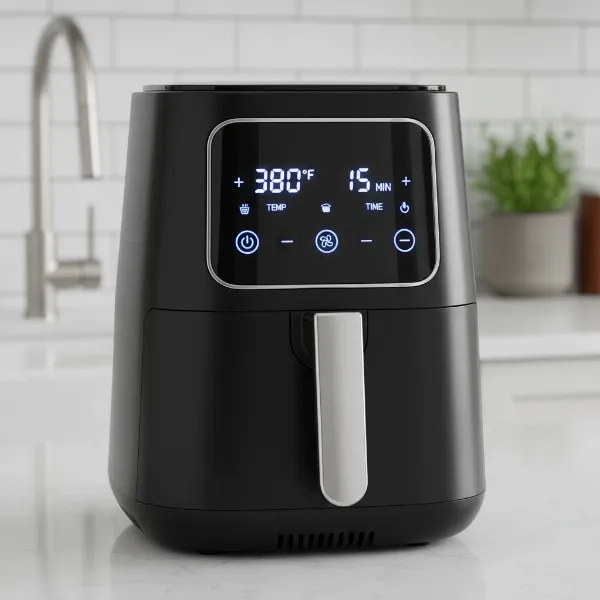 A sleek black digital air fryer with a clear LED touchscreen display and intuitive buttons.
Analog Air Fryers: The Classic, Hands-On Approach
Analog air fryers, often referred to as manual air fryers, embrace a more traditional design. They feature mechanical dials for setting both temperature and time, similar to a classic oven. [cite: 1 (how analog air fryers work), 2 (how analog air fryers work), 3 (digital vs analog air fryer pros and cons)] This straightforward interface appeals to users who prefer a hands-on approach and find complex digital displays less intuitive.
While analog models lack the granular precision of their digital counterparts, they offer a no-frills, direct method of control. Temperature adjustments are typically made in larger increments, and the timer functions similarly to an egg timer, chiming when cooking is complete. This simplicity is a hallmark of analog air fryers, making them a favored choice for those who value durability and ease of maintenance over advanced technological features. [cite: 1 (how analog air fryers work), 2 (how analog air fryers work)]
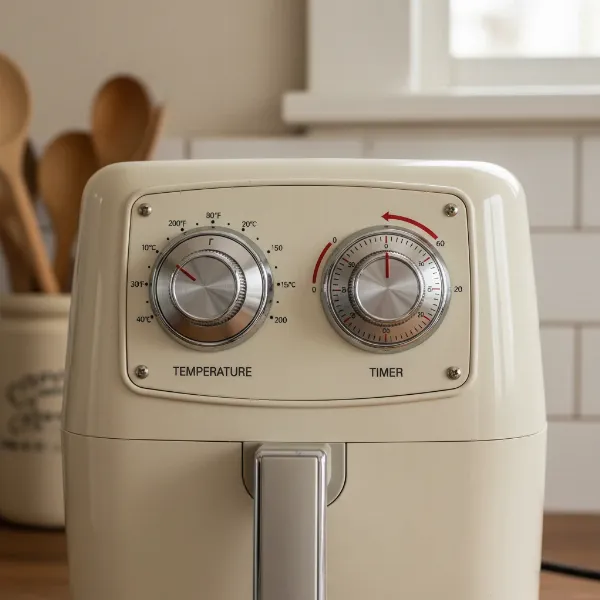 A traditional white analog air fryer with two large mechanical control dials for temperature and time.
Digital Air Fryers: Unpacking the Advantages and Disadvantages
Digital air fryers bring a host of benefits to the modern kitchen, but they also come with a few considerations.
Advantages of Digital Air Fryers
- Precision Control: One of the most significant advantages of digital air fryers is their ability to set temperature and time with exactitude. You can often adjust settings in one-degree or one-minute increments, ensuring optimal cooking conditions for delicate dishes or specific recipes. [cite: 1 (air fryer technology differences digital analog), 3 (digital vs analog air fryer pros and cons), 4 (which is better digital or manual air fryer)]
- Convenience and Pre-set Programs: Many digital models feature pre-set cooking functions for popular foods like French fries, chicken wings, or vegetables. These one-touch options eliminate guesswork, automatically setting the ideal temperature and time for consistent results. [cite: 2 (digital vs analog air fryer pros and cons), 3 (digital vs analog air fryer pros and cons)] This is particularly beneficial for busy individuals or cooking beginners.
- Modern Aesthetics: With their sleek touchscreens and contemporary designs, digital air fryers often add a sophisticated touch to any kitchen countertop. [cite: 3 (digital vs analog air fryer pros and cons), 4 (which is better digital or manual air fryer)]
- Enhanced Features: Digital models frequently include additional functionalities like preheat cycles, automatic shut-off, “keep warm” settings, and even shake reminders, which alert you to toss your food for even crisping. [cite: 3 (digital vs analog air fryer pros and cons), 4 (which is better digital or manual air fryer)] Some even offer smart connectivity for remote control via smartphone apps.
Disadvantages of Digital Air Fryers
- Higher Cost: Digital air fryers generally come with a higher price tag compared to analog models due to their advanced technology and features. [cite: 1 (digital vs analog air fryer pros and cons), 2 (why are analog air fryers priced higher than digital)]
- Potential for Complexity: While presets simplify cooking, the array of buttons, menus, and functions can be overwhelming for some users, particularly those less comfortable with technology or elderly individuals. [cite: 3 (digital vs analog air fryer pros and cons)]
- Durability Concerns: With more electronic components and complex circuitry, digital models might be perceived as having more points of failure compared to the simpler mechanical design of analog units.
- Audible Alerts: Some users find the beeping sounds of digital air fryers to be annoying. [cite: 4 (analog vs digital airfryer)]
- Bulky Design: Certain digital air fryers, especially those with larger capacities and more features, can be bulkier, requiring more countertop space. [cite: 3 (which is better digital or manual air fryer)]
Analog Air Fryers: Simplicity, Durability, and Direct Control
Analog air fryers, with their straightforward design, also offer distinct advantages and a few drawbacks.
Advantages of Analog Air Fryers
- Affordability: Analog air fryers are typically more budget-friendly, making them an excellent entry-level option for those new to air frying or looking for a cost-effective appliance. [cite: 1 (digital vs analog air fryer pros and cons), 2 (why are analog air fryers priced higher than digital)]
- Simplicity and Ease of Use: The manual dials are intuitive and require no learning curve, appealing to users who prefer a direct, no-fuss approach to cooking. They are often favored by older individuals who may find digital interfaces challenging. [cite: 1 (digital vs analog air fryer pros and cons), 3 (digital vs analog air fryer pros and cons)]
- Durability and Longevity: With fewer electronic parts, analog air fryers often boast greater mechanical durability and are less prone to technical malfunctions, potentially leading to a longer lifespan. [cite: 1 (how analog air fryers work), 2 (why are analog air fryers priced higher than digital)]
- Compact Size: Many analog air fryers are designed to be smaller and more compact, which is ideal for kitchens with limited counter space or for those who need a portable option for camping or travel. [cite: 3 (which is better digital or manual air fryer)]
- Hands-On Control: Cooks who enjoy experimenting and making small adjustments during cooking might appreciate the tactile feel of manual dials.
Disadvantages of Analog Air Fryers
- Less Precise Control: The primary drawback of analog air fryers is their lack of precision. Setting exact temperatures and times can be challenging with dials, which typically offer wider increments (e.g., 5-degree temperature jumps). [cite: 1 (air fryer technology differences digital analog), 3 (digital vs analog air fryer pros and cons)]
- Fewer Features: Analog models generally do not include advanced features like pre-set programs, preheat functions, or shake reminders. This means more manual monitoring and adjustments are required during cooking. [cite: 3 (digital vs analog air fryer pros and cons), 4 (which is better digital or manual air fryer)]
- No Digital Display: Without a clear LED screen, it can be harder to gauge the exact time remaining or precise temperature setting at a glance.
- Limited Versatility: The absence of diverse cooking modes means you primarily rely on manual adjustments for all cooking tasks, which might be less convenient for complex recipes.
Side-by-Side Comparison: Digital vs. Analog Air Fryers
To help you visualize the key differences, here’s a direct comparison of digital and analog air fryers:
| Feature | Digital Air Fryer | Analog Air Fryer |
|---|---|---|
| Control Type | Touchscreen/Buttons, LED Display | Manual Dials (Knobs) |
| Precision | High (e.g., 1-degree/minute increments) | Lower (e.g., 5-degree increments, rough time) [cite: 1 (digital vs analog air fryer pros and cons), 3 (digital vs analog air fryer pros and cons)] |
| Features | Presets, Preheat, Shake Reminder, Keep Warm, Smart Connectivity (some models) [cite: 3 (digital vs analog air fryer pros and cons)] | Basic Timer & Temperature Settings |
| Cost | Higher | Lower [cite: 1 (digital vs analog air fryer pros and cons), 2 (why are analog air fryers priced higher than digital)] |
| Ease of Use | Intuitive presets, clear digital feedback [cite: 2 (digital vs analog air fryer pros and cons)] | Simple, hands-on, no tech barrier [cite: 3 (digital vs analog air fryer pros and cons)] |
| Aesthetics | Modern, Sleek | Traditional, Functional |
| Durability | More electronics, potentially more complex repairs | Mechanical, often more durable and reliable [cite: 2 (why are analog air fryers priced higher than digital)] |
| User Feedback | Praised for convenience, consistency [cite: 1 (digital vs analog air fryer pros and cons), 3 (digital vs analog air fryer pros and cons)] | Favored for simplicity, reliability, cost-effectiveness [cite: 1 (digital vs analog air fryer pros and cons), 3 (digital vs analog air fryer pros and cons)] |
Choosing Your Perfect Air Fryer: A Buying Guide
Selecting between a digital and analog air fryer ultimately depends on your individual preferences, cooking habits, and kitchen environment.
Assess Your Cooking Style and Needs
Consider your comfort level with technology. If you embrace smart appliances and appreciate precise control, a digital model might be a better fit. If you prefer straightforward mechanics and a hands-on approach, or if technology tends to frustrate you, an analog air fryer could be ideal. Think about the types of food you’ll primarily cook. If you frequently use pre-packaged frozen foods, digital presets can be a time-saver. If you often experiment with fresh ingredients that require nuanced temperature adjustments, an analog model’s direct control might appeal to you more, despite its less precise markings.
Consider Your Budget
Digital air fryers typically command a higher price. If budget is a primary concern, analog models offer excellent value and functionality at a lower cost. Decide if the additional features and precision of a digital unit justify the extra investment for you.
Evaluate Capacity and Size
While not strictly tied to control type, digital air fryers sometimes come in larger, more feature-rich models that can take up more counter space. Analog versions are often more compact. Consider your available kitchen real estate and the number of people you typically cook for. A 2-3 liter air fryer is suitable for 1-2 people, while 4-5 liters or larger is better for families.
Prioritize Essential Features
Do you value pre-set programs, a preheat function, or smart connectivity? If these features enhance your cooking experience significantly, a digital air fryer is likely your best bet. If you only need to set a temperature and a timer, an analog model will suffice.
Check for Warranty and Support
Regardless of the type, always research the manufacturer’s warranty and customer service reputation. A good warranty can save you headaches down the line, especially for appliances with more intricate electronic components.
Tips for Maximizing Your Air Fryer Experience
No matter whether you choose a digital or an analog air fryer, a few universal tips can elevate your cooking:
- Preheat Your Air Fryer: Just like a conventional oven, preheating your air fryer for 3-5 minutes helps achieve consistent cooking temperatures and ensures food starts crisping immediately.
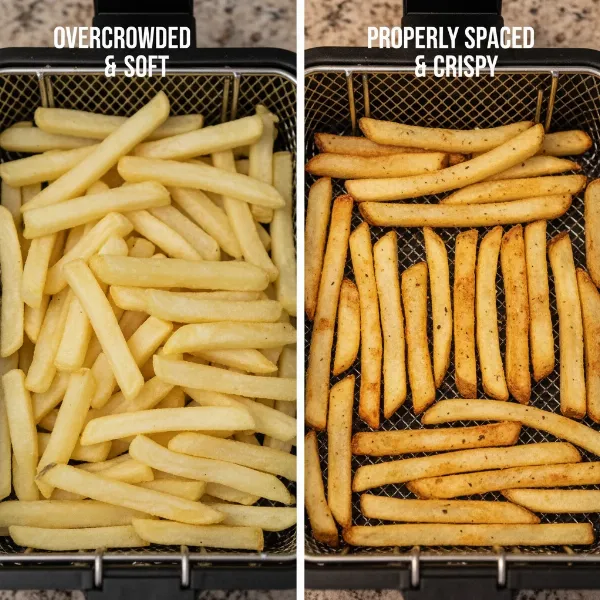
- Don’t Overcrowd the Basket: For optimal crispiness, ensure a single layer of food with enough space for hot air to circulate around each piece. Cook in batches if necessary.
- Use a Little Oil: While air frying uses significantly less oil, a light spray or toss with a teaspoon of oil can enhance browning and crispiness, especially for fresh ingredients.
- Shake or Flip Food: Mid-way through cooking, shake the basket or flip larger items to ensure even exposure to hot air and uniform browning.
- Clean Regularly: Promptly clean the air fryer basket and drawer after each use. Most are dishwasher safe, but check your model’s instructions. A clean air fryer performs better and lasts longer.
Conclusion
The choice between a digital and analog air fryer is a personal one, influenced by your priorities in the kitchen. Digital models offer unparalleled precision and convenience with their advanced features and sleek interfaces, making them ideal for tech-savvy cooks seeking efficiency and consistent results. Conversely, analog air fryers appeal to those who value simplicity, affordability, and robust durability, providing reliable performance with a straightforward, hands-on approach.
Ultimately, both types excel at delivering delicious, crispy meals with less oil. By weighing the pros and cons against your lifestyle and cooking preferences, you can confidently select the air fryer that will best serve as your culinary companion. Which air fryer will make its home in your kitchen?
Frequently Asked Questions
Which air fryer is better for a beginner?
Analog air fryers are often recommended for beginners due to their simple, intuitive dial controls that make setting temperature and time straightforward. They are less intimidating than digital models with multiple buttons and presets, offering an easy entry point into air frying without overwhelming new users. [cite: 3 (digital vs analog air fryer pros and cons)]
Are digital air fryers harder to clean?
Generally, the internal components and baskets of both digital and analog air fryers are designed for easy cleaning, often being dishwasher safe. However, digital control panels with touchscreens may require more careful wiping to avoid streaks or damage to the electronic interface, whereas analog dials are usually more robust and simpler to clean on the exterior.
Do analog air fryers cook food differently than digital ones?
No, the fundamental cooking mechanism (circulating hot air) is the same for both digital and analog air fryers. The difference lies solely in the control interface. The quality of cooking depends more on the air fryer’s overall design, fan power, and heating element efficiency rather than whether it has digital or analog controls.
Can I get precise results with an analog air fryer?
While analog air fryers allow you to manually set temperature and time, the dials offer less granular control compared to digital displays. You might have to estimate between markings for specific temperatures and precise minute adjustments are harder to achieve. For consistent, highly precise results, digital models typically provide a distinct advantage.