The aroma of freshly fried food is undeniably inviting, a staple in kitchens and restaurants worldwide. But when it comes to achieving that perfect crisp, two contenders stand out: the traditional deep fryer and the increasingly popular air fryer. Each promises delicious results, yet they operate on fundamentally different principles, leading to significant variations in taste, health implications, and overall kitchen convenience. Navigating this culinary crossroads requires understanding what each appliance truly offers. This article delves into a comprehensive head-to-head comparison, putting both the air fryer and the deep fryer to the ultimate test to help you determine which best suits your cooking style and dietary goals.
Understanding the Core Technologies
Before dissecting their performance, it’s crucial to grasp how these two appliances transform raw ingredients into crispy delights. Though both are designed for “frying,” their methods diverge significantly.
Deep Fryer: The Traditional Method
|
Our Picks for the Best Air fryer in 2026
As an Amazon Associate I earn from qualifying purchases.
|
||
| Num | Product | Action |
|---|---|---|
| 1 | bella 4Qt Slim Air Fryer, Fits-anywhere™ Kitchenware, EverGood™ Ceramic Nonstick Coating, Adjustable Temperature, 6 Preset Cooking Options, 60 Min Auto Shutoff w Audible Tone, 3.3lb Capacity, Oatmilk |

|
| 2 | Ninja - Air Fryer - 4-in-1 Pro Air Fry, Roast, Reheat, Dehydrate - 5QT Capacity fits up to 4lbs of French Fries - 400F Max Temp - Nonstick Basket & Crisper Plate - 120V - Grey - AF141 |
|
| 3 | Cuisinart Air Fryer Toaster Oven, 1800W, 8-in-1 with Air Fry, Convection, Broil & Warm, 0.6 Cubic Feet, 60-Minute Timer, TOA-70NAS, Stainless Steel |
|
| 4 | Ninja Air Fryer, 8 QT DoubleStack 2-Basket, Space Saving Design, Cooks 2lb Chicken Wings, Feeds up to 6 People, 6-in1 Air Fryer, Roast, Bake & More, Easy to Clean, Dishwasher Safe Parts, Black, SL201 |
|
| 5 | Chefman TurboX 4-in-1 Air Fryer, 5-Quart Airfryer for Extra Crispy Chicken, Fries, Wings, and More, Air Fry, Bake, Reheat, and Frozen Functions, Digital Touch Controls, Dishwasher Safe |
|
| 6 | Cosori 9-in-1 TurboBlaze Air Fryer 6 Qt, Premium Ceramic Coating, 90°–450°F, Precise Heating for Even Results, Air Fry, Roast, Bake, Broil, Dry, Frozen, Proof, Reheat, Keep Warm, 120V, Dark Gray |
|
| 7 | Ninja - Air Fryer - 4 QT Capacity - 4-in1 Roast, Crisp, Roast, Reheats, & Dehydrates - Dishwasher Safe Parts - Includes 20 Easy & Healthy Recipes - Compact - Grey - AF101 |
|
| 8 | Ninja Crispi Pro 6-in-1 Glass Air Fryer - 450°F, Nontoxic, 6qt & 2.5qt Containers & Lids - Microwave, Freezer, Dishwasher Safe - Max Crisp, Air Fry, Bake, Roast, Recrisp, Dehydrate -Cyberspace AS101CY |
|
| 9 | Chefman Air Fryer – 6 QT Compact Airfryer for Quick & Easy Meals in Minutes, Features Hi-Fry Technology for Extra Crisp, Touchscreen Controls with 4 Presets, Nonstick & Dishwasher Safe Basket - Black |
|
| 10 | Ninja - XL Single Basket Air Fryer - 5.5 QT Capacity fits 3lbs of Wings - 5-in-1Air Fry, Roast, Bake,Reheat & Dehydrate -Dishwasher Safe Parts & Recipe Guide - Grey -AF150AMZ |
|
The deep fryer employs a time-honored cooking technique where food is completely submerged in a vat of hot oil, typically heated to temperatures between 350-375°F (175-190°C). This high-heat oil bath rapidly cooks the food from all sides, creating a thick, golden, crispy crust while sealing in moisture. The intense, direct heat from the oil results in a distinct texture and flavor profile that many associate with classic fried foods.
Air Fryer: The Hot Air Circulation Approach
In contrast, an air fryer operates more like a compact convection oven. It utilizes a powerful fan to circulate extremely hot air (often up to 400°F or 200°C) around the food at high speed. This rapid air movement creates a “frying” effect by crisping the exterior with a minimal amount of oil, often just a tablespoon or a light spray. The air fryer aims to replicate the texture and taste of deep-fried food but with a significantly healthier approach.
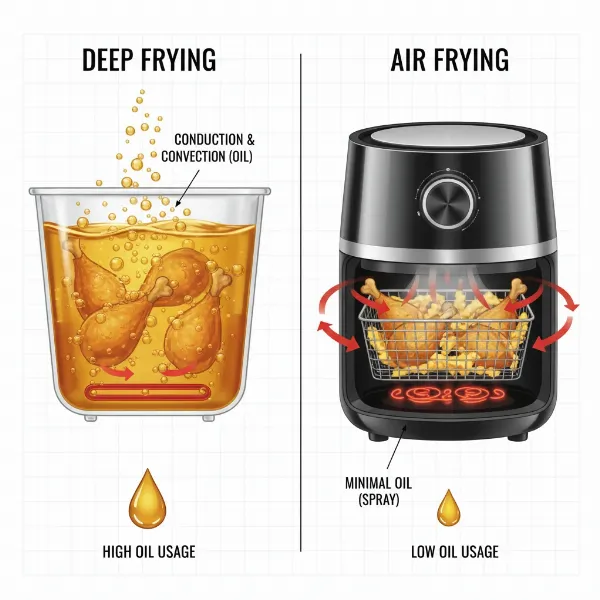 An illustration comparing deep frying and air frying mechanisms, highlighting oil submersion versus hot air circulation.
The Taste Test: Crispiness, Flavor, and Texture
The ultimate arbiter for any cooking method is taste. While both appliances deliver crispy results, the nuances in texture and flavor can be a deal-breaker for some.
Deep Fryer’s Edge: Unmatched Crisp and Classic Flavor
For many, the deep fryer reigns supreme in achieving that iconic, “undeniably crispier” exterior and a satisfyingly fluffy interior, especially for beloved foods like french fries. The complete submersion in super-heated oil instantly seals the food, creating a thick, uniform crust and a rich, traditional fried flavor. This method is particularly effective for items with wet batters, as the oil sets the coating immediately, preventing sogginess.
Air Fryer’s Advantage: Healthier Crunch with Enhanced Seasoning
The air fryer, while not replicating the exact deep-fried texture, offers a distinct “lighter crunch”. One of its notable advantages is its ability to infuse flavors. Because food cooks with minimal oil, seasonings can adhere and absorb better, leading to a “better taste” and an “almost-caramelized” flavor profile. Air-fried potatoes, for instance, can be “very crunchy” and absorb desired flavors more effectively than their deep-fried counterparts. This method shines with breaded items or foods with natural fats, such as chicken wings, which become wonderfully crispy as fat renders and drips away.
Verdict on Taste: It’s All About Preference and Expectation
Ultimately, the “taste” debate has no single winner. Deep-fried food often delivers the classic, indulgent texture many crave, particularly for certain recipes. However, the air fryer offers a delicious, healthier crunch where seasonings are prominent, proving incredibly satisfying for a different culinary experience. Your preference will largely depend on the specific food and your expectation of “fried.”
Health & Nutrition: A Clear Winner?
When health is a priority, the contrast between air frying and deep frying becomes much starker. The amount of oil used is the primary differentiator here.
Significant Reduction in Fat and Calories
Air frying stands out as a significantly healthier cooking method because it dramatically reduces the amount of oil required. Air fryers can use up to 80% less oil compared to deep fryers, directly translating to fewer calories and less fat in your meals. For example, a serving of french fries might contain around 471 calories when deep-fried, but only about 176 calories when prepared in an air fryer. This substantial reduction makes air frying “the healthier choice,” actively contributing to lower fat intake and potentially reducing the risk of heart disease and obesity.
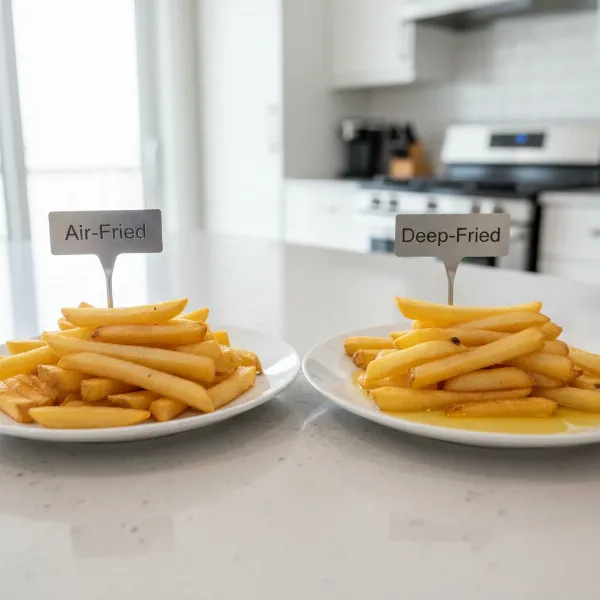 A visual comparing air-fried food with minimal oil to deep-fried food with excess oil, illustrating health benefits.
Minimizing Harmful Compounds: The Acrylamide Debate
Another crucial health consideration is the formation of acrylamide, a chemical compound that can form in starchy foods (like potatoes) when cooked at high temperatures. Research has linked acrylamide to an increased chance of certain cancers. Air frying can play a beneficial role here; studies suggest that air frying can reduce the amount of acrylamide in fried potatoes by up to 90% compared to traditional oil frying. This reduction is attributed to the lower oil usage and often slightly lower cooking temperatures involved.
Broader Health Implications
While air frying offers a healthier alternative to deep frying, it’s essential to remember that the inherent healthiness of a dish also depends on the ingredients. Air-frying indulgent foods, such as Oreos, technically makes them “healthier” than their deep-fried versions, but they remain treats rather than health foods. An air fryer serves as an excellent tool in a healthy kitchen when used alongside other cooking methods like steaming or baking, encouraging a reduction in overall fat and calorie consumption.
Convenience & Practicality in Your Kitchen
Beyond taste and health, the everyday experience of using an appliance—from preparation to cleanup—heavily influences its practicality in a busy kitchen.
Ease of Use and Preparation
Air fryers generally offer a more straightforward preparation process. There’s no need to handle or heat large quantities of oil, and most foods only require a light toss with a tablespoon of oil or a quick spray. This makes the initial setup quick and less intimidating. Deep fryers, conversely, demand careful measurement and heating of oil, which can be time-consuming and involved.
Cleanup: The Mess Factor
This is where the air fryer truly shines. Deep fryers are notoriously messy, prone to oil splatters, and leave a lingering, “potent smell” in the kitchen. Disposing of used oil requires waiting for it to cool completely and careful handling. Air fryers, on the other hand, boast “so much easier” cleanup. Many air fryer baskets and inserts are non-stick and dishwasher-safe, drastically simplifying the post-cooking chore and minimizing lingering odors.
Cooking Speed and Batch Size
Deep fryers can often cook foods faster, particularly with techniques like double-frying for perfectly crisp results. However, this speed often comes at the cost of requiring constant supervision. Air fryers, while sometimes taking slightly longer for a complete cook (e.g., 25 minutes for fries versus 14 minutes for deep-fried fries including double-fry), are much more hands-off once started. The trade-off often lies in batch size; deep fryers can typically accommodate larger quantities, whereas air fryers can be limited by their basket capacity.
Safety Considerations
Safety is a critical factor. Operating a deep fryer involves working with large volumes of extremely hot oil, which poses a significant risk of burns, oil splatters, and even kitchen fires if not handled with extreme caution. Air fryers, by circulating hot air rather than immersing food in oil, are inherently safer, reducing these risks considerably.
“The convenience of an air fryer, especially its ease of cleanup, often outweighs the slightly longer cooking times for busy home cooks who want to enjoy crispy meals without the fuss and mess of traditional frying.”
Deciding Which is Right for You
The choice between an air fryer and a deep fryer is not about one being definitively superior in all aspects, but rather about aligning the appliance with your personal culinary priorities and lifestyle.
When to Choose a Deep Fryer
Opt for a deep fryer if your primary goal is to achieve the classic, thick-crusted crispiness and rich flavor that only full oil submersion can provide. It’s ideal for those who frequently prepare traditional fried dishes, especially those with wet batters, and are willing to manage the larger oil usage, cleanup, and safety considerations for that authentic taste experience.
When an Air Fryer Shines
An air fryer is an excellent choice for health-conscious individuals who want to enjoy crispy foods with significantly less fat and calories. It’s perfect for everyday cooking, offering convenience, easier cleanup, and safer operation. If you value a lighter crunch, better seasoning absorption, and versatility in cooking various foods (from vegetables to chicken wings) without the mess, an air fryer is a strong contender.
Considering Both for Different Needs
For some, the ideal solution might be to own both. A deep fryer can be reserved for occasional indulgent treats and special occasions where authentic fried taste is paramount. An air fryer can then serve as the go-to appliance for daily, healthier “fried” meals and snacks, offering convenience and peace of mind.
Conclusion
The debate between the air fryer and the deep fryer ultimately boils down to a balance of taste, health, and convenience. While the deep fryer delivers the unmistakable, classic crisp and rich flavor achieved through oil submersion, it comes at the cost of higher fat intake, more significant cleanup, and safety concerns. The air fryer, on the other hand, offers a healthier alternative, drastically reducing oil, calories, and potentially harmful compounds, all while providing a satisfying crunch and enhanced flavor absorption with remarkable ease of use and cleanup. Your decision hinges on what you prioritize in your kitchen: the traditional indulgence or the modern, health-conscious convenience. Which fryer will claim its spot in your home?
Frequently Asked Questions
Is air-fried food truly healthier than deep-fried?
Yes, air-fried food is generally healthier than deep-fried food. Air fryers use up to 80% less oil, which significantly reduces the calorie and fat content of dishes. This reduction in oil can lead to a lower risk of heart disease and obesity compared to regular consumption of deep-fried foods.
Can an air fryer make food as crispy as a deep fryer?
An air fryer can produce very crispy food, but the texture is often different from deep-fried items. Deep frying creates a thick, uniform crust due to full oil submersion, resulting in a distinct crispiness. Air frying delivers a lighter, drier crunch, which many find satisfying, though it may not perfectly replicate the classic deep-fried texture for all foods.
Which appliance is easier to clean?
The air fryer is significantly easier to clean than a deep fryer. Air fryers use minimal oil, leading to less mess and splatter. Most air fryer baskets and removable parts are non-stick and often dishwasher-safe, simplifying cleanup. Deep fryers require careful disposal of large quantities of hot oil and extensive cleaning to remove grease.
Are there any foods that shouldn’t be air-fried?
While versatile, some foods are not ideal for air frying. Items with very wet batters (like traditional tempura or battered fish) tend to drip and make a mess without crisping properly. Similarly, foods with a lot of loose seasonings that aren’t well-adhered can blow around inside the air fryer, potentially burning or unevenly coating the food.